Quick Answer
The safe storage window for deli meat depends on temperature, handling, and how quickly it was refrigerated. Keep it at 40°F (4°C) or colder, follow the specific time limits below, and discard it sooner if its storage history is uncertain.
Practical note
For deli meat storage, the home-kitchen check is not only the number of days. We look at the start date, fridge temperature, container seal, serving time, and spoilage signs. If one of those facts is missing, the safer move is to use the shorter window.
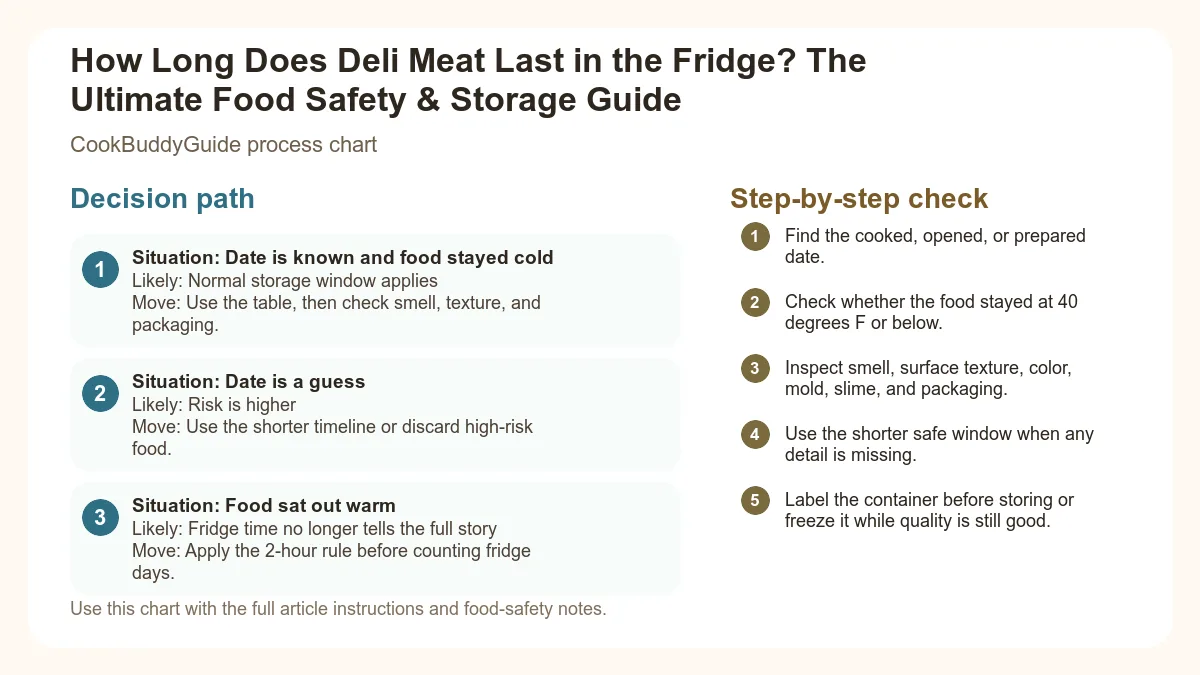
Decision table
| Situation | Likely cause or meaning | Best move |
|---|---|---|
| Date is known and food stayed cold | Normal storage window applies | Use the table, then check smell, texture, and packaging. |
| Date is a guess | Risk is higher | Use the shorter timeline or discard high-risk food. |
| Food sat out warm | Fridge time no longer tells the full story | Apply the 2-hour rule before counting fridge days. |
Step-by-step fix
- Find the cooked, opened, or prepared date.
- Check whether the food stayed at 40 degrees F or below.
- Inspect smell, surface texture, color, mold, slime, and packaging.
- Use the shorter safe window when any detail is missing.
- Label the container before storing or freeze it while quality is still good.
Common mistakes
- Counting fridge days from the day you noticed the container instead of the day it was made.
- Ignoring time spent on the counter, in a lunch bag, or on a serving table.
- Trusting smell alone when the date or temperature history is unknown.
- Putting warm food into a deep container that cools slowly.
Related topic hubs
How Long Does Deli Meat Last in the Fridge? A Practical Food Safety & Storage Guide
You’re standing in front of the open refrigerator at 7:15 AM, trying to assemble a sandwich before the morning commute. You pull out a plastic-wrapped bundle of turkey breast from the deli counter. You remember buying it... was it Wednesday? Or maybe last Saturday? You take a cautious sniff, but it’s cold, and the scent is faint. You touch the edge of a slice—it feels a bit tacky, but not quite "slimy." Do you risk it?
Table of Contents
The Quick Reference Guide: Deli Meat Shelf Life at a Glance
According to USDA deli meat storage guidelines, unopened pre-packaged deli meat can last for up to two weeks, but once you break that seal, the environment changes instantly.
| Type of Deli Meat | Fridge Life (Unopened) | Fridge Life (Opened/Fresh Sliced) | Freezer Life |
|---|---|---|---|
| Freshly Sliced (Deli Counter) | N/A | 3–5 Days | 1–2 Months |
| Pre-Packaged (Factory Sealed) | 2 Weeks (or Use-By Date) | 3–5 Days | 1–2 Months |
| Cured Meats (Salami, Pepperoni) | 2–3 Weeks | 2–3 Weeks | 1–2 Months |
The Difference Between "Sell-By" and "Use-By" Dates
Deep Dive: How Long Does Deli Meat Last in the Fridge?
Turkey and Chicken Breast: The 3-Day Window
Ham and Cured Meats: Why They Last Slightly Longer
Roast Beef and Rare Meats: High Moisture Risks
Bologna and Salami: The Preservation Factor
Hard salamis and heavily processed meats like bologna are the "marathon runners" of the deli drawer. Their low moisture and high salt content mean they can often last up to two weeks once opened, provided they are kept in an airtight container. For a comprehensive list of these specific timelines, the cold food storage chart is an excellent resource to bookmark.
The Hidden Danger: Understanding Listeria and Foodborne Illness
Unlike most other bacteria, Listeria is a hardy survivor. It can grow at temperatures as low as 32°F, which means even a perfectly chilled meat drawer isn't a total shield. According to the FDA's Listeria safety and prevention guide, it is critical to keep your refrigerator at or below 40 degrees Fahrenheit to slow its growth, but cold temperatures alone will not stop it.
High-Risk Groups
For most healthy adults, a small amount of Listeria might cause mild flu-like symptoms. However, for pregnant women, the elderly, and those with weakened immune systems, it can lead to a serious foodborne illness called listeriosis. If you fall into a high-risk category, the USDA and CDC recommend heating all deli meats to an internal temperature of 165°F (steaming hot) before eating. This kills the bacteria and ensures safety. You can learn more about the specific symptoms of listeria infection from the Mayo Clinic.
Cross-Contamination at the Counter
Even if you are careful at home, cross-contamination can happen at the deli counter. If a slicer isn't cleaned properly between cutting a contaminated ham and your fresh turkey, the bacteria can spread. This is why Consider buying from reputable delis that have high turnover and visible cleaning protocols.
How to Tell if Deli Meat Has Spoiled: 5 Warning Signs
The Pro Senses Spoilage Check
- The Slime Factor: Run a clean finger over the surface. A slight dampness is normal; a thick, sticky, or "stringy" slime is a definitive sign of bacterial colonies.
- The Sour Sniff: Fresh deli meat should smell like the protein it is (salty, smoky, or meaty). If you detect a vinegar-like, ammonia, or yeast-like off-smell, it's gone.
- Color Fading: Turkey should be white/pink; roast beef should be brownish-red. If the edges are turning gray, green, or excessively dark, spoilage has begun.
- Texture Changes: If the meat feels mushy or loses its structural integrity when you pick it up, it has started to break down.
- The Package Test: If a sealed package is "puffed up" with air, this indicates gas production from bacterial growth. Do not even open it—toss it immediately.
For more detailed visuals on these signs, this guide on signs deli meat has spoiled offers excellent photographic examples of what to look for.
Pro Storage Tips to Maximize Freshness
The Best Containers for Deli Meat
The thin plastic bags provided at the deli counter are terrible for long-term storage. They don't seal perfectly, and they allow the meat to sit in its own moisture. My Recommendation: Transfer your meat to a shallow, airtight container (glass is best). Line the bottom with a piece of parchment paper to absorb excess moisture, and place another piece on top before sealing the lid. This prevents the "slime" from developing prematurely.
Optimal Fridge Placement
Most modern refrigerators have a dedicated meat drawer. This isn't just marketing; these drawers are designed to stay slightly colder than the rest of the fridge by drawing in air from the cooling coils. If you don't have one, store your deli meat on the bottom shelf toward the back, which is the coldest part of the appliance. Never store it in the door, where the temperature fluctuates every time you reach for the milk.
The Paper vs. Plastic Debate
Can You Freeze Deli Meat? The Best Wrapping Methods
Many people are surprised to learn that you can absolutely freeze deli meat. While the texture of very thinly sliced "shaved" meats can suffer, standard slices freeze beautifully. This is a great way to handle bulk purchases or leftovers that you know you won't finish in 3 days.
Step-by-Step: Flash Freezing Deli Slices
To prevent the meat from turning into one giant, unusable block, follow this method:
- Separate: Place individual slices (or small stacks of 3) between squares of parchment paper.
- Seal: Place the stacks into a heavy-duty freezer bag. Use a straw to suck out as much air as possible before sealing (poor man's vacuum sealing).
- Label: Write the date and the type of meat on the bag with a permanent marker.
- Thaw: Always thaw in the refrigerator overnight. Never thaw on the counter, as this enters the "danger zone" for bacterial growth.
Chef's Tip: Thawed deli meat is best used in "hot" applications. If the texture feels slightly different after freezing, use it for grilled cheese, paninis, or chopped up in a breakfast omelet.
Common Mistakes Home Cooks Make with Lunch Meat
1. The 2-Hour Rule on the Counter
2. Using Dirty Utensils
3. Ignoring the "Open Date"
Conclusion: Smart Shopping for Less Waste
Understanding how long does deli meat last in fridge is the key to a safer, more efficient kitchen. While the convenience of a giant 2-pound pack of turkey is tempting, for most families, it simply isn't realistic to consume it within the safe 3 to 5-day window.
My final piece of advice? Buy small, buy fresh. Visit the deli counter twice a week if you have to, or freeze half of your purchase immediately upon arriving home. By respecting the deli meat shelf life and following the storage tips we've discussed—like using airtight containers and keeping your fridge at 40 degrees Fahrenheit—you can enjoy your favorite sandwiches with total peace of mind.
Frequently Asked Questions
A: Actually, nitrates and nitrites act as preservatives that inhibit bacterial growth. "Natural" or nitrate-free meats may actually have a shorter shelf life and require even stricter adherence to the 3-day rule.
A: This is usually "structural coloration" caused by the way light hits the moisture and fat on the sliced surface. If it doesn't smell bad or feel slimy, it's generally safe to eat.
Happy (and safe) sandwich making! For more kitchen tips, check out our latest guides on no-cook summer meals to keep your kitchen cool and your family fed.