Instant Pot Recipes for Beginners: 10 reliable Meals to Start With
Quick Answer
Start with beginner Instant Pot recipes, step-by-step pressure cooking tips, and simple troubleshooting for confident weeknight meals.
Practical note
For Instant Pot Recipes for Beginners, this guide centers on Pressure Cook (or Manual), Sauté, Natural Release vs. Quick Release. Those are the checkpoints we would use first in a normal home kitchen before making a bigger change.
Decision table
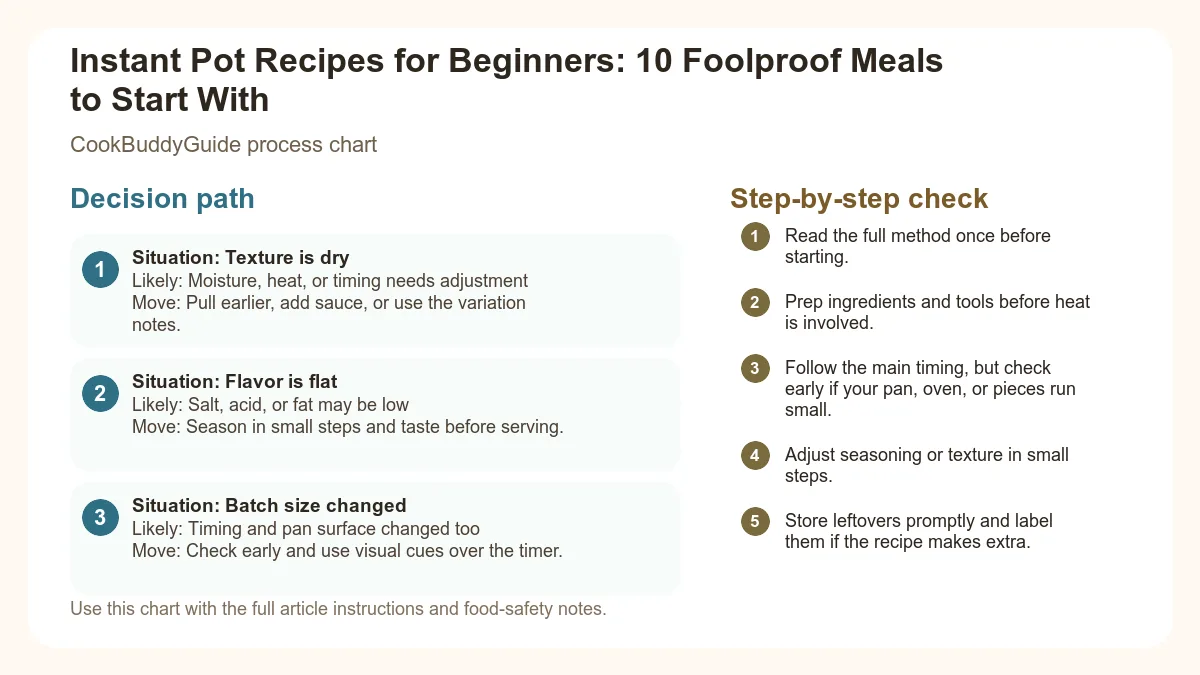
| Situation | Likely cause or meaning | Best move |
|---|---|---|
| Texture is dry | Moisture, heat, or timing needs adjustment | Pull earlier, add sauce, or use the variation notes. |
| Flavor is flat | Salt, acid, or fat may be low | Season in small steps and taste before serving. |
| Batch size changed | Timing and pan surface changed too | Check early and use visual cues over the timer. |
Step-by-step fix
- Read the full method once before starting.
- Prep ingredients and tools before heat is involved.
- Follow the main timing, but check early if your pan, oven, or pieces run small.
- Adjust seasoning or texture in small steps.
- Store leftovers promptly and label them if the recipe makes extra.
Common mistakes
- Changing the recipe before trying the base method once.
- Measuring casually when texture depends on ratios.
- Waiting until the end to fix seasoning.
- Ignoring carryover heat or resting time.
Related topic hubs
Introduction
Why the Instant Pot is Perfect for Beginners
The Instant Pot takes the guesswork out of cooking. Unlike stovetop methods where you're constantly adjusting heat and timing, it maintains precise temperature and pressure automatically — and it's incredibly forgiving. You can walk away and trust it to do its job.
The time-saving aspect is real. Easy instant pot meals typically cut cooking time by 50–70% compared to conventional methods. That tough beef stew that takes 3 hours on the stove? Done in 35 minutes. Dried beans that need overnight soaking and hours of simmering? Ready in 25 minutes with no soaking required.
Understanding Your Instant Pot Basics
Before the recipes, focus on the few pressure-cooker functions used most often. Most other buttons are presets for the same core settings.
The Three Functions You Need to Know
- Pressure Cook (or Manual): Your workhorse button — used for 90% of cooking. It cooks food under high pressure, which is what makes everything so fast.
- Sauté: Brown meat or sauté vegetables right in the pot before pressure cooking. No extra pans needed. Use medium heat for most tasks.
- Natural Release vs. Quick Release: Natural release means letting the pressure come down on its own (10–25 minutes). Quick release means manually releasing steam using the valve. Each recipe below will tell you which to use.
Safety Features That Protect You
Your Instant Pot won't build pressure if the lid isn't properly sealed, and it won't open while under pressure. The float valve (that small pin) pops up when the pot is pressurized and drops when it's safe to open. Never try to open the lid while that pin is up. According to USDA food safety guidelines, proper pressure cooking reaches temperatures that safely eliminate harmful bacteria.
10 Beginner-Friendly Instant Pot Recipes
I've arranged these instant pot recipes for beginners from absolute easiest to slightly more involved. Start with Recipe #1 and you'll build confidence for the rest.
Recipe 1: Perfect White Rice (Your First Success)
This is THE recipe to try first. It's impossible to mess up, and it teaches you how the Instant Pot works with zero stress.
- 1 cup white rice (jasmine or long-grain)
- 1 cup water
- Pinch of salt (optional)
- Rinse the rice in a fine-mesh strainer until the water runs clear. This takes about 30 seconds and prevents gummy rice.
- Add rice, water, and salt directly to the Instant Pot inner pot.
- Close the lid and make sure the valve is set to "Sealing" (not "Venting"). Check this every single time — it's the most common beginner mistake.
- Press "Pressure Cook" or "Manual" and set to 3 minutes on high pressure. The pot will take about 8 minutes to come to pressure first.
- When the timer beeps, let it naturally release for 10 minutes. Then carefully turn the valve to "Venting" to release any remaining steam.
- Open the lid, fluff with a fork, and serve.
Recipe 2: Hard Boiled Eggs (The Helpful Shortcut)
- 6–12 eggs (however many fit in a single layer)
- 1 cup water
- Ice bath (bowl of ice water)
- Trivet or steamer basket
- Pour 1 cup of water into the Instant Pot and place the trivet inside. The trivet keeps eggs out of the water.
- Arrange eggs on the trivet in a single layer. They can touch each other.
- While the eggs cook, prepare an ice bath. When the timer beeps, do a quick release by carefully turning the valve to "Venting." Keep your hand away from the valve — the steam comes out fast.
- Use tongs to transfer eggs immediately to the ice bath. Let them sit for 5 minutes, then peel under cool running water. The shells slip right off.
Recipe 3: Chicken Breast (Versatile Protein Base)
reliable tender, juicy chicken every time — perfect for salads, tacos, or meal prep.
- 2–3 boneless, skinless chicken breasts (about 1.5 lbs)
- 1 cup chicken broth (or water)
- 1 tsp garlic powder, 1 tsp onion powder, ½ tsp salt, ¼ tsp black pepper
- Season chicken breasts on both sides with all seasonings right in the Instant Pot to save dishes.
- Pour chicken broth into the pot. The chicken can sit in the liquid.
- Close the lid, set valve to "Sealing," and pressure cook on high for 8 minutes. If breasts are over 1 inch thick, add 1–2 more minutes.
- Allow a natural release for 5 minutes, then quick release the remaining pressure.
- Check internal temperature — it should read 165°F (per USDA poultry safety standards).
- Remove chicken and let rest for 3 minutes before slicing or shredding.
Recipe 4: Beef Chili (One-Pot Comfort Food)
Rich, hearty chili in 30 minutes that tastes like it simmered all day. Made this at least 30 times.
- 1 lb ground beef (85% lean)
- 1 onion, diced + 1 bell pepper, diced + 3 cloves garlic, minced
- 1 can (15 oz) kidney beans, drained + 1 can (15 oz) diced tomatoes + 1 can (6 oz) tomato paste
- 1 cup beef broth
- 2 tbsp chili powder + 1 tsp cumin + ½ tsp salt + ¼ tsp black pepper
- Press "Sauté" and let the pot heat for 2 minutes until it shows "Hot." Add ground beef and cook, breaking it apart, until browned (about 5 minutes).
- Add onion, bell pepper, and garlic. Sauté for 2 more minutes.
- Press "Cancel" to turn off sauté — don't skip this step or you'll get a Burn notice.
- Add beans, diced tomatoes, tomato paste, broth, and all seasonings. Stir well and scrape up any browned bits from the bottom.
- Close lid, set valve to "Sealing," and pressure cook on high for 10 minutes.
- Natural release for 10 minutes, then quick release remaining pressure. Stir well before serving — the chili thickens as it sits.
Recipe 5: Vegetable Soup (Budget-Friendly & Healthy)
- 1 tbsp olive oil
- 1 onion, diced + 2 carrots, sliced + 2 celery stalks, sliced + 2 cloves garlic, minced
- 4 cups vegetable broth + 1 can (15 oz) diced tomatoes
- 2 cups chopped vegetables (green beans, zucchini, corn, peas — whatever you like)
- 1 tsp dried thyme + 1 bay leaf + salt and pepper to taste
- Press "Sauté" and heat olive oil for 1 minute. Add onion, carrots, and celery. Cook for 3–4 minutes until onion is translucent.
- Add garlic and cook for 30 seconds. Garlic burns quickly — watch it carefully.
- Press "Cancel," then add broth, diced tomatoes, chopped vegetables, thyme, and bay leaf. Season with salt and pepper.
- Close lid, set valve to "Sealing," and pressure cook on high for 5 minutes. The vegetables will be perfectly tender, not mushy.
- Quick release the pressure when done. Remove bay leaf, taste, and adjust seasonings.
Recipe 6: Spaghetti and Meat Sauce (Family Favorite)
- 1 lb ground beef + 1 onion, diced + 3 cloves garlic, minced
- 1 jar (24 oz) marinara sauce + 2 cups water
- 8 oz spaghetti, broken in half
- 1 tsp Italian seasoning + ½ tsp salt + ¼ tsp red pepper flakes (optional)
- Parmesan cheese for serving
- Press "Sauté" and brown the ground beef with onion for 5–6 minutes. Add garlic and cook 30 more seconds.
- Press "Cancel." Add marinara sauce, water, Italian seasoning, salt, and red pepper flakes. Stir well.
- Break spaghetti in half and add to the pot. Push pasta down into the liquid but don't stir — this prevents sticking. Make sure all pasta is submerged.
- Close lid, set valve to "Sealing," and pressure cook on high for 8 minutes.
- Quick release the pressure immediately when done — don't let it sit or the pasta will get mushy.
- Open lid and stir well. Sauce will seem thin but thickens after 2 minutes. Serve with Parmesan.
Recipe 7: Chicken and Rice (Complete One-Pot Meal)
- 1 tbsp olive oil
- 1.5 lbs chicken thighs (bone-in or boneless)
- 1 onion, diced + 1.5 cups white rice, rinsed + 2 cups chicken broth
- 1 cup frozen mixed vegetables
- 1 tsp garlic powder + 1 tsp paprika + ½ tsp thyme + salt and pepper
- Season chicken generously with salt, pepper, garlic powder, and paprika on both sides.
- Press "Sauté" and heat olive oil. Brown chicken for 3–4 minutes per side until golden. You're creating flavor, not cooking it through. Remove and set aside.
- Add onion to the pot and cook for 2 minutes, scraping up browned bits.
- Press "Cancel." Add rice, broth, frozen vegetables, and thyme. Stir to combine, then place chicken pieces on top — don't stir them in.
- Close lid, set valve to "Sealing," and pressure cook on high for 10 minutes.
- Natural release for 10 minutes, then quick release remaining pressure. Verify chicken reaches 165°F. Stir gently to combine.
Recipe 8: Black Beans from Dried (No Soaking!)
No overnight soaking needed, and the beans turn out creamy and perfect every time.
- 1 lb dried black beans, rinsed and picked over
- 6 cups water
- 1 onion, quartered + 4 cloves garlic, smashed + 1 bay leaf + 1 tsp cumin
- 1 tsp salt (add after cooking — salt during cooking makes beans tough)
- Rinse beans in a colander and pick through them to remove any stones or debris.
- Add beans, water, onion, garlic, bay leaf, and cumin to the Instant Pot. Do not add salt yet.
- Close lid, set valve to "Sealing," and pressure cook on high for 25 minutes.
- Natural release for 15 minutes, then quick release remaining pressure.
- Test a bean — it should be tender but not mushy. If still firm, close lid and cook 3 more minutes.
- Remove bay leaf and onion quarters. Stir in salt.
Recipe 9: Beef Stew (Restaurant-Quality Comfort)
Tastes like it simmered all day. Fork-tender beef, perfectly cooked vegetables — all under an hour.
- 2 lbs beef chuck, cut into 1.5-inch cubes
- 2 tbsp flour + 2 tbsp olive oil
- 1 onion, chopped + 3 carrots (1-inch pieces) + 3 potatoes (1-inch pieces) + 2 celery stalks, sliced + 3 cloves garlic, minced
- 2 cups beef broth + 1 tbsp tomato paste + 1 tsp Worcestershire sauce
- 1 bay leaf + 1 tsp thyme + salt and pepper
- Pat beef cubes dry with paper towels. Toss with flour, salt, and pepper until coated — this creates a beautiful thick gravy.
- Press "Sauté" and heat olive oil. Working in batches, brown beef on all sides (about 2 minutes per side). Don't crowd the pot. Remove and set aside.
- Add onion and garlic. Cook for 2 minutes, scraping up browned bits.
- Press "Cancel." Return beef to pot with all remaining ingredients. Stir to combine.
- Close lid, set valve to "Sealing," and pressure cook on high for 35 minutes.
- Natural release for 10 minutes, then quick release remaining pressure. Remove bay leaf and let stew sit 5 minutes to thicken.
Recipe 10: Whole Chicken (Sunday Dinner Special)
Felt ambitious as a beginner, but it's actually straightforward. The chicken stays incredibly moist and the cooking time is unbeatable.
- 1 whole chicken (3–4 lbs)
- 1 cup chicken broth or water
- 1 tbsp olive oil
- 1 tbsp paprika + 1 tsp garlic powder + 1 tsp onion powder + 1 tsp thyme + ½ tsp salt + ¼ tsp black pepper
- Trivet
- Remove giblets from cavity and pat chicken dry inside and out.
- Mix all spices in a small bowl. Rub all over the chicken including the cavity. Drizzle with olive oil and rub to coat.
- Pour broth into Instant Pot and place trivet inside. Place chicken breast-side up on the trivet.
- Close lid, set valve to "Sealing," and pressure cook on high for 6 minutes per pound (e.g., 24 minutes for a 4-lb chicken).
- Natural release for 15 minutes, then quick release remaining pressure.
- Check internal temperature in the thickest part of the thigh — it should read 165°F. In testing it usually reaches 170–175°F, which is perfect.
- Carefully remove chicken using sturdy tongs or two large forks.
Practical Tips from 3 Years of Pressure Cooking
- Always check the sealing ring before every cooking session. A loose or missing ring means the pot won't pressurize. Have a spare — they absorb odors and wear out after about a year of heavy use.
- The minimum liquid rule: Your Instant Pot needs at least 1 cup of thin liquid (water, broth, wine) to build pressure. Thick sauces don't count. When in doubt, add an extra ½ cup of broth.
- Don't overfill: Never fill more than two-thirds full for most foods, or one-half full for foods that expand (rice, grains, beans).
- Natural vs. quick release strategy: Natural release = meat, beans, soups, high-liquid recipes. Quick release = vegetables, pasta, eggs, quick-cooking foods.
- The Sauté function is your friend: Brown meat and sauté aromatics in one pot before pressure cooking. Medium heat works for most tasks.
- Layer strategically: Ingredients needing the most cooking go on the bottom. Delicate items go on top.
- Always deglaze after sautéing: Add a splash of broth and scrape up browned bits with a wooden spoon. This prevents the Burn notice and adds flavor.
Common Mistakes to Avoid
Troubleshooting Guide
🔴 "Burn" Notice Appears
The bottom of the pot is too hot — something is sticking or there's not enough liquid.
- Press "Cancel" immediately and quick release pressure.
- Open lid and check the bottom for stuck food.
- Add ½–1 cup more liquid and scrape the bottom well.
- Resume cooking, reducing time slightly since food is partially cooked.
Prevention: Always deglaze after sautéing, use enough liquid, and layer liquid beneath thick sauces.
🔴 Pot Won't Come to Pressure
Check these causes in order:
- Sealing ring is missing or not properly seated — check the lid
- Valve is on "Venting" instead of "Sealing" — flip it to Sealing
- Not enough liquid — add at least 1 cup
- Lid isn't closed properly — open and reclose with a firm click
- Steam release valve is clogged — remove and clean it
🔴 Steam Leaking from the Lid
The sealing ring is dirty, damaged, or not seated correctly. Remove the ring, wash it thoroughly, and reseat it. Solves this 95% of the time. If the ring is stretched or damaged, replace it.
🔴 Food is Undercooked
- Close the lid and cook for 3–5 more minutes on high pressure.
- Ensure meat pieces are evenly sized — large chunks need more time.
- At high altitude, add 5% more time per 1,000 feet above 2,000 feet.
🔴 Food is Overcooked or Mushy
- For vegetables, reduce cooking time by 1–2 minutes next time.
- Always quick release vegetables to stop cooking immediately.
- Don't let foods naturally release if the recipe calls for quick release.
🔴 Pot Says "Lid" on Display
The safety mechanism detected the lid isn't properly closed. Open and reclose the lid firmly until you hear it click. The lid must align correctly — sometimes it feels closed but isn't quite locked.
Frequently Asked Questions (FAQ)
Q: How long does it take the Instant Pot to come to pressure?
A: Typically 8–15 minutes before cooking begins, depending on how much food is inside and how cold it is. A pot full of cold ingredients takes longer than room-temperature food. This pressurization time is not included in the recipe cooking time, so factor it in when planning meals.
Q: Can I double a recipe in the Instant Pot?
A: Yes, as long as you don't exceed the two-thirds fill line (one-half for expanding foods like rice and beans). The cooking time stays the same when doubling. The pot just takes an extra 5–7 minutes to come to pressure when it's fuller.
Q: What's the difference between natural release and quick release?
A: Natural release means letting pressure come down on its own (10–25 minutes) — gentler, keeps meat tender. Quick release means manually turning the valve to "Venting" to release steam immediately, which stops cooking and is ideal for vegetables, pasta, and eggs.
Q: Why does my Instant Pot take so long to start cooking?
A: The time in the recipe is only the pressure cooking time. It doesn't include the time to come to pressure (8–15 minutes) or release time (0–25 minutes). A recipe that says "10 minutes" typically takes 25–40 minutes total from start to finish.
Q: Do I need to adjust cooking times for frozen meat?
A: Yes, add about 5–10 minutes for frozen meat depending on thickness. Large frozen roasts aren't recommended — thaw them first or cut into smaller pieces before freezing. Frozen ground meat works well in dishes like chili with an extra 5 minutes.
Q: Can I cook frozen vegetables in the Instant Pot?
A: Yes. Don't thaw them first — just add frozen and follow the recipe. Frozen vegetables actually hold their shape better than fresh in some high-pressure recipes.
Q: How do I know when it's safe to open the Instant Pot?
Q: What should I do if my sealing ring smells?
A: Wash after every use with dish soap and warm water. Soak in white vinegar and water (1:1) for 30 minutes to remove stubborn smells. Consider having two rings — one for savory, one for sweet dishes. Replace every 12–18 months with regular use.
Conclusion
Starting with the Instant Pot doesn't have to be intimidating. These 10 beginner-friendly instant pot recipes for beginners are the exact ones Consider to everyone getting started with pressure cooking.
Key takeaways: always check the valve is set to "Sealing" before cooking, start with simple recipes like rice and eggs to build confidence, and understand that natural release and quick release serve different purposes. Your Instant Pot has multiple safety features that make it safer than traditional methods.
Related Recommended Articles
15 No-Cook Summer Meals
Beat the heat with 15 delicious cold dinner ideas that require zero oven time. Fresh, fast, and full of flavor.
Read More →