Quick Answer
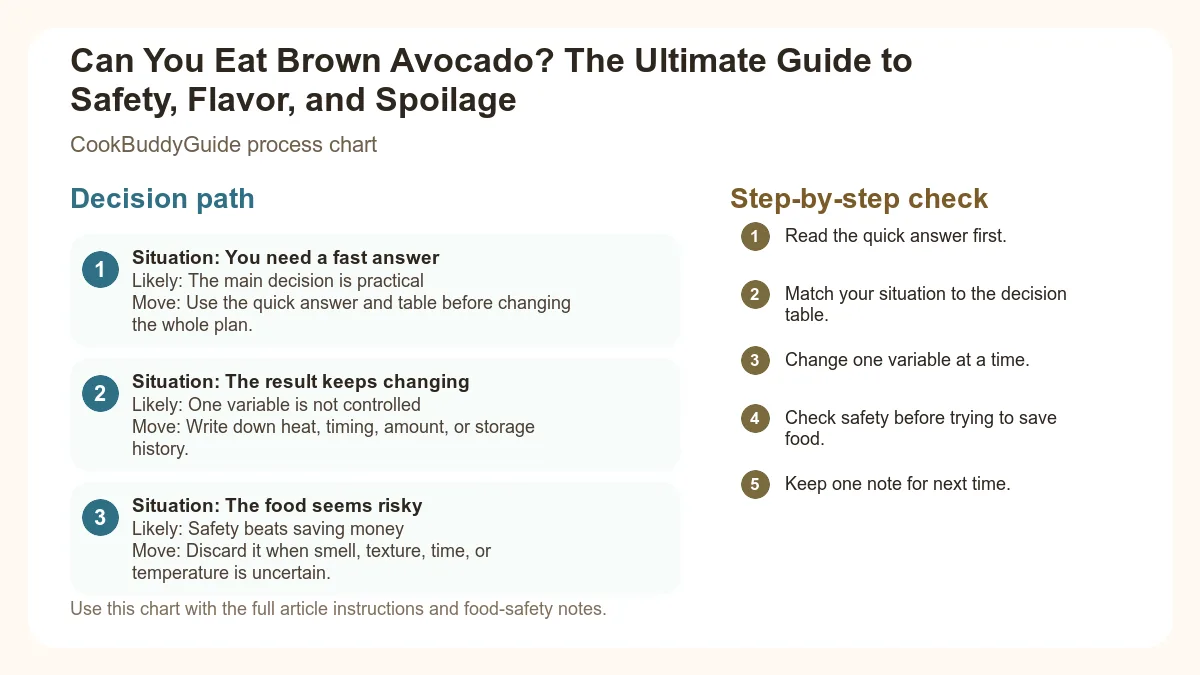
Brown avocado is usually safe when the discoloration is limited to the cut surface and the flesh still smells fresh and feels firm or creamy. Discard it if you see mold, smell a sour or rancid odor, or find widespread slimy, watery flesh.
Practical note
A thin brown surface layer is often oxidation, much like a cut apple. Scrape away that layer and inspect the flesh underneath; color alone matters less than odor, texture, mold, and how long the avocado has been cut.
Decision table
| Situation | Likely cause or meaning | Best move |
|---|---|---|
| Only the exposed surface is brown | Normal oxidation | Scrape the surface and use the green flesh underneath. |
| Flesh is very soft with dark bruises | Overripe or bruised, but not automatically unsafe | Trim damaged areas and use promptly if smell is normal. |
| Mold, rancid odor, or slime is present | Spoilage | Discard the entire avocado. |
Step-by-step fix
- Look for mold around the stem, skin, and cut surface.
- Smell the flesh for sour, fermented, or rancid odors.
- Check whether the brown area is only on the exposed surface.
- Scrape or trim a thin oxidized layer if everything else is normal.
- Use the remaining avocado promptly and keep leftovers airtight.
Common mistakes
- Throwing out an avocado for surface browning alone.
- Assuming every dark bruise means dangerous spoilage.
- Tasting avocado that already smells rancid or shows mold.
- Storing a cut half with air trapped against the flesh.
Related topic hubs
You’ve been waiting three days for that rock-hard Hass avocado to reach peak ripeness. You’ve performed the gentle squeeze test every morning like a ritual. Finally, the texture feels just right. You slice it open, expecting a vibrant, creamy green interior, only to find a muddy, bruised-looking mess staring back at you. It’s a moment of pure kitchen heartbreak that every home cook knows all too well. The immediate question that follows is always: can you eat brown avocado, or is it destined for the compost bin?
Table of Contents
- The Avocado Dilemma: To Eat or Not to Eat?
- The Science of Browning: What is Enzymatic Oxidation?
- Can You Eat Brown Avocado? The Definitive Answer
- How to Tell if an Avocado is Bad: 5 Warning Signs
- Pro Kitchen Hacks: How to Prevent Avocado Browning
- What to Do with Slightly Brown Avocados
- Avocado Storage Masterclass: From Counter to Fridge
- Conclusion: Reducing Food Waste One Avocado at a Time
The Avocado Dilemma: To Eat or Not to Eat?
The "Perfect Window" Struggle
Avocados are notoriously finicky. They seem to stay hard for a week and then ripen in a span of about fifteen minutes while you’re in the other room. This "perfect window" is what we all strive for, especially when planning breakfast meal prep ideas like avocado toast. When you miss that window, you’re often left with dark spots on avocado flesh that look unappealing. But "unappealing" doesn't always mean "unsafe."
Why We Fear the Brown Spot
The Science of Browning: What is Enzymatic Oxidation?
Meet Polyphenol Oxidase
The browning you see in an avocado is a chemical reaction known as enzymatic browning. Avocados contain an enzyme called polyphenol oxidase. When the fruit is whole and the skin is intact, this enzyme is tucked away inside the plant's cells. However, the moment you slice into the fruit or drop it (causing a bruise), those cells rupture. This exposes the phenolic compounds to oxygen in the air.
The Role of Oxygen in Cellular Breakdown
Once oxygen hits the enzyme, it triggers a reaction that produces melanins—the same type of pigment that gives humans our skin, hair, and eye color. In the plant world, this is actually a defense mechanism. The brown layer acts as a sort of "scab" to protect the rest of the fruit from further fungal or bacterial attack. It’s the exact same process you see when you bite into an apple or peel a potato and leave it on the counter. According to experts, enzymatic browning in avocados is a natural occurrence and does not inherently make the food toxic.
Why Some Avocados Brown Faster Than Others
Can You Eat Brown Avocado? The Definitive Answer
Is Brown Avocado Safe to Eat?
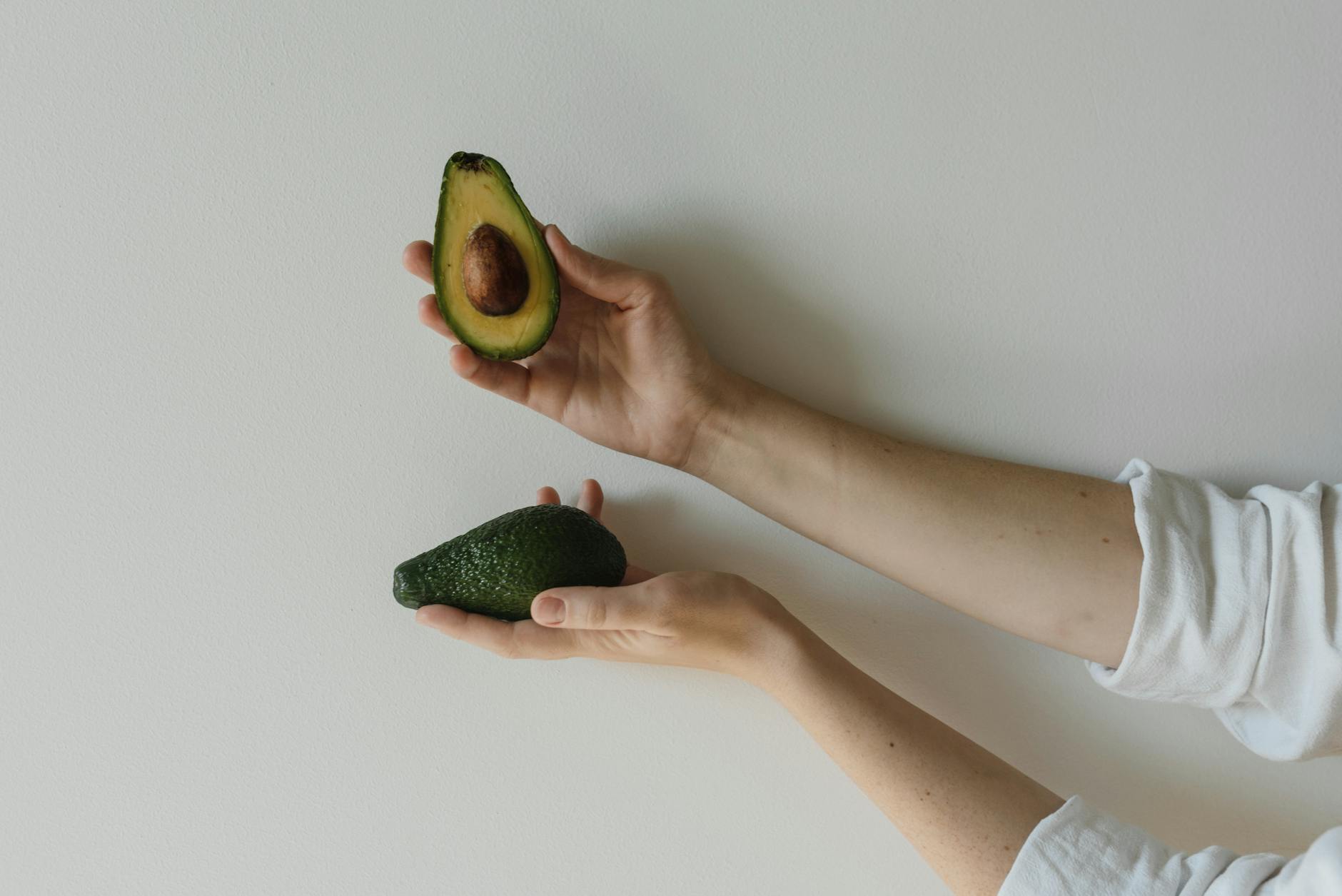
The short answer is yes. If the browning is caused by oxidation (exposure to air) or minor bruising, is brown avocado safe to eat? Absolutely. You are not going to get sick from eating an avocado that has turned slightly brown on the surface. It is a cosmetic issue rather than a safety issue. Most home kitchens will simply scrape away the oxidized layer before serving a dish to a customer.
When Browning is Just a Cosmetic Issue
You can tell the difference between "safe brown" and "bad brown" by the location. If you left half an avocado in the fridge and the surface is brown, that’s oxidation. If you slice open a fresh avocado and there are small dark spots on avocado flesh specifically where the fruit might have been bumped during shipping, that’s a bruise. Both are safe. You can confirm this by checking the safe to eat brown avocados guidelines which emphasize that while the appearance changes, the nutritional value remains largely the same.
The Flavor Profile of Oxidized Avocado
How to Tell if an Avocado is Bad: 5 Warning Signs
1. The Squeeze Test: Mushy vs. Soft
A ripe avocado should yield to gentle pressure, feeling similar to the palm of your hand. If your finger leaves a permanent indentation or the skin feels like it’s "floating" over a liquid interior, it is an overripe avocado that has likely begun to ferment. A mushy texture that feels watery is a major red flag.
2. The Sniff Test: Detecting Rancidity
This is the most reliable method. Fresh avocado has a mild, nutty, slightly sweet scent. A spoiled avocado will develop a rancid smell. Because avocados are high in fat, those fats can oxidize into a chemical-like odor, sometimes smelling like vinegar, old gym socks, or even latex paint. If it smells "off," trust your nose and toss it.
3. Visual Cues: Mold, Dark Streaks, and Slime
Look closely at the flesh. While brown is okay, black or dark gray streaks throughout the entire fruit usually indicate vascular browning or rot. More importantly, check for mold. Mold on an avocado often looks like white or gray fuzz. If you see mold on the skin or the pit, do not just cut it off. The porous nature of the avocado means mold spores can travel deep into the fruit where you can't see them. For more on this, check out this guide on how to tell if an avocado is bad.
4. The Stem Peek Trick (And Why It's Not reliable)
5. Internal Stringiness
Sometimes you’ll find an avocado that is perfectly green but full of tough, brown fibers. This usually happens with fruit harvested from young trees or fruit that was stored at improper temperatures during transport. While it’s safe to eat, it’s a culinary nightmare. Usually, save these for smoothies where the fibers can be pulverized by a high-speed blender.
Pro Kitchen Hacks: How to Prevent Avocado Browning
The Acid Barrier: Lemon vs. Lime Juice
This is the gold standard. Ascorbic acid (Vitamin C) and citric acid found in citrus juices act as antioxidants. They literally stop the oxidation process by reacting with the oxygen before it can reach the enzymes in the fruit. In my side-by-side tests, lemon juice actually performs slightly better than lime juice for long-term storage, though lime is the traditional choice for flavor in Mexican cuisine.
The Physical Barrier: Plastic Wrap and Air Pockets
Oxygen is the enemy. When storing half an avocado, the goal is zero air contact. Consider using high-quality plastic wrap and pressing it directly onto the surface of the flesh. You want to eliminate every single air bubble. If you use an airtight container, the air trapped inside the box will still brown the fruit. The "flush contact" method is much more effective.
The Onion Method: Sulfur to the Rescue
If you store a sliced avocado in a container with a piece of chopped red onion, the sulfur gases released by the onion will slow down the browning. It works surprisingly well! The only downside? Your avocado will taste slightly like onion. This is fine for savory dishes but terrible if you plan on using that avocado for a morning smoothie.
The Water Submersion Myth: Why the FDA Warns Against It
You may have seen the viral "hack" of storing whole or halved avocados in a jar of water in the fridge. Stop doing this immediately. The FDA has issued warnings because this environment is a breeding ground for human pathogens like Listeria monocytogenes and Salmonella. These bacteria can reside on the skin of the avocado and, when submerged, can migrate into the flesh. It is not worth the risk. Stick to the keep avocados from browning methods that are scientifically safe.
What to Do with Slightly Brown Avocados
If your avocado has crossed the line into being a little too "ugly" for toast, don't throw it away! There are plenty of uses for overripe avocados that hide the color and utilize the creamy texture.
1. Chocolate Avocado Mousse
This is the ultimate way to use a brown avocado. The dark cocoa powder completely masks any discoloration, and the slight bitterness of oxidation actually complements the dark chocolate.
- 2 overripe avocados (brown spots are fine!)
- 1/2 cup high-quality cocoa powder
- 1/2 cup maple syrup or honey
- 1 tsp vanilla extract
- A pinch of sea salt
Instructions: Blend all ingredients in a food processor until silky smooth. Chill for 30 minutes before serving. You won't taste the avocado at all!
2. High-Protein Green Smoothie
Avocados provide a creamy, dairy-free base for smoothies. When blended with spinach or kale, the green from the veggies overwhelms any brown from the avocado.
- 1/2 brown avocado
- 1 frozen banana
- 1 cup spinach
- 1 scoop vanilla protein powder
- 1.5 cups almond milk
Instructions: Toss everything into a blender. The healthy fats in the avocado make the smoothie incredibly filling and satisfying.
3. Avocado "Butter" for Baking
Did you know you can swap butter for avocado in a 1:1 ratio by weight in many baking recipes? This works best in brownies or chocolate cakes where the color doesn't matter.
Instructions: Puree your brown avocado until it is completely smooth with no lumps. Use it in place of butter in your favorite brownie recipe. It adds moisture and heart-healthy fats without the saturated fat of dairy butter.
Avocado Storage Masterclass: From Counter to Fridge
Managing the ripening process is the best way to prevent browning before you're even ready to eat. It’s all about ethylene gas management.
How to Ripen a Rock-Hard Avocado Fast
If you have an avocado that feels like a baseball, put it in a brown paper bag with an apple or a banana. These fruits release high amounts of ethylene gas, which acts as a natural ripening hormone. Fold the top of the bag over and leave it on the counter. Usually, this cuts the ripening time in half.
When to Move Your Avocado to the Refrigerator
The Avocado Pit Myth
We’ve all heard it: "Leave the pit in the guacamole to keep it from turning brown." I hate to be the bearer of bad news, but this is a total myth. The only reason the area under the pit stays green is because the pit is physically blocking oxygen from touching that specific spot. It doesn't have any magical chemical properties. You’d get the same result by placing a clean stone or a golf ball in your dip. The best way to save guacamole is the plastic wrap method mentioned earlier.
Conclusion: Reducing Food Waste One Avocado at a Time
At the end of the day, the answer to can you eat brown avocado is a resounding yes, provided you aren't seeing signs of actual spoilage. We live in a world where we’ve been conditioned to expect "perfect" looking produce, but nature isn't always perfect. By understanding that browning is just a simple chemical reaction with oxygen, we can save hundreds of dollars a year in groceries and reduce our environmental footprint.
Next time you slice into an avocado and see a few dark spots on avocado flesh, don't panic. Perform the sniff test, check the texture, and if it passes those, just scrape off the brown or blend it into a delicious chocolate mousse. My final "CookBuddy" tip? Trust your senses over the calendar. Your nose and your sense of touch are your best tools in the kitchen. Happy cooking!
Frequently Asked Questions
A: If it has been sitting at room temperature for more than two hours, you should be cautious. While the browning itself is safe, avocados are low-acid fruits that can harbor bacteria if left in the "danger zone" temperatures for too long.
A: These are the vascular bundles of the fruit. They usually turn brown and woody when the avocado is picked too early or grown in poor soil conditions. They are safe to eat but have an unpleasant, stringy texture.
A: Yes! If you have too many ripe avocados, mash them with a little lemon juice and store them in an airtight bag in the freezer. They won't be good for slicing later, but they are perfect for guacamole or smoothies.