Table of Contents
- The Quick Answer: How Long Does Cooked Rice Last?
- The Science of Rice Safety: Understanding Bacillus Cereus
- The Golden Rule of Cooling: How to Prep Rice for the Fridge
- Best Storage Practices: Containers and Placement
- Shelf Life by Rice Variety: White, Brown, and Beyond
- How to Tell if Cooked Rice is Bad: 5 Warning Signs
- How to Reheat Rice Safely (Without Drying It Out)
- Can You Freeze Cooked Rice? (The Pro Move)
- Kitchen Tips for Using Leftover Rice
- Common Mistakes Home Cooks Make
The Quick Answer: How Long Does Cooked Rice Last?
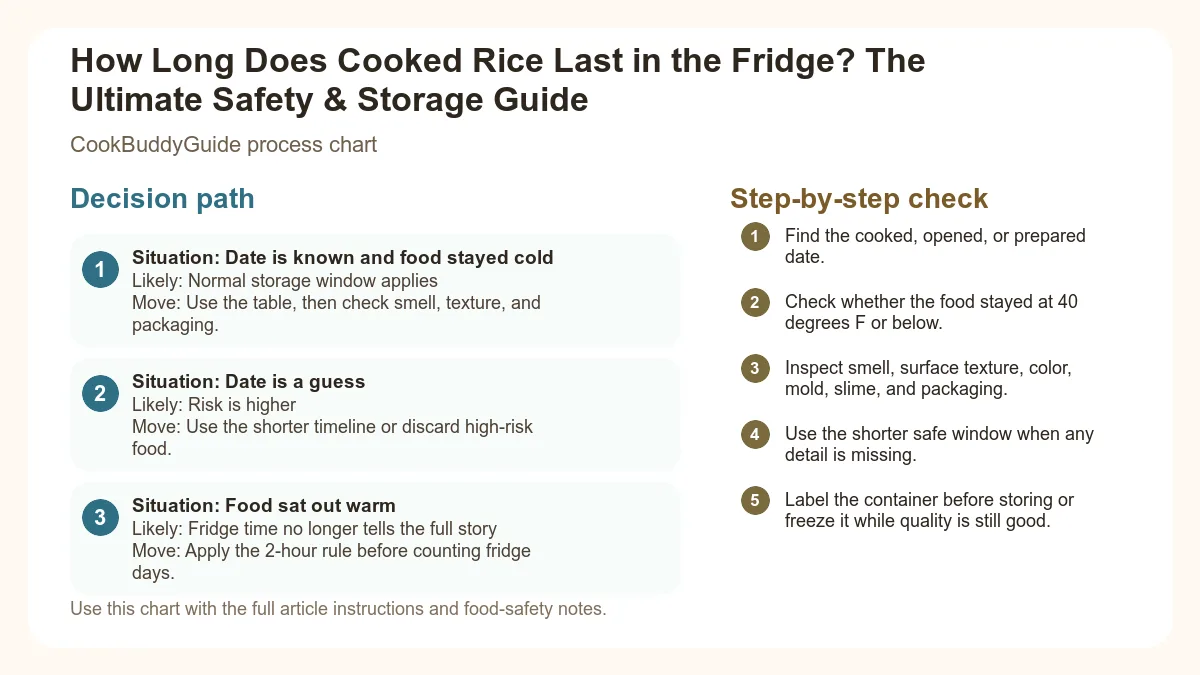
For a conservative food-safety window, refrigerate cooked rice within two hours and use it within 3 to 4 days. Keep the refrigerator at 40°F (4°C) or colder, and discard rice that sat out too long or has an uncertain storage history.
The 4 to 6 Day Rule
Why Rice is Different from Other Leftovers
The Science of Rice Safety: Understanding Bacillus Cereus
What is "Fried Rice Syndrome"?
How Heat-Resistant Spores Survive Cooking
This is the part that surprises most people: Bacillus cereus spores are naturally present in uncooked rice and can survive the boiling process. These spores are designed to survive harsh conditions, including the 212°F temperature of boiling water. If the rice is allowed to cool slowly or sit on the counter, the spores germinate into active bacteria. These bacteria then produce heat-stable toxins. This means that even if you reheat the rice until it's steaming, the toxins remain active and can still make you sick. This is why understanding risks of Bacillus cereus is vital for anyone who enjoys leftover rice.
The Golden Rule of Cooling: How to Prep Rice for the Fridge
Shallow-pan cooling method
A shallow pan increases surface area so steam can escape and the rice can cool more quickly before refrigeration.
- Spread it out: Immediately after cooking, transfer the rice from the pot or rice cooker onto a large, clean baking sheet.
- Increase Surface Area: Use a spatula to spread the rice into a thin layer (no more than 1 inch thick). This allows steam to escape rapidly.
- The Fluff: Every 5 minutes, give the rice a quick toss to let the heat from the bottom layer escape.
- Seal and Chill: Once the rice is no longer steaming and feels cool to the touch (usually 15-20 minutes), transfer it to an airtight container and place it in the fridge.
The Ice Bath Shortcut
Why You Should Never Put Hot Rice Directly in the Fridge
Best Storage Practices: Containers and Placement
Airtight vs. Vented Containers
When it comes to the shelf life of your rice, the container is your first line of defense. You must use airtight storage. Rice is highly porous and will absorb the odors of that half-cut onion or the leftover blue cheese in your fridge. More importantly, an airtight seal prevents moisture retention issues. If rice dries out too much, it undergoes starch retrogradation, becoming hard and unpalatable.
Glass vs. Plastic: Which is Better for Rice?
Where to Store Rice in Your Refrigerator
Avoid storing your rice in the refrigerator door. The door is the warmest part of the fridge and subject to constant temperature fluctuations. Instead, store your rice on the middle or bottom shelf, toward the back. This is where the temperature is most consistent, ensuring your rice stays well below the 40°F threshold.
Shelf Life by Rice Variety: White, Brown, and Beyond
Not all rice is created equal. The fat and fiber content of different rice varieties significantly impacts how long they stay safe and tasty in the fridge. You can find a deep dive into these differences in this medically reviewed article on how long rice lasts.
- White Rice (Basmati, Jasmine, Long-Grain): This is the marathon runner of rice. Because the bran and germ have been removed, it has a very low oil content. It typically lasts 4-6 days.
- Brown Rice and Whole Grains: Brown rice still contains the bran and germ, which are rich in oils. These oils can go rancid over time. Expect brown rice to last about 4-5 days.
- Wild Rice: Technically a grass, wild rice is quite hardy and can usually last a full 6 days if stored properly.
- Seasoned Rice and Pilafs: If you've added onions, garlic, broth, or vegetables, the shelf life drops. The added moisture and organic matter from the vegetables can accelerate bacterial growth. Consider eating these within 3 days.
How to Tell if Cooked Rice is Bad: 5 Warning Signs
Even if you follow the 4-6 day rule, you should always perform a sensory check. Here is my checklist for identifying spoiled rice:
- The Smell Test: Fresh rice has a neutral, slightly sweet aroma. If you detect even a hint of a sour, fermented, or "funky" smell, toss it.
- Slimy Texture: This is a major red flag. If the rice feels slippery or slimy when you touch it, it is teeming with bacteria. Do not taste it; discard it immediately.
- Visible Mold: Mold on rice can be white, green, or even fuzzy black spots. Because rice is porous, if you see mold in one spot, the spores are likely throughout the entire container.
- Discoloration: If your white rice is starting to look yellow or grey, it’s past its prime.
- Excessive Hardness: While rice naturally hardens in the fridge (retrogradation), if it becomes exceptionally crunchy or develops a "leathery" skin despite being sealed, it's a sign of poor storage and potential spoilage.
How to Reheat Rice Safely (Without Drying It Out)
Reheating is where most people fail—either they don't get it hot enough to be safe, or they turn it into a dry, rubbery mess. To ensure safety, the rice must reach an internal temperature of 165°F (74°C). This is the temperature required to kill most active bacteria that may have developed during storage. Refer to this safe internal reheating temperature guide for more details.
The "Ice Cube" Microwave Trick
- Place your rice in a microwave-safe bowl.
- Place a single ice cube on top of the rice (do not bury it).
- Cover the bowl with a microwave-safe lid or a damp paper towel.
- Microwave on high for 1.5 to 2 minutes.
- The ice cube won't melt completely, but it will create a steam chamber. Remove the remaining ice cube, fluff the rice, and serve.
Stovetop Steaming for Maximum Fluffiness
If you have a larger batch, the stovetop is better. Add the rice to a saucepan with 1-2 tablespoons of water or broth per cup of rice. Cover tightly and heat over low-medium heat, stirring occasionally, until the rice is steaming hot throughout. This is the best way to maintain the integrity of delicate grains like Basmati.
For a conservative routine, portion the cold rice first and reheat only what you plan to eat. The rice reheating safety guide explains the different U.S. and UK recommendations and how to decide when a stored portion should be discarded.
Can You Freeze Cooked Rice? (The Pro Move)
The Freezer Bag Flat-Pack Method
This method saves space and allows for the fastest thawing possible.
- Allow the rice to cool completely using the shallow pan method.
- Scoop 1-2 cup portions into high-quality freezer bags.
- Squeeze out as much air as possible and seal the bag.
- Flatten the bag so the rice is in a thin, even sheet.
- Stack the flat bags in the freezer.
Kitchen Tips for Using Leftover Rice
Why Cold Rice is Essential for Fried Rice
Have you ever wondered why restaurant fried rice is so distinct and separate, while your home version is a mushy clump? It’s all about starch retrogradation. When rice sits in the fridge, the starch molecules realign and harden. This is exactly what you want for stir-frying. The grains become resilient enough to withstand the high heat and constant tossing of a wok without breaking apart. If you're looking for inspiration, check out our easy Instant Pot rice recipes to start your next batch.
Using Leftovers for Congee or Rice Pudding
If your rice has gotten a little too dry (but is still safe!), it’s the perfect candidate for congee (savory rice porridge) or rice pudding. The long simmering time in liquid will fully rehydrate the grains, making the previous dryness irrelevant. This is a great way to ensure zero waste in your kitchen. For more ways to integrate leftovers into your morning routine, see our successful weekly meal prep guide.
Common Mistakes Home Cooks Make
Leaving Rice in the Rice Cooker on "Warm"
The "Sniff Test" Fallacy
The toxins produced by Bacillus cereus are often odorless and tasteless. You cannot always smell spoilage in rice the way you can with milk or meat. This is why timing is a much better safety metric than your nose. If it’s been 7 days, it doesn't matter if it smells like a fresh spring meadow—toss it out. Your health is worth more than a 50-cent portion of rice.
Frequently Asked Questions
A: Yes, as long as it was cooled and stored properly within the safe timeframes. Many people enjoy cold rice in salads. However, if you have a compromised immune system, reheating to 165°F is always the safer bet.
A: Not significantly, but using broth or coconut milk will shorten the shelf life to about 3 days due to the extra fats and proteins that can spoil.
A: It's likely just "stale" due to starch retrogradation. As long as it's within the 4-6 day window and shows no other signs of spoilage (slime, mold, smell), it's safe to eat once reheated with a little moisture.
The Bottom Line
Understanding how long does cooked rice last in fridge is a fundamental skill for any home cook. By respecting the 4-6 day rule, mastering the rapid cooling process, and reheating to a safe 165°F, you can enjoy the convenience of leftover rice without the anxiety of food poisoning. Remember: when in doubt, throw it out. But with the tips we've covered today, you should have all the tools you need to keep your kitchen running safely and efficiently. Happy cooking!