Quick Answer
Yes, you can freeze cooked pasta. For the best texture, cook it just shy of tender, cool it promptly, portion it airtight, and freeze it with a little sauce or moisture; reheat directly in simmering sauce or hot water so it does not dry out.
Practical note
Thin noodles soften faster than sturdy shapes. Penne, rigatoni, shells, and baked pasta usually handle freezing better than delicate angel hair, so freeze delicate pasta slightly firmer and reheat it briefly.
Decision table
| Situation | Likely cause or meaning | Best move |
|---|---|---|
| Plain pasta | Can dry out or stick together | Toss lightly, portion flat, and reheat in hot water or sauce. |
| Tomato-sauced pasta | Sauce protects the noodles from drying | Freeze as a complete meal in an airtight container. |
| Cream-sauced pasta | Sauce may split after thawing | Reheat gently and stir in a splash of milk or stock. |
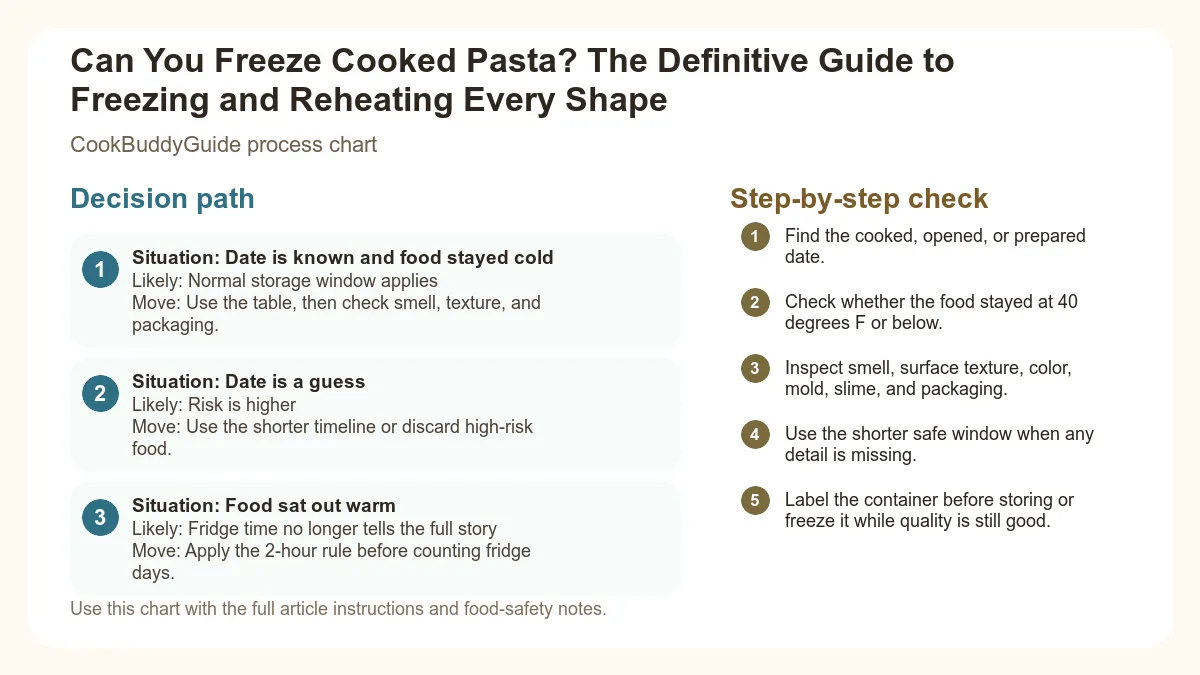
Step-by-step fix
- Cook the pasta just shy of your preferred tenderness.
- Drain it and cool it promptly without leaving it out for hours.
- Divide into meal-size portions with sauce when possible.
- Remove excess air, seal, label, and freeze flat.
- Reheat from frozen or thaw overnight in the refrigerator.
Common mistakes
- Freezing pasta that was already cooked very soft.
- Packing one large block instead of meal-size portions.
- Leaving plain noodles exposed to freezer air.
- Reheating cream sauce over aggressive high heat.
Related topic hubs
But the question remains: can you freeze cooked pasta without it turning into a mushy, unappetizing pile of starch?
The Quick Answer: Yes, You Can!
Table of Contents
- The Science of Freezing Pasta: Why Texture Matters
- The Golden Rule: How to Cook Pasta for the Freezer
- How to Freeze Plain Cooked Pasta: Step-by-Step
- Freezing Pasta with Sauce vs. Plain
- Which Pasta Shapes Freeze Best? (A Definitive Ranking)
- Storage Solutions: Containers, Bags, and Portioning
- Shelf Life and Food Safety
- The Reheating Masterclass: From Freezer to Table
- Common Mistakes to Avoid
The Science of Freezing Pasta: Why Texture Matters
To master freezing cooked pasta, we have to look at what happens at a molecular level. When pasta is cooked, the starch granules absorb water and swell—a process called gelatinization. When you cool that pasta down, those starch molecules begin to re-align themselves into a more crystalline structure. This is known as starch retrogradation.
In the freezer, the moisture inside the pasta turns into ice crystals. If there is too much moisture, or if the pasta was overcooked to begin with, these ice crystals expand and rupture the delicate gluten network of the noodle. This is why poorly frozen pasta often turns into "mush" upon reheating. By aiming for a firm Al dente texture before freezing, you provide a structural "safety net" that allows the pasta to withstand the freezing and thawing cycle.
The Golden Rule: How to Cook Pasta Specifically for the Freezer
The "Minus Two" Cooking Method
Goal: To ensure pasta remains firm after reheating.
- Step 1: Bring a large pot of boiling water to a rolling boil. Salt it heavily—it should taste like the sea.
- Step 2: Check the package instructions for "Al Dente" timing.
- Step 3: Set your timer for 2 minutes less than the Al Dente recommendation. (If the box says 10 minutes for al dente, pull it at 8).
- Step 4: Taste a noodle. It should have a definite "bite" or even a slightly chalky center. This is perfect because it will finish cooking during the reheating process.
According to expert tips for freezing cooked pasta, cooking slightly under al dente is the single most important factor in success.
To Rinse or Not to Rinse?
Once rinsed and drained well, toss the pasta with a tablespoon of olive oil. This creates a moisture barrier and ensures that when you go to grab a handful of frozen noodles, they actually separate.
How to Freeze Plain Cooked Pasta: Step-by-Step
- Cool Completely: Never put warm pasta in the freezer. Spread your rinsed, oiled pasta out on a large baking sheet in a single layer. Let it air dry and cool to room temperature for about 15-20 minutes.
- The Flash Freeze: Place the entire baking sheet in the freezer for 1 to 2 hours. This freezes each individual noodle separately. This is the secret to being able to pour out exactly one portion later.
- Bagging: Transfer the "pasta pebbles" into high-quality Ziploc bags or airtight containers.
- Remove the Air: If using bags, use a straw to suck out the excess air before sealing. Removing air is the best defense against freezer burn.
- Label: Always write the date and the type of pasta. Trust me, after three months, all white noodles look the same!
If you're looking for more ways to prep ahead, check out our guide on Crockpot Freezer Meals for more "dump and go" inspiration.
Freezing Pasta with Sauce vs. Plain
Can you freeze pasta that is already tossed in pasta sauce? Yes, and in some cases, it’s actually better. The sauce acts as a protective coating, insulating the noodles from the harsh dry air of the freezer.
The Best Sauces for Freezing
- Tomato-Based: Marinara, Bolognese, and Arrabbiata freeze beautifully. The acidity helps preserve the texture.
- Pesto: Pesto freezes well, though the basil may darken slightly. Consider adding a tiny bit of extra olive oil to the top before sealing.
- Meat Sauces: These are the champions of the freezer. The fat in the meat helps keep the pasta lubricated.
Sauces to Avoid
For those who love saucy dishes, you might enjoy our One-Pot Pasta Recipes, many of which can be adapted for the "Casserole Method" of freezing. Simply assemble the dish, undercook the noodles, and freeze the entire tray. As noted by the Food Network's guide on freezing meals, fully assembled dishes often retain better moisture than components frozen separately.
Which Pasta Shapes Freeze Best? (A Definitive Ranking)
The Winners: Short and Sturdy
Penne, Fusilli, and Rigatoni are the kings of the freezer. Their thick walls and ridges make them incredibly resilient. They don’t collapse under the weight of other frozen items, and they hold onto sauce perfectly during the reheating process. According to research on the best pasta shapes for freezing, these sturdy options are the most reliable for meal preppers.
The Losers: Long and Thin
Angel hair and thin spaghetti are difficult. They tend to clump into a "nest" that is hard to reheat evenly. If you do freeze spaghetti, consider the "Bird's Nest" method: twirl individual portions into nests on your baking sheet before flash freezing.
Specialty Pastas
- Ravioli and Tortellini: These actually freeze better when raw (freshly made but not boiled). If already cooked, freeze them in a single layer with space between each piece to prevent tearing.
- Lasagna: The absolute gold standard for frozen pasta. The layers of cheese and sauce protect the noodles perfectly.
Storage Solutions: Containers, Bags, and Portioning
When it comes to meal prepping, how you store the pasta is just as important as how you cook it.
Portioning: Choose freezing in single-serve portions (about 2 cups of cooked noodles). This is perfect for quick lunches. For family dinners, Use the "Flat-Lay" method with gallon-sized Ziploc bags. By laying the bag flat while it freezes, you maximize your freezer's real estate and the pasta thaws much faster.
Container Types:
- Glass: Great for microwave-safe reheating, but leave 1/2 inch of "headspace" because pasta contains water and will expand.
- Silicone Bags: An eco-friendly alternative that works just as well as plastic, provided you squeeze out the air.
- Vacuum Sealing: If you plan on keeping pasta for more than 3 months, vacuum sealing is worth the effort. It completely eliminates the risk of freezer burn.
Shelf Life and Food Safety
How long is too long? According to the USDA's safe handling of leftovers guidelines, cooked grains and pastas can be frozen for 3 to 4 months for peak quality. While the pasta will technically be safe to eat indefinitely if kept at 0°F, the texture and flavor will begin to degrade after the 90-day mark.
Signs of Spoilage:
- Freezer Burn: Look for white, dried-out patches. While not unsafe, these spots will be chewy and flavorless.
- The "Freezer Funk": If the pasta has absorbed the smells of the freezer (like that old bag of onions in the back), it’s time to toss it.
- Sliminess: If, upon thawing, the pasta feels slimy or has an off-smell, do not consume it.
The Reheating Masterclass: From Freezer to Table
This is where most people fail. They take a beautiful bag of frozen pasta and turn it into mush by over-microwaving it. Here are my four practical methods for success.
1. The Boiling Water Dip (Best for Plain Pasta)
2. The Microwave Method (Best for Lunches)
Place the pasta in a microwave-safe bowl. The Ice Cube Trick: Place a single ice cube on top of the pasta before covering the bowl with a damp paper towel. The ice cube won't melt completely, but it creates a steam chamber that restores moisture to the noodles without making them soggy. Microwave in 1-minute increments.
3. The Oven Bake (Best for Sauced Pasta)
If you have a frozen block of pasta and sauce, place it in an oven-safe dish, cover tightly with foil, and bake at 350°F. The foil is crucial—it traps the steam. In the last 5 minutes, remove the foil and add a fresh sprinkle of cheese to revive the dish.
4. The Skillet Sauté
For shapes like penne or farfalle, you can throw them directly into a skillet with a little simmering pasta sauce or a splash of water and olive oil. Cover the pan and let the steam do the work for 3-5 minutes.
Common Mistakes to Avoid When Freezing Pasta
2. Forgetting the Oil: If you don't toss plain pasta with olive oil, the starches will bond together as they freeze. You’ll end up with a "pasta brick" that is impossible to portion out without breaking the noodles.
3. Overcrowding the Bag: If you pack the bag too tightly, the noodles in the center take too long to freeze, which can affect food safety and texture. Aim for a flat, thin layer.
Frequently Asked Questions
A: Yes, but be extra careful. Gluten-free pasta is more fragile. Consider undercooking it by 3 minutes and always using the flash-freeze method on a baking sheet.
A: No! In fact, for plain pasta, it’s better to go straight from the freezer to boiling water to maintain the best "bite."
Final Thoughts: Your Future Self Will Thank You
Next time you’re boiling a pot of rigatoni, throw in an extra handful or two. Your future, busy self will be incredibly grateful when you pull that perfectly preserved bag of pasta out of the freezer. Happy cooking!