Quick Answer
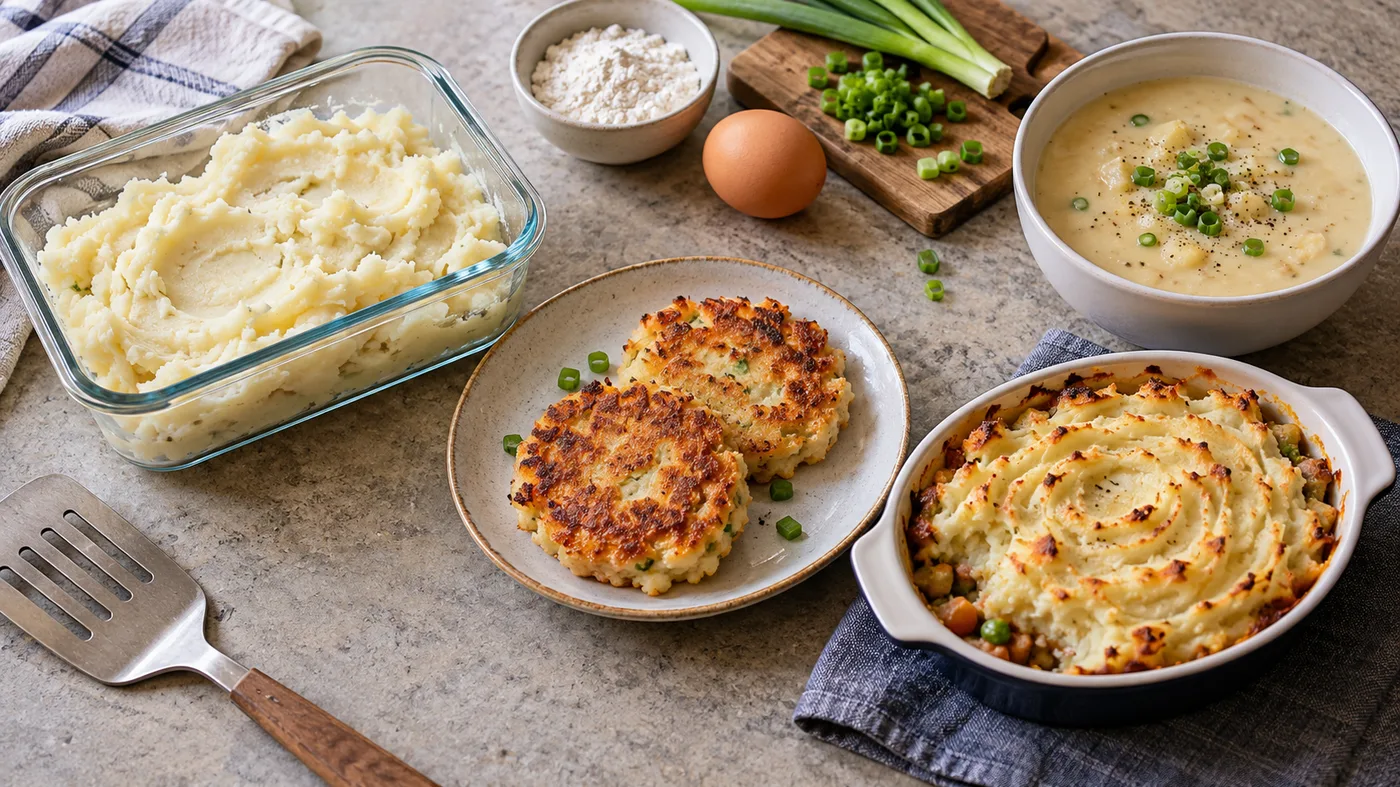
Turn firm leftover mashed potatoes into potato cakes, croquettes, waffles, or a pie topping. Use softer mash in soup, casseroles, or a meal bowl. Before cooking, confirm the potatoes were refrigerated within 2 hours and are no more than 3 to 4 days old. Reheat leftovers to 165°F.
CookBuddy kitchen note
Mashed potatoes do not have one standard consistency. A batch made with plenty of milk behaves differently from a firm, lightly dressed mash. Choose the cooking method by texture first, then adjust the binder or liquid in small amounts.
Match the idea to the texture
| Your leftover mash | Best uses | Adjustment |
|---|---|---|
| Firm and fairly dry | Potato cakes, croquettes, waffles, gnocchi | Add binder only until the mixture holds together. |
| Soft and creamy | Cottage pie, casserole topping, soup, dinner bowl | Use it as a topping or stir it into a liquid dish. |
| Loose or watery | Soup, chowder, egg bake | Skip free-form patties unless you add enough binder. |
| Chunky or skin-on | Bubble and squeak, breakfast hash, rustic cakes | Keep the texture instead of forcing it smooth. |
| Strongly flavored | Savory pie, croquettes, meal bowl | Match the filling and toppings to the existing seasoning. |
Choose a use by amount and seasoning
Texture decides whether the potatoes can hold a shape. Amount and seasoning narrow the choice further. A small scoop can disappear into soup, while a deep container is easier to use as a pie topping or divide between one meal and the freezer.
| What you have | Practical choice | Why it fits |
|---|---|---|
| Less than 1 cup | Soup thickener, egg bake, or hot bowl | A small amount can add body without setting the structure of the whole dish. |
| About 1 cup | Potato rolls or a small batch of croquettes | King Arthur Baking's potato roll formula uses 1 cup of mash, so this use has a published starting point. |
| About 2 cups | Potato cakes, waffles, or soup | This is enough for several portions without committing to a large casserole. |
| 3 cups or more | Cottage pie, casserole topping, or split and freeze | A broad topping uses a large batch evenly. Freezing part of it avoids forcing every portion into the same meal. |
Garlic, chives, cheese, bacon, or sour cream already point toward savory uses. Put that mash into cakes, croquettes, soup, a casserole, or a dinner bowl. Avoid using heavily seasoned potatoes in neutral rolls or gnocchi unless the recipe is designed for those flavors. Taste before adding more salt, cheese, gravy, or cured meat.
For a large holiday batch, pick one main use and freeze the rest while it is still within the safe storage window. The Food Network collection shows how mashed potatoes work in pancakes, soup, croquettes, dumplings, and meat pies. King Arthur Baking gives the published 1-cup measure in its potato roll method.
Quick navigation
Check the storage history before choosing a recipe
Use leftover mashed potatoes only if they were refrigerated within 2 hours of cooking, or within 1 hour when the room was above 90°F. The USDA says refrigerated leftovers should be used within 3 to 4 days and reheated to 165°F. A recipe cannot make poorly stored food safe.
Put a large batch into shallow containers so it cools faster. Hot food can go directly into the refrigerator; waiting for a deep bowl to reach room temperature can keep it warm for too long. The USDA leftovers guidance covers the timing, storage, freezing, and reheating rules.
If the date or temperature history is unclear, discard the potatoes. Smell and appearance can identify obvious spoilage, but they cannot prove food is safe. The focused guide to mashed potato refrigerator life has a day-by-day decision table.
Safety check: Keep the refrigerator at 40°F or below. Reheat the finished dish to 165°F, checking in more than one spot when the food is thick. University of Minnesota Extension also recommends shallow containers and a 165°F reheating temperature.
Use firm mashed potatoes for crisp skillet dishes
Firm, cold mash is easiest to shape. It can hold a crust while the inside warms, so potato cakes, bubble and squeak, and savory waffles are better choices than trying to restore the potatoes to their original fluffy texture.
1. Pan-fried potato cakes
For 2 cups of cold mashed potatoes, start with 1 beaten egg and 3 tablespoons of all-purpose flour. Add chopped scallions or grated cheese if they suit the original seasoning. If the mixture still slumps, add flour 1 tablespoon at a time. Shape 1/2-inch-thick cakes and cook them in a thin layer of oil over medium heat until each side is browned.
This is a starting formula, not a fixed ratio. Food Network notes that leftover mash varies with the amount of milk, cream, and butter in the original batch. Its cheesy potato pancake recipe gives separate adjustments for mixtures that are too wet or too dry.
2. Bubble and squeak
Fold chopped cooked cabbage, Brussels sprouts, or other fairly dry vegetables into the potatoes. Press the mixture into a lightly oiled skillet as one large cake or several small patties. Let the first side brown before turning. This method is especially useful for chunky, skin-on mash because a rustic texture belongs in the dish.
3. Savory potato waffles
A waffle iron gives soft mashed potatoes more crisp surface area. Use a recipe written for potato waffles because the egg, flour, and leavener amounts depend on the mash. Grease both plates, spread a modest layer, and wait until the waffle releases without force. Do not pack the iron as full as a standard batter.
Use creamy mash as a topping in the oven
Soft mashed potatoes work well as a ready-made topping. The oven sets the surface while the filling provides the structure, which makes cottage pie, vegetable pie, and small casseroles forgiving choices for mash that is too loose to shape.
4. Cottage or shepherd's pie topping
Spread the potatoes over a fully cooked, hot filling of ground meat or lentils and vegetables. Rough the surface with a fork so the ridges brown. If the mash is very stiff, fold in a spoonful of warm milk before spreading. If it is loose, spoon it on gently instead of stirring more liquid into it.
5. Turkey or chicken leftover casserole
Layer chopped cooked poultry, vegetables, and gravy in a baking dish, then cover with mashed potatoes. This works well when several holiday leftovers need using at once. The site's Thanksgiving leftover ideas can help match the other components without forcing every leftover into one dish.
6. Crisp croquettes
Use firm mash for croquettes. Fold in a small amount of cheese, cooked vegetables, or chopped meat, then shape the mixture into short cylinders or balls. Coat with flour, beaten egg, and breadcrumbs before baking or shallow-frying. Loose mash needs enough binder to hold a clean shape before breading.
Use loose mashed potatoes in soups, bowls, and bakes
Loose or watery mash is not ruined. It already has the moisture that causes trouble in patties, so move it into a dish where that moisture helps. Soup, an egg bake, or a hot dinner bowl will use it without adding large amounts of flour.
7. Creamy potato soup or chowder
Whisk the mash into hot broth a little at a time until the soup reaches the thickness you want. Add cooked vegetables, corn, or chopped ham after the base is smooth. Keep the heat moderate once dairy-rich potatoes are added so the soup heats evenly rather than catching on the bottom.
8. Vegetable and egg bake
Stir a modest amount of loose mash into beaten eggs, cooked vegetables, and cheese, then bake the mixture in a shallow dish. The potatoes add body without needing to form a separate crust. Use vegetables that have already shed excess water, such as well-drained spinach or roasted broccoli.
9. A hot leftover bowl
Reheat the potatoes with a splash of milk, broth, or water, then use them as the base for cooked vegetables, beans, gravy, or shredded meat. For a balanced texture, add something crisp at the end. Roasted vegetables and chopped herbs keep the bowl from feeling uniformly soft.
If the mash is much thinner than expected, the watery mashed potato rescue guide explains which corrections are worth trying and when repurposing is the better move.
Use plain, firm mash in doughs and fillings
Plain or lightly seasoned mash can go into rolls, filled dough, or gnocchi. These methods need more precision than a soup or casserole because the potatoes already contain an unknown amount of liquid, salt, and fat. Start with a recipe designed for mashed potatoes.
10. Potato rolls or bread
King Arthur Baking's Amish Dinner Rolls use 1 cup, or 213 grams, of mashed potatoes with 4 1/4 cups, or 510 grams, of flour. The recipe advises smoothing lumpy leftovers and reducing added salt when the potatoes are already well seasoned.
Use a potato-specific bread recipe instead of adding a random scoop to standard dough. The water in the mash changes hydration, while butter, cream, garlic, or cheese can change both flavor and dough behavior.
11. Pierogi, samosa, or hand-pie filling
Cold mash makes a convenient filling because it is already cooked and easy to portion. Add sautéed onion, cheese, peas, or cooked greens, then taste before adding more salt. The filling should be cool before it touches pastry or dumpling dough so the dough stays easy to seal.
12. Gnocchi made from leftover mash
Choose this only for firm, fairly plain potatoes. Milk and butter make the required flour amount unpredictable, and too much flour produces a heavy dumpling. Use a recipe written for leftover mash, add flour gradually, and handle the dough only until it holds together. Very creamy potatoes are better in soup or a casserole.
What if you only want mashed potatoes again?
Reheat them gently with a small amount of liquid. On the stovetop, use low heat and fold in warm milk, broth, or water a spoonful at a time. In the microwave, cover the dish, heat in short intervals, stir between intervals, and check several spots for 165°F.
More vigorous mixing does not guarantee a smoother result. Add only enough liquid to loosen the potatoes, and stop once they are hot. The general leftover reheating guide covers microwave cold spots and moisture control.
Common mistakes
- Choosing a recipe before checking whether the mash is firm, creamy, chunky, or loose.
- Adding a full cup of flour at once and turning soft potato cakes into dense patties.
- Flipping cakes before the first side has formed a browned crust.
- Using strongly garlicky or cheesy mash in a sweet or neutral bread recipe.
- Keeping leftovers past 4 refrigerated days because they still smell normal.
Freeze the mash if you cannot use it in time
Freeze portions while the potatoes are still within the safe refrigerator window. Airtight, meal-size packages thaw faster and make it easier to take only what you need. The USDA says frozen leftovers remain safe indefinitely at 0°F, although quality declines with long storage.
Thaw in the refrigerator, use cold water with leak-proof packaging, or reheat from frozen. If using the microwave to thaw, continue heating to 165°F. See how to freeze mashed potatoes and the broader leftover freezing workflow for portioning and packaging details.
Leftover mashed potato FAQ
How long can leftover mashed potatoes stay in the fridge?
Use refrigerated mashed potatoes within 3 to 4 days if they were chilled within 2 hours and kept at 40°F or below. Discard them sooner if the storage history is uncertain or they sat at room temperature longer than the USDA limit.
Can you freeze leftover mashed potatoes?
Yes. Freeze mashed potatoes in meal-size portions while they are still within the safe refrigerator window. Thaw them in the refrigerator or reheat from frozen. If the texture turns grainy, use the potatoes in soup, cakes, or a casserole instead of serving them plain.
Why do leftover mashed potato cakes fall apart?
The mash may be too loose for the amount of binder, or the cakes may have been flipped before a crust formed. Start with cold potatoes, add flour a tablespoon at a time until the mixture holds, and cook the first side until it is well browned before turning.
What is the best use for watery leftover mashed potatoes?
Use loose mashed potatoes where extra moisture helps: stir them into soup, spread them over a casserole, or fold them into an egg bake. Potato cakes can still work, but they need more binder and are easier to overcorrect with too much flour.
What can you make with garlic or loaded mashed potatoes?
Keep strongly seasoned mash in savory dishes. Garlic, cheese, bacon, chives, or sour cream fit potato cakes, croquettes, soup, a casserole topping, or a hot leftover bowl. Taste the finished mixture before adding salt, cheese, or cured meat.
Sources
- USDA FSIS: Leftovers and Food Safety
- FoodSafety.gov: Cold Food Storage Chart
- University of Minnesota Extension: Safe Food Temperatures, Heating, and Cooling
- Food Network Kitchen: Irish Potato Cakes
- Food Network: Leftover Mashed Potato Recipe Ideas
- King Arthur Baking: Amish Dinner Rolls