Quick Answer
For a fine, crisp copycat-style slaw, chop the cabbage and carrot evenly, whisk the dressing separately, and chill the mixed slaw before serving. Add the dressing gradually so the vegetables are coated without becoming watery.
Practical note
For KFC Coleslaw Recipe, this guide centers on copycat kfc coleslaw, side dish, white vinegar. Those are the checkpoints we would use first in a normal home kitchen before making a bigger change.
Decision table
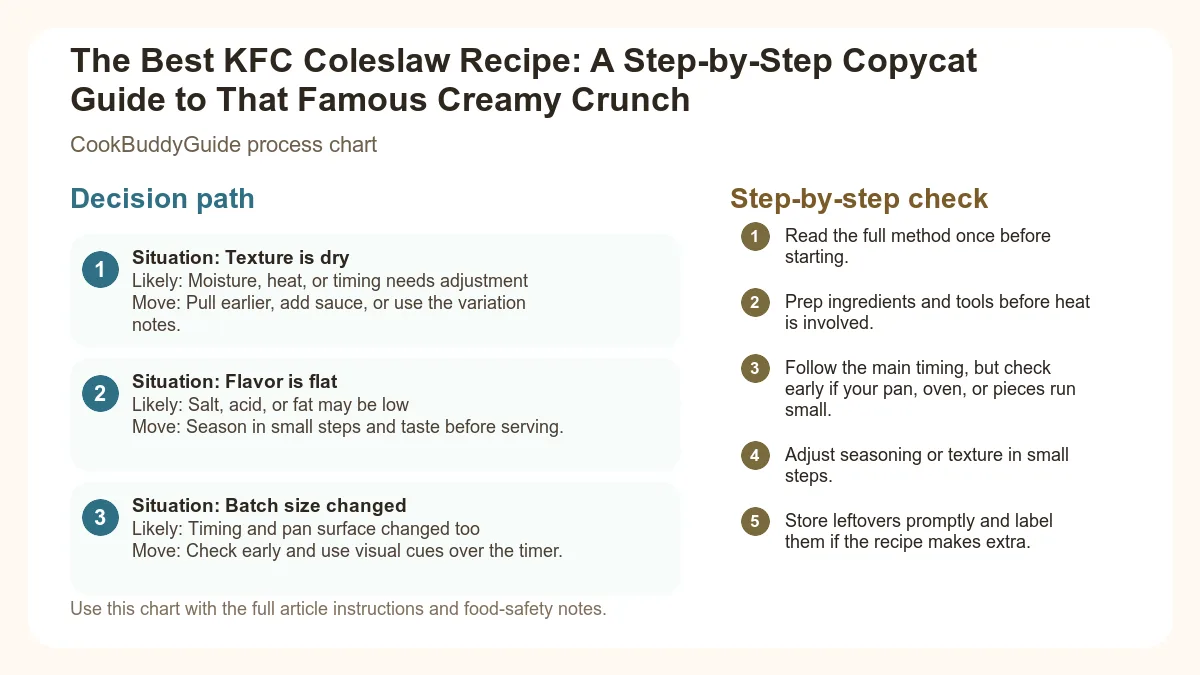
| Situation | Likely cause or meaning | Best move |
|---|---|---|
| Texture is dry | Moisture, heat, or timing needs adjustment | Pull earlier, add sauce, or use the variation notes. |
| Flavor is flat | Salt, acid, or fat may be low | Season in small steps and taste before serving. |
| Batch size changed | Timing and pan surface changed too | Check early and use visual cues over the timer. |
Step-by-step fix
- Read the full method once before starting.
- Prep ingredients and tools before heat is involved.
- Follow the main timing, but check early if your pan, oven, or pieces run small.
- Adjust seasoning or texture in small steps.
- Store leftovers promptly and label them if the recipe makes extra.
Common mistakes
- Changing the recipe before trying the base method once.
- Measuring casually when texture depends on ratios.
- Waiting until the end to fix seasoning.
- Ignoring carryover heat or resting time.
Related topic hubs
Table of Contents
- Why This is the Only Copycat KFC Coleslaw Recipe You’ll Ever Need
- The Anatomy of the Original KFC Coleslaw
- Essential Ingredients: The Secret Dressing Ratio
- The Texture Secret: Why Your Shred Matters
- The Pro Technique: How to Prevent Watery Coleslaw
- Step-by-Step Instructions for the Perfect Batch
- The Resting Rule: Why Patience is the Key Ingredient
- Troubleshooting Common Coleslaw Mistakes
- Best Pairings: What to Serve with Your Copycat Coleslaw
- Storage and Food Safety Tips
Why This is the Only Copycat KFC Coleslaw Recipe You’ll Ever Need
The Quest for the Authentic KFC Flavor
What Makes This Recipe Different from Standard Slaw
Standard coleslaw often uses a 1:1 ratio of vinegar to sugar and large, hand-cut shreds. The KFC version is fundamentally different. It uses a triple-dairy base (mayonnaise, buttermilk, and whole milk) to create a thin but rich creamy dressing. Furthermore, the cabbage isn't shredded into long strips; it is finely minced. This increases the surface area, allowing the dressing to penetrate every single morsel. This recipe focuses on that specific emulsification process that keeps the dressing clinging to the cabbage rather than pooling at the bottom of the bowl.
The Anatomy of the Original KFC Coleslaw
The Signature Fine-Chop Texture
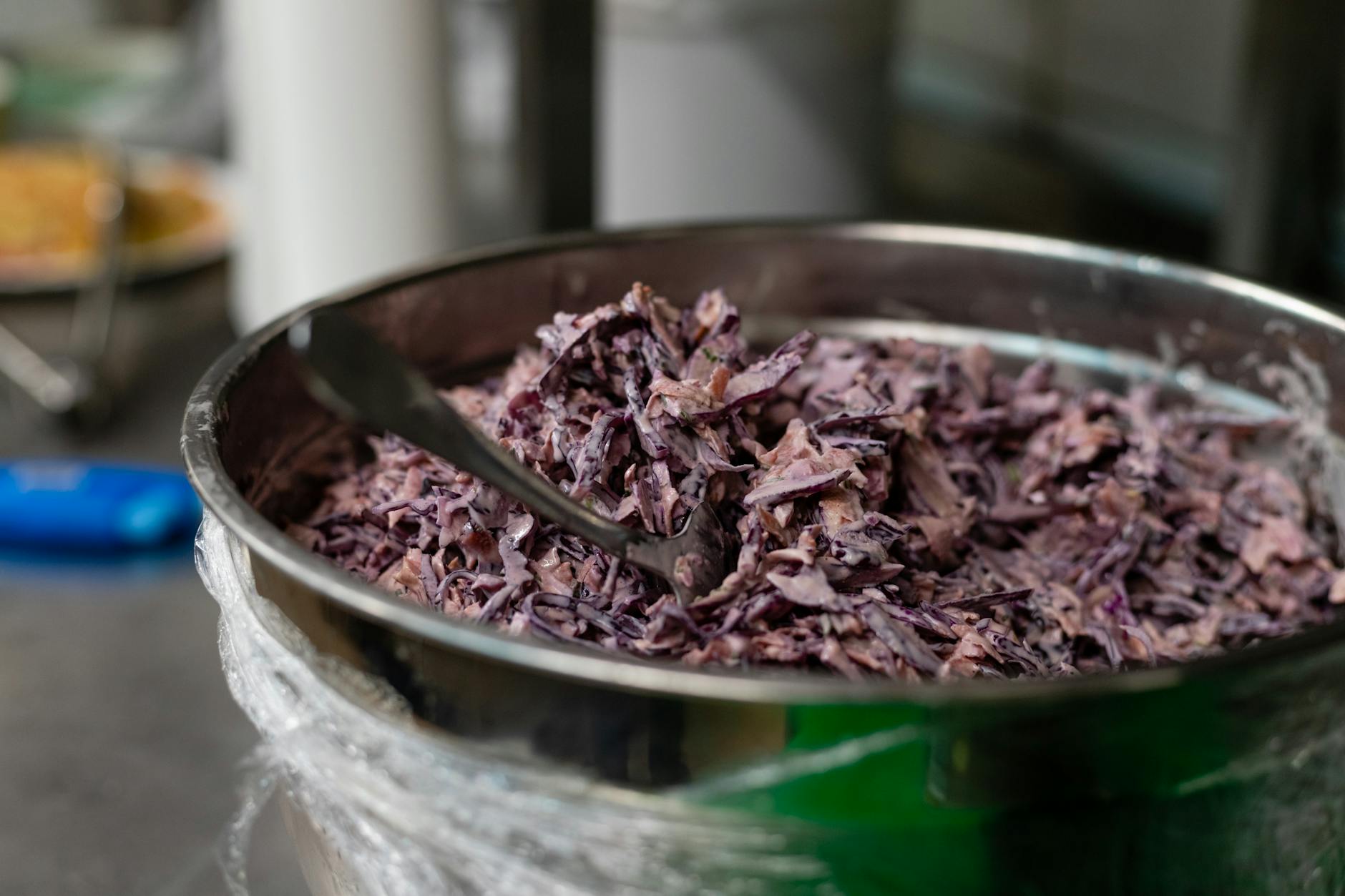
If you look closely at a spoonful of the original, you’ll notice the cabbage, carrot, and onion are all roughly the same size—about the size of a grain of rice. This is the biggest mistake home cooks make. They use a bag of pre-shredded slaw mix. Those long, dry strands will never give you the KFC experience. Using a food processor is the only way to achieve this uniform, pebbly texture. When the pieces are this small, they release a bit of their own juice, which mixes with the dressing to create that signature "slaw milk" we all love to dip our chicken in.
The Flavor Profile: Sweet, Tangy, and Creamy
The flavor is famously sweet, but it’s backed by a sharp acidity from both lemon juice and vinegar. The "neon" flavor balance comes from a high concentration of sugar—more than you might think is healthy—but it's necessary to counteract the sulfurous notes of raw cabbage. Cabbage is incredibly nutritious, as noted in this guide on the health benefits of cabbage, but for this specific picnic recipe, we are prioritizing the classic taste profile over low-sugar dietary trends.
Essential Ingredients: The Secret Dressing Ratio
The Holy Trinity: Mayonnaise, Buttermilk, and Milk
The Flavor Enhancers: Sugar, Vinegar, and Lemon Juice
You need 1/3 cup of granulated sugar. It sounds like a lot, but remember, this recipe makes a large batch. This sugar dissolves into the 1.5 tablespoons of white vinegar and 1 tablespoon of lemon juice. The combination of two different acids gives the dressing a multi-dimensional tartness. Vinegar provides the sharp "bite," while the lemon juice provides a fresh, citrusy top note.
The Hidden Hero: Celery Seed
If your copycat kfc coleslaw tastes "flat," you probably forgot the celery seed. This is the secret ingredient that provides that earthy, slightly bitter undertone that cuts through the sweetness. You only need 1/4 teaspoon, but it is the difference between "good" and "authentic."
The Practical Copycat KFC Coleslaw Ingredients
For the Vegetables:
- 8 cups finely minced cabbage (about 1 medium head)
- 1/4 cup finely minced carrot (1 medium carrot)
- 2 tablespoons finely minced onion (white or yellow)
For the Dressing:
- 1/2 cup mayonnaise
- 1/3 cup granulated sugar
- 1/4 cup milk
- 1/4 cup buttermilk
- 1 1/2 tablespoons white vinegar
- 1 tablespoon lemon juice
- 1/2 teaspoon salt
- 1/8 teaspoon black pepper
- 1/4 teaspoon celery seed
The Texture Secret: Why Your Shred Matters
Food Processor vs. Hand Grating
Achieving the 'Rice-Sized' Cabbage Bits
The goal is a uniform mince. If you’re unsure how to handle the knife work before the processor, check out this guide on finely shredding the cabbage to ensure you start with manageable chunks. Consider quartering the cabbage and removing the core first. Then, cut each quarter into 2-inch chunks before dropping them into the processor. This ensures that the blades can grab the cabbage evenly without some parts getting pulverized while others stay large.
The Pro Technique: How to Prevent Watery Coleslaw
The Science of Osmosis in Vegetables
The Salt-and-Drain Method Explained
Step-by-Step Instructions for the Perfect Batch
Step 1: Prep the Vegetables
Start with the onion. Mince it so finely it’s almost a paste. You only need 2 tablespoons, but those 2 tablespoons carry the entire aromatic profile of the dish. Next, process the carrot until it looks like small orange confetti. Finally, process the cabbage in batches. Do not overcrowd the processor, or you will get uneven results. Combine all the vegetables in a large bowl.
Step 2: Whisk the Emulsion
In a separate medium bowl, combine the mayonnaise, granulated sugar, milk, buttermilk, white vinegar, lemon juice, and spices. Whisk vigorously for at least 60 seconds. You want to ensure the sugar is fully dissolved. If you feel a "gritty" texture at the bottom of the bowl, keep whisking. The sugar acts as a stabilizer for the dairy, helping the dressing stay thick.
Step 3: The Final Mix
Pour the dressing over the vegetable mixture. Use a large rubber spatula to fold the dressing in. It might look like there is too much dressing at first. Don't worry. As the slaw rests, the vegetables will absorb some of that liquid, and the flavors will meld. This is a no-cook summer meal staple that relies entirely on the quality of this initial mix. For more easy ideas, check out our refreshing no-cook summer meals.
The Resting Rule: Why Patience is the Key Ingredient
What Happens During the Overnight Chill?
You cannot eat this coleslaw immediately. If you do, it will taste like raw cabbage with a side of sweet milk. It will be crunchy in a way that feels aggressive. During the overnight marinating process, the acids in the vinegar and lemon juice begin to break down the tough cellulose in the cabbage. This softens the texture just enough to give it that "tender-crisp" bite that defines Kentucky Fried Chicken.
The Minimum Marinating Time
Troubleshooting Common Coleslaw Mistakes
Cabbages vary in their natural sugar content depending on the season. If your batch tastes like candy, add a teaspoon of white vinegar at a time, stir, and let it sit for another hour. The acidity will balance the sugar.
This usually happens if you use a red onion or a very old yellow onion. To fix this, you can add more cabbage to dilute the flavor, or next time, soak the minced onions in cold water for 10 minutes and drain them before adding to the mix. This removes the "sulfur" bite.
If the dressing looks curdled, it’s likely because the buttermilk was too cold or the vinegar was added too quickly. To fix a broken emulsification, whisk a tablespoon of mayonnaise with a teaspoon of warm water in a small bowl until smooth, then slowly stir that back into the main batch.
Best Pairings: What to Serve with Your Copycat Coleslaw
The Classic Fried Chicken Pairing
Beyond the Bucket: BBQ and Sandwiches
This kfc coleslaw recipe isn't just for chicken. It is a phenomenal topper for pulled pork sandwiches. The sweetness of the slaw complements the smoky, spicy notes of BBQ sauce. It’s also a mandatory picnic recipe for summer cookouts, pairing beautifully with grilled hot dogs or blackened fish tacos. Because it is finely minced, it stays on the sandwich better than traditional long-shred slaws.
Storage and Food Safety Tips
How Long Does It Last in the Fridge?
Because of the high sugar and vinegar content, this slaw actually stays fresh longer than most. It is best between 24 and 48 hours. By day 3, the cabbage starts to lose its structural integrity and becomes a bit too soft. By day 5, you should discard it. Always keep it in an airtight glass container to prevent it from absorbing other "fridge smells."
Can You Freeze Coleslaw?
The short answer is: No. Mayonnaise is an emulsion of oil and egg. When frozen and thawed, that emulsion breaks, resulting in a greasy, separated mess. Additionally, the cabbage cells will burst when frozen, turning your slaw into a soggy pile of mush. For the best quality and safety, follow the safe refrigeration practices outlined by the USDA: keep it at or below 40°F (4°C) at all times.
Final Thoughts from the Kitchen
Making the perfect copycat kfc coleslaw is a lesson in patience and precision. It’s about understanding that the food processor is your best friend and that overnight marinating is not a suggestion—it’s a requirement. When you finally take that first bite of the chilled, creamy, perfectly balanced slaw, you’ll realize why we spent so much time sweating the details. It’s the ultimate side dish that turns a simple meal into a feast. So, grab a head of cabbage, get that creamy dressing emulsified, and prepare for the best "fried chicken night" you've ever had at home. Happy cooking!