Quick Answer
The right substitute for vanilla extract depends on what that ingredient contributes: flavor, salt, acidity, fat, moisture, or structure. Use the comparison below to choose the closest match and adjust the amount for your recipe.
Practical note
For vanilla extract recipes substitutes, we judge swaps by job first: flavor, salt, acid, fat, moisture, or structure. That keeps a substitution from fixing one problem while creating another.
Decision table
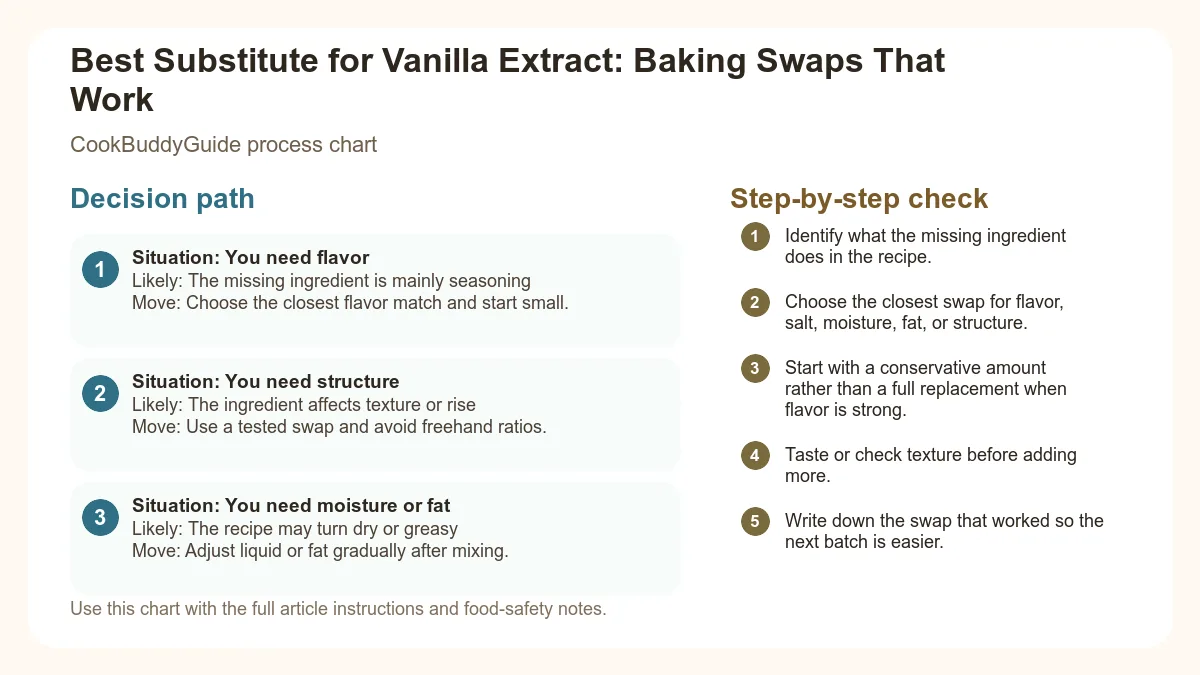
| Situation | Likely cause or meaning | Best move |
|---|---|---|
| You need flavor | The missing ingredient is mainly seasoning | Choose the closest flavor match and start small. |
| You need structure | The ingredient affects texture or rise | Use a practical swap and avoid freehand ratios. |
| You need moisture or fat | The recipe may turn dry or greasy | Adjust liquid or fat gradually after mixing. |
Step-by-step fix
- Identify what the missing ingredient does in the recipe.
- Choose the closest swap for flavor, salt, moisture, fat, or structure.
- Start with a conservative amount rather than a full replacement when flavor is strong.
- Taste or check texture before adding more.
- Write down the swap that worked so the next batch is easier.
Common mistakes
- Replacing a strong ingredient 1:1 before tasting.
- Choosing a flavor match when the recipe actually needs structure.
- Forgetting that salty swaps can change the whole dish.
- Adding extra liquid before the batter, dough, or sauce has time to hydrate.
The best substitute for vanilla extract is vanilla bean paste in a 1:1 swap. It gives the closest vanilla flavor, works in cakes, cookies, frosting, custards, and whipped cream, and does not require changing the recipe. If you do not have another vanilla product, maple syrup is the easiest pantry swap for casual baking, while almond extract works only when you use less and want a nutty flavor.
Vanilla extract is mostly a flavor ingredient, not the ingredient that makes a cake rise or a cookie hold together. That means a smart swap can save the recipe. The right choice depends on whether vanilla is a background note, the main flavor, or part of an uncooked dessert where the flavor stays sharp.
| Substitute | Use This Amount | Best For | Watch For |
|---|---|---|---|
| Vanilla bean paste | 1 teaspoon for 1 teaspoon extract | Frosting, cake, cookies, custard | May add visible bean flecks and light sweetness |
| Vanilla powder | 1/2 teaspoon for 1 teaspoon extract | Dry mixes, cookies, alcohol-free baking | Check the label; powders vary in strength |
| Vanilla bean seeds | Seeds from 1 bean for 1 tablespoon extract | Vanilla-forward desserts | Expensive, but strongest true-vanilla flavor |
| Maple syrup | 1 teaspoon for 1 teaspoon extract | Muffins, pancakes, banana bread, oatmeal | Adds sweetness and maple flavor |
| Almond extract | 1/2 teaspoon for 1 teaspoon extract | Cookies, chocolate cake, yellow cake | Strong flavor; avoid if serving nut-allergic guests |
| Bourbon, rum, or brandy | 1 teaspoon for 1 teaspoon extract | Brownies, spice cake, caramel desserts | Use only when alcohol is acceptable |
| Leave it out | Use nothing | Chocolate cookies, pancakes, quick breads | Do not skip in vanilla cake, frosting, or custard |
In This Guide
How to Choose the Right Vanilla Substitute
Start with the role vanilla plays in the recipe. In chocolate chip cookies, pancakes, brownies, and banana bread, vanilla rounds out sweetness and makes other flavors taste fuller. In a simple vanilla cake, buttercream, pastry cream, or ice cream, it is the main flavor. Those two situations need different swaps.
For a background flavor, maple syrup, almond extract, a pinch of cinnamon, citrus zest, or even skipping vanilla can work. For a vanilla-forward recipe, stay inside the vanilla family: vanilla bean paste, vanilla powder, vanilla bean seeds, or a clearly labeled alcohol-free vanilla flavor.
Quick rule: If the word "vanilla" is in the recipe title, use another vanilla product. If vanilla is just one teaspoon in a larger batter, you have more flexibility.
The FDA standard of identity describes vanilla extract as vanilla constituents in aqueous ethyl alcohol, with alcohol not less than 35 percent by volume. That matters if you are avoiding alcohol for dietary, religious, recovery, or family reasons. For that case, choose a labeled alcohol-free vanilla flavor or vanilla powder rather than assuming heat removes every trace.
Best Swaps by Recipe Type
Best for Cakes and Cupcakes: Vanilla Bean Paste
Use vanilla bean paste 1:1 for vanilla extract. It is the closest practical match because it is made to deliver vanilla flavor in a spoonable form. McCormick notes that vanilla paste is useful when vanilla is central and when you want the look of vanilla flecks, which is exactly the case with white cake, yellow cake, cupcakes, and frosting.
Paste is also easy because you do not need to adjust flour, sugar, eggs, or liquid. If your recipe calls for 2 teaspoons vanilla extract in easy chocolate cake, use 2 teaspoons vanilla bean paste.
Best for Cookies and Brownies: Maple Syrup or Almond Extract
For casual cookies, bars, and brownies, maple syrup is the most forgiving pantry swap. Use it 1:1. It adds a gentle caramel-maple note that fits chocolate, oats, peanut butter, and brown sugar doughs. The added liquid is tiny when replacing 1 or 2 teaspoons, so you normally do not need to change the dry ingredients.
Almond extract is stronger. Food Network recommends using about half as much almond extract as vanilla because the flavor can take over. That makes it useful in chocolate chip cookies without butter, sugar cookies, and chocolate desserts, but it is not neutral.
Best for Pancakes, French Toast, and Oatmeal: Maple Syrup
Maple syrup is the easiest breakfast substitute. Use 1 teaspoon maple syrup for 1 teaspoon vanilla extract in pancakes without milk, baked oatmeal, overnight oats, waffles, or French toast without milk. If the recipe already contains maple syrup, you can simply increase it by the amount of vanilla called for.
For a cleaner flavor, use cinnamon, nutmeg, or orange zest instead. These are not true vanilla substitutes, but they add aroma so the recipe does not taste flat.
Best for Frosting, Whipped Cream, and Custards: Stay with Vanilla
Unbaked or lightly cooked recipes expose the flavor of the substitute. In buttercream, whipped cream, pastry cream, pudding, and custard, use vanilla bean paste, vanilla powder, vanilla bean seeds, or an alcohol-free vanilla flavor. Maple syrup can work in whipped cream, but it changes the flavor and color. Almond extract can taste harsh if you use too much.
King Arthur Baking describes vanilla as an essential baking ingredient because it helps recipes taste less flat and muted. That effect is especially obvious in simple dairy desserts where there is no chocolate, spice, or fruit to hide behind.
Exact Ratios and Adjustments
Vanilla Bean Paste
Use the same amount as vanilla extract. This is the most reliable all-purpose swap:
- 1 teaspoon vanilla extract = 1 teaspoon vanilla bean paste
- 1 tablespoon vanilla extract = 1 tablespoon vanilla bean paste
Use it in cake batter, cookie dough, cheesecake filling, frosting, whipped cream, custard, and quick breads. It may add small flecks and a slightly sweeter finish, depending on the brand.
Vanilla Powder
Use about half as much vanilla powder as extract: 1/2 teaspoon vanilla powder for every 1 teaspoon vanilla extract. Food Network gives this as a practical swap for powder. Because brands vary, start with less in delicate recipes and taste if the mixture is safe to taste, such as frosting or whipped cream.
Vanilla powder is useful when you do not want extra liquid or alcohol. It is also handy in dry mixes, homemade pancake mix, cookie mix jars, and powdered sugar glazes.
Vanilla Bean Seeds
Use the seeds from one vanilla bean to replace 1 tablespoon of vanilla extract. Split the bean lengthwise, scrape the seeds with the back of a knife, and mix them into the wet ingredients or directly into sugar so they distribute evenly.
Save this swap for recipes where the vanilla flavor is worth the cost: vanilla cake, custard, ice cream, shortbread, pastry cream, and frosting.
Maple Syrup
Use maple syrup 1:1 for vanilla extract. The amount is usually small enough that no formula change is needed. If a recipe calls for more than 1 tablespoon vanilla extract, reduce another liquid by 1 to 2 teaspoons or accept a softer texture.
Maple syrup works best in recipes that already welcome deeper flavor: banana bread, oatmeal cookies, muffins, pumpkin bread, pancakes, and brownies from scratch.
Almond Extract
Use half as much almond extract as vanilla extract. If the recipe calls for 1 teaspoon vanilla extract, start with 1/2 teaspoon almond extract. For mild cakes or frostings, start with 1/4 teaspoon and taste before adding more.
Allergy note: Almond extract may not be appropriate for people with tree nut allergies. Labels and formulations vary, so use a different swap when cooking for someone with a nut allergy.
Bourbon, Rum, or Brandy
Use 1:1 when alcohol is acceptable. Bourbon and rum work well with chocolate, brown sugar, pecans, caramel, and warm spices. Brandy works with fruit desserts. Do not use these in recipes for people avoiding alcohol, and avoid them in pale vanilla frosting unless you want the flavor to be noticeable.
When Not to Substitute Vanilla Extract
Do not make a loose swap when vanilla is the point of the recipe. A vanilla cake without vanilla will taste like sweet butter cake. Vanilla frosting without vanilla can taste like plain powdered sugar and fat. Custard without vanilla can taste eggy. In these recipes, use a true vanilla product or choose a different recipe.
You should also avoid strong extracts unless they fit the dessert. Peppermint, lemon, orange, coffee, and almond extracts can all be useful, but they are new flavors rather than neutral replacements. Add them in smaller amounts and build slowly.
Can You Just Skip Vanilla Extract?
Yes, if the recipe uses a small amount and has other strong flavors. You can usually skip vanilla in chocolate cookies, spiced muffins, pancakes, quick breads, and some peanut butter cookies. The finished food will be less aromatic, but the structure should still work.
Skipping is better than adding the wrong strong flavor. For example, almond extract in a lemon cake may be distracting, and maple syrup in a white frosting may change the color. When in doubt, leave vanilla out and add a topping with aroma, such as cinnamon sugar, citrus glaze, toasted nuts, or a little brown butter.
Common Vanilla Substitute Mistakes
Using Too Much Almond Extract
Almond extract is the swap most likely to overwhelm a recipe. It can make a plain cake taste like almond cake and can turn a simple glaze sharp. Start with half the vanilla amount, and use even less in frostings, whipped cream, and no-bake fillings because the flavor does not mellow in the oven.
Forgetting That Maple Syrup Adds Sweetness
One teaspoon of maple syrup in a muffin batter will not change much. A tablespoon or more can. If you are replacing a larger amount of vanilla extract in a cake, custard, or syrup, reduce another sweetener slightly or choose vanilla paste instead.
Using a Strong Swap in a Vanilla-Forward Dessert
A chocolate brownie can handle maple, bourbon, or almond. A vanilla custard cannot. For vanilla-forward desserts, the safest substitutes are vanilla bean paste, vanilla powder, vanilla bean seeds, or a labeled vanilla flavor that matches your alcohol preference.
Assuming Every Vanilla Product Is Alcohol-Free
Vanilla paste and vanilla flavor products vary by brand. Some are based on extract, some include sugar or syrup, and some are labeled alcohol-free. Read the ingredient label if alcohol is the reason you are avoiding regular extract.
Source Notes
This guide uses current source checks from 21 CFR 169.175 for the U.S. vanilla extract standard, King Arthur Baking for vanilla's role in baking and bean varieties, Food Network for common substitute ratios, and McCormick for practical differences among extract, beans, and paste.
Frequently Asked Questions
Usually, yes. If the recipe uses only 1 teaspoon of vanilla in cookies, brownies, pancakes, or banana bread, leaving it out changes flavor more than structure. Do not skip it in vanilla cake, vanilla frosting, custard, ice cream, or any recipe where vanilla is the main flavor.
Almond extract is much stronger and has a distinct nutty flavor, so start with half as much. Use 1/2 teaspoon almond extract for every 1 teaspoon vanilla extract, then add more only if the flavor fits the recipe.
Vanilla powder is the cleanest alcohol-free swap when the label confirms it contains only ground vanilla or vanilla flavor without alcohol. Use about 1/2 teaspoon vanilla powder for every 1 teaspoon vanilla extract.
Yes, maple syrup can replace vanilla extract 1:1 in many cookies, muffins, oatmeal, and quick breads. It adds sweetness and maple-caramel flavor, so it is less ideal for recipes that need a clean vanilla taste.