You open the refrigerator door on a Thursday evening, tired after a long day of work, and your eyes land on that half-finished spiral cut ham from Sunday dinner. It looks fine, but a nagging question stops you: how long does ham last in fridge before it becomes a health risk? Whether it’s a pricey honey baked ham from a holiday feast or a stack of deli ham for the week's school lunches, knowing the exact window of safety is the difference between a delicious second meal and a nasty case of foodborne illness.
Table of Contents
- The Quick Answer: Ham Shelf Life at a Glance
- Understanding Your Ham: Cured vs. Uncured
- How Long Does Whole or Half Ham Last?
- Deli Ham Shelf Life: Sliced vs. Pre-packaged
- The Science of Spoilage: How to Tell if Ham is Bad
- Pro Storage Tips to Extend Freshness
- Freezing Ham: Methods for Long-Term Storage
- Safe Thawing and Reheating Practices
- Creative Ways to Use Ham Before It Goes Bad
The Quick Answer: Ham Shelf Life at a Glance
If you are looking for a fast answer to get dinner on the table, the general rule of thumb for most cooked, sliced ham is 3 to 5 days in the refrigerator. This is the standard food safety for leftovers recommendation from medical experts to prevent the growth of harmful bacteria.
However, ham isn't a "one size fits all" food. A vacuum-sealed whole ham will last significantly longer than ham sliced at the deli counter. Use the table below as your primary reference point for your specific type of meat.
Ham Storage Reference Table
| Type of Ham | Fridge Life (Unopened) | Fridge Life (Opened/Sliced) | Freezer Life (Best Quality) |
|---|---|---|---|
| Deli Ham (Sliced at counter) | N/A | 3–5 Days | 1–2 Months |
| Pre-packaged Deli Ham | Until Use-By Date | 3–5 Days | 1–2 Months |
| Whole/Half Cooked Ham | 2 Weeks | 7 Days | 1–2 Months |
| Spiral Cut Ham | 7 Days | 3–5 Days | 1–2 Months |
| Canned Ham (Shelf-Stable) | 2 Years (Pantry) | 3–5 Days | 1–2 Months |
| Fresh (Uncured) Ham | 3–5 Days | 3–5 Days (Cooked) | 6 Months |
Understanding Your Ham: Cured vs. Uncured
To understand why some hams last longer than others, we have to look at the chemistry of the meat. When we talk about how long does ham last in fridge, we are usually talking about cured ham.
What Does 'Cured' Actually Mean?
Curing is an ancient preservation method that involves treating meat with a combination of salt, sugar, and nitrates (specifically sodium nitrate or sodium nitrite). This process does two things: it gives ham its signature pink color and salty flavor, and it creates an environment that is hostile to bacteria. Salt draws moisture out of the meat cells, making it harder for microbes to survive.
The Shelf Life of Uncured (Fresh) Ham
In recent years, "uncured" hams have become popular in grocery stores. These are hams that don't use synthetic nitrates, though they often use celery juice or sea salt, which contain naturally occurring nitrates. Warning: Uncured or "fresh" ham has a much shorter shelf life. If you buy a truly fresh, raw ham from a butcher, treat it like a raw pork roast—it only lasts 3 to 5 days in the fridge before it must be cooked or frozen.
Nitrates and Preservatives: Do They Help?
How Long Does Whole or Half Ham Last?
Unopened Vacuum-Sealed Hams
If you buy a fully cooked whole ham that is vacuum-sealed at the factory, it can safely stay in your refrigerator for up to 2 weeks. This is because the oxygen has been removed, significantly slowing down the oxidation and bacterial growth. Always check the sell-by date, but generally, the USDA ham storage chart confirms that 14 days is the safe upper limit for unopened, cured, cooked ham.
Opened Whole Hams
Canned Ham: Shelf-Stable vs. Refrigerated
This is a point of confusion for many. There are two types of canned hams:
- Shelf-stable canned ham: These can live in your pantry for up to 2 years. They are processed at high heat to kill all bacteria.
- Refrigerated canned ham: These are found in the meat aisle and must stay cold. They usually last 6 to 9 months unopened in the fridge.
Once either type is opened, you must treat it like deli meat—consume it within 3 to 5 days.
Deli Ham Shelf Life: Sliced vs. Pre-packaged
The deli ham shelf life is perhaps the most frequent cause of food waste. We've all been there: you buy a half-pound of Black Forest ham on Monday, and by Friday, you're questioning the texture.
Freshly Sliced Deli Counter Ham
Pre-packaged Sliced Ham (Unopened)
If you buy the pre-sealed tubs or pouches of ham, you have more leeway. These are often packed in a modified atmosphere (nitrogen) to prevent spoilage. These can last in your fridge until the use-by date, which might be several weeks away. However, don't confuse "Sell By" with "Use By." The sell-by date is for the store; the use-by date is for your safety.
The Clock Starts After Opening
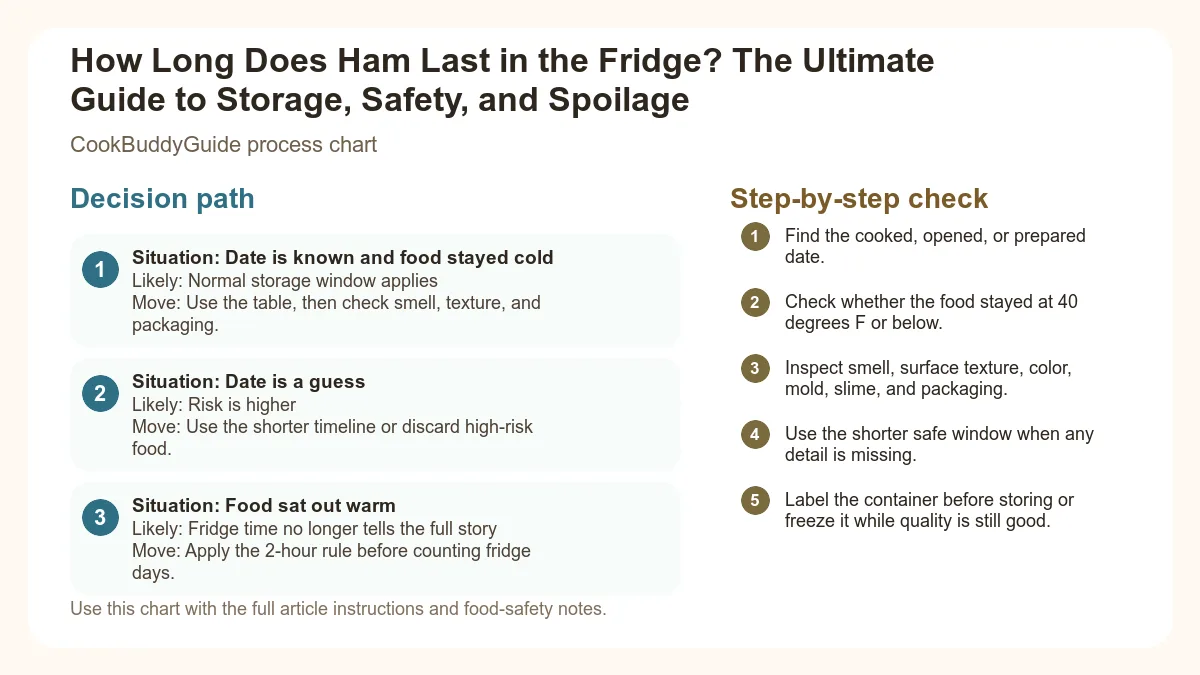
The moment you peel back the plastic on that pre-packaged ham, the deli ham shelf life drops to 3–5 days. A useful option is to use a permanent marker to write the date I opened the package directly on the lid. It takes two seconds and prevents the "Wait, did I open this Monday or Thursday?" guessing game. For more details on these timelines, refer to the cold food storage charts provided by FoodSafety.gov.
The Science of Spoilage: How to Tell if Ham is Bad
The Smell Test: Sour vs. Salty
Visual Cues: Slime, Mold, and Color Changes
One of the most common signs of spoiled ham is a slimy texture. If the surface of the meat feels slippery or "tacky" to the touch, bacteria are colonizing the surface. You might also see an iridescent, rainbow-like sheen on the ham. Interestingly, this sheen isn't always spoilage—it can be caused by light refracting off the fat and protein—but if that sheen is accompanied by slime, toss it immediately. Look for any gray, green, or black spots (mold), which are definitive signs of spoilage.
Texture: When Firm Becomes Sticky
Ham should be firm and slightly moist. If the meat feels mushy or excessively sticky, it’s a sign that the proteins are breaking down. For a deeper dive into these sensory indicators, check out this guide on signs of spoiled ham.
Pro Tip: The "Two-Hour Rule"
Pro Storage Tips to Extend Freshness
The Best Containers for Ham
Ditch the loose plastic wrap or the flimsy deli bag. Exposure to air is the enemy of freshness. Consider using airtight containers, preferably glass. Glass doesn't absorb odors and provides a better seal than plastic. If you are storing a large whole ham, and it won't fit in a container, wrap it tightly in plastic wrap, followed by a layer of heavy-duty aluminum foil. This double-layering prevents the meat from drying out and picking up "fridge flavors."
Optimal Fridge Temperature and Placement
The Vinegar-Soaked Cloth (Old-School Butcher Tip)
Freezing Ham: Methods for Long-Term Storage
If you realize you won't finish your ham within the 5-day window, the freezer is your best friend. While ham is safe to eat indefinitely when frozen at 0°F, the quality begins to decline after a few months.
How Long Does Frozen Ham Last?
For the best flavor and texture, aim to use frozen ham within 1 to 2 months. Beyond that, the high salt content in ham actually accelerates the oxidation of fats, which can lead to a rancid taste even if the meat is technically safe. Freezer burn is also a major risk, turning the edges of your ham tough and leathery.
Flash Freezing Slices for Easy Access
If you're prepping for breakfast meal prep ideas, don't freeze the ham in one giant block. Lay individual slices on a parchment-lined baking sheet and freeze them for 2 hours. Once they are firm, transfer them to a freezer bag. This "flash freezing" method allows you to grab exactly two slices for a morning sandwich without having to thaw the whole stash.
Preventing Freezer Burn
The gold standard for freezing is vacuum sealing. If you don't have a vacuum sealer, use the "water displacement method": put the ham in a zip-top bag, submerge the bag in a bowl of water (keeping the opening above water) to force the air out, then seal it. Then, wrap that bag in aluminum foil for an extra layer of protection against the dry freezer air.
Safe Thawing and Reheating Practices
Thawing ham correctly is just as important as storing it. Never, ever thaw ham on the kitchen counter. This allows the outside of the meat to reach the "Danger Zone" while the inside is still frozen.
The Refrigerator Thaw Method
This is the safest method. Place the frozen ham on a plate (to catch any drips) and let it thaw in the fridge. A small package of deli ham will thaw overnight, but a large 10-pound ham can take 24 hours for every 5 pounds of meat. Plan ahead!
Cold Water Thawing for Busy Cooks
If you're in a rush, place the ham in a leak-proof plastic bag and submerge it in cold tap water. Change the water every 30 minutes. This is much faster than the fridge but requires constant attention. Once thawed, the ham must be cooked or eaten immediately.
Reheating to the Safe Internal Temperature
If you are reheating leftover ham, the USDA Food Safety guidelines recommend reaching an internal temperature of 165°F. To prevent the ham from drying out, consider reheating it in the oven at a low temperature (325°F) with a splash of water or broth in the bottom of the pan, covered tightly with foil. This creates a steam chamber that keeps the meat succulent.
Creative Ways to Use Ham Before It Goes Bad
Don't let that ham sit until day 5! If you're running out of time, incorporate it into your weekly meal plan. Ham is incredibly versatile and works for breakfast, lunch, or dinner.
The "Everything" Ham Bone Soup
- Yield: 6-8 servings
- Prep time: 15 minutes
- Cook time: 3 hours
15-Minute Leftover Ham Recipes
If you need healthy lunch ideas for work, ham is a fantastic protein source. Here are three quick ways Use up the last bits of ham:
- Ham and Pea Pasta: Sauté diced ham with frozen peas and garlic. Toss with fettuccine and a splash of heavy cream or olive oil.
- Ham and Cheese Frittata: Whisk 6 eggs with a handful of diced ham and shredded cheddar. Bake in a skillet at 350°F until set.
- Ham Salad: Pulse leftover ham in a food processor with mayo, Dijon mustard, and sweet relish for a classic sandwich spread.
Frequently Asked Questions
A: For a whole, bone-in ham that you carved yourself, 7 days is generally the limit if stored properly. However, for deli-sliced ham, 7 days is too long. Stick to the 3-5 day rule for sliced meats to avoid foodborne illness.
A: Sometimes ham develops small white specks. If they are hard and crystalline, they are likely salt or tyrosine crystals (a sign of aging, common in dry-cured hams like Prosciutto). If the white spots are fuzzy or slimy, it is mold, and the ham should be discarded.
Conclusion
Understanding how long does ham last in fridge is about balancing the science of preservation with common-sense kitchen habits. By respecting the 3-5 day rule for sliced meats, utilizing your freezer for long-term storage, and keeping a sharp eye (and nose) out for signs of spoiled ham, you can enjoy this versatile protein without worry. Remember, when in doubt, throw it out. No sandwich is worth the risk of a week of illness. Keep your fridge organized, date your packages, and enjoy those leftovers while they are at their peak of flavor!