Quick Answer
Yes, you can freeze cheese, but the texture may change after thawing. Freeze it while fresh in an airtight, labeled container, and thaw perishable foods in the refrigerator before using them in the ways described below.
Practical note
For Can You Freeze Cheese? Guide to Freezing, Thawing, and Using Every Type of Cheese, the home-kitchen check is not only the number of days. We look at the start date, fridge temperature, container seal, serving time, and spoilage signs. If one of those facts is missing, the safer move is to use the shorter window.
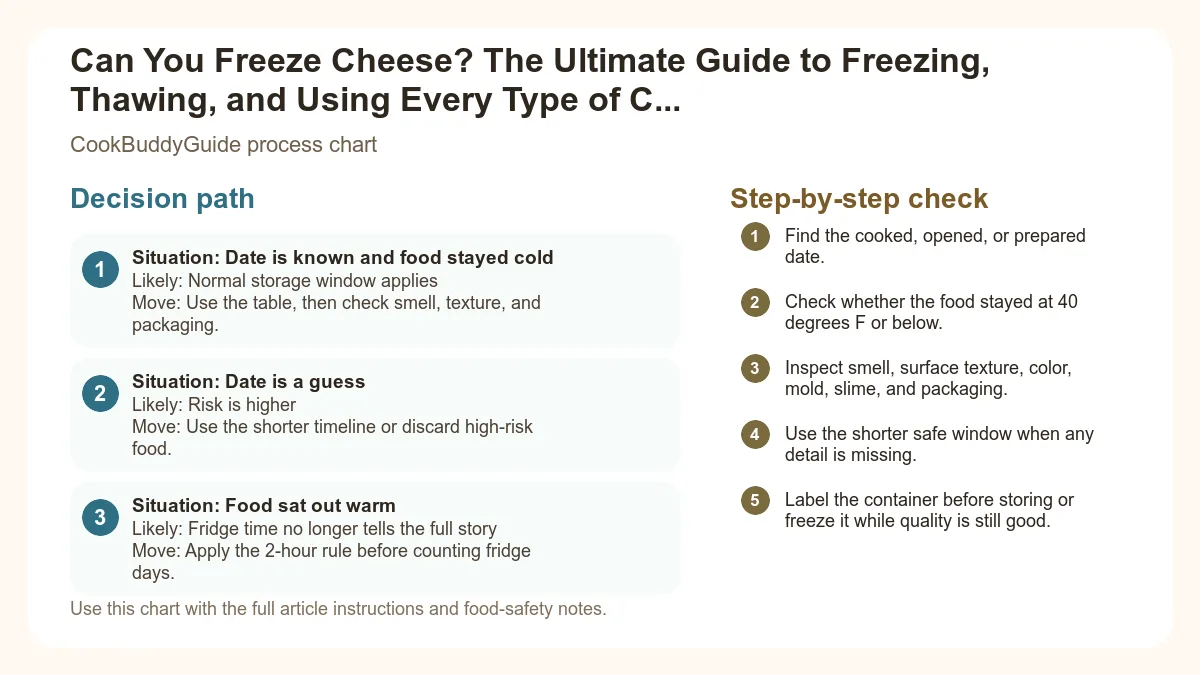
Decision table
| Situation | Likely cause or meaning | Best move |
|---|---|---|
| Date is known and food stayed cold | Normal storage window applies | Use the table, then check smell, texture, and packaging. |
| Date is a guess | Risk is higher | Use the shorter timeline or discard high-risk food. |
| Food sat out warm | Fridge time no longer tells the full story | Apply the 2-hour rule before counting fridge days. |
Step-by-step fix
- Find the cooked, opened, or prepared date.
- Check whether the food stayed at 40 degrees F or below.
- Inspect smell, surface texture, color, mold, slime, and packaging.
- Use the shorter safe window when any detail is missing.
- Label the container before storing or freeze it while quality is still good.
Common mistakes
- Counting fridge days from the day you noticed the container instead of the day it was made.
- Ignoring time spent on the counter, in a lunch bag, or on a serving table.
- Trusting smell alone when the date or temperature history is unknown.
- Putting warm food into a deep container that cools slowly.
Related topic hubs
Introduction: The 'Yes, But...' of Freezing Cheese
It’s 6:00 PM on a Tuesday, and you’re staring at a half-used block of expensive sharp cheddar that’s been sitting in the deli drawer for a week. You know that if you don't use it by Friday, it’s destined for the compost bin. Or perhaps you’ve just spotted a massive "Buy One, Get Two Free" sale on mozzarella at the grocery store, but you live in a two-person household. The question inevitably arises: can you freeze cheese without ruining it?
Table of Contents
- The Science of the Freezer: What Happens to Cheese at 0°F?
- The Best Cheeses to Freeze (Hard and Semi-Hard)
- The 'Proceed with Caution' List: Semi-Soft Cheeses
- Cheeses You Should Never Freeze (And Why)
- Step-by-Step: How to Prepare Cheese for the Freezer
- Essential Wrapping Techniques to Prevent Freezer Burn
- Storage Timelines: How Long Does Frozen Cheese Last?
- The Right Way to Thaw Cheese (Preventing the Crumble)
- 10 Genius Ways to Use Frozen-Then-Thawed Cheese
- Common Mistakes to Avoid When Freezing Cheese
Why Freezing Cheese is a Helpful Shortcut for Busy Cooks
The Golden Rule: Cooking vs. Fresh Eating
The Science of the Freezer: What Happens to Cheese at 0°F?
To understand why some cheeses survive the sub-zero temperatures better than others, we have to look at the molecular level. Cheese is a complex emulsion of water, fat, and protein—specifically a protein called Casein. When you place cheese in a freezer, the moisture content within the cheese begins to form ice crystals.
Ice Crystals and Protein Structures
Water expands when it freezes. In high-moisture cheeses, these ice crystals grow large enough to physically rupture the delicate Casein matrix that holds the cheese together. Imagine a sponge being frozen; the ice pushes the fibers of the sponge apart. When the ice melts (thaws), those fibers don't always snap back into place. This is the primary cause of texture degradation. According to research on freezing dairy products safely, the rate of freezing also matters—the slower a cheese freezes, the larger the ice crystals and the more damage they do to the texture.
Fat Separation and Texture Degradation
Beyond the protein structure, the fat in cheese can also behave strangely. In some cases, the emulsion of fat and solids can break, leading to a "mealy" or "grainy" mouthfeel. This is why semi-hard cheese varieties, which have a balanced ratio of fat to moisture, tend to fare better than very soft, high-fat cheeses. The "Crumbly Factor" is a direct result of these broken protein bonds. Once the Casein network is compromised, the cheese loses its ability to slice cleanly, often falling apart under the knife.
The Best Cheeses to Freeze (Hard and Semi-Hard)
Cheddar, Monterey Jack, and Colby
Swiss, Emmental, and Gruyère
Swiss-style cheeses are excellent candidates for the freezer, especially if you plan to use them for fondue or French onion soup. One Testing Note: Swiss cheese can become slightly more brittle after thawing. If you are freezing slices for sandwiches, be sure to use parchment paper between each slice to prevent them from shattering when you try to separate them later.
Hard Grating Cheeses: Parmesan and Pecorino Romano
You might wonder why you’d freeze a cheese that already lasts so long in the fridge. The answer is food waste prevention. If you have a large wedge of Parmesan that you won't finish in a month, grate it and freeze it. Pro Tip: Never freeze a solid block of Parmesan. It becomes nearly impossible to grate once it has been frozen and thawed. Instead, use a food processor to grate the entire wedge, then store it in a freezer-safe airtight container. It can be used directly from the freezer—no thawing required! For more on which varieties work best, check out this guide on which cheeses freeze well.
The 'Proceed with Caution' List: Semi-Soft Cheeses
Semi-soft cheeses are the "middle children" of the freezer world. They can be frozen, but you need to be strategic about how you use them afterward.
Mozzarella (Low-Moisture vs. Fresh)
Gouda and Edam
Havarti and Muenster
These are incredibly creamy cheeses. When they thaw, they tend to become very soft—almost pasty. Testing Notes: After 30 days in the freezer, my "slice test" showed that Havarti lost its ability to hold a sharp edge. However, it melted perfectly into a grilled cheese sandwich. If you freeze these, plan on melting them.
Cheeses You Should Never Freeze (And Why)
Some things are just not meant to be frozen. If you value the culinary integrity of these cheeses, keep them far away from the freezer.
- Soft-Ripened Cheeses (Brie and Camembert): The magic of Brie lies in its velvety rind and gooey interior. Freezing causes the delicate rind to collapse and the interior to become watery and grainy. It’s a tragedy for any cheese lover.
- Artisan and Blue Cheeses: High-end artisan cheeses have complex flavor profiles that are often muted by the freezing process. Blue cheeses, like Gorgonzola or Roquefort, become extremely crumbly—essentially turning into blue dust when you try to use them.
The Exception: You can freeze cream cheese, but only if you plan to use it for baking (like in a cheesecake or pound cake). The texture will change from smooth to grainy, making it unpleasant for spreading on a bagel, but it will incorporate fine into a batter.
Step-by-Step: How to Prepare Cheese for the Freezer
Proper preparation is the difference between a freezer-safe ingredient and a block of ice-covered waste. According to industry experts at Wisconsin Cheese, the way you wrap your cheese determines its ultimate shelf life.
Method 1: The Shredded Method (Best for Cooking)
- Grate: Use a box grater or food processor to shred your block cheese.
- Flash Freeze: Spread the grated cheese in a single layer on a baking sheet lined with parchment paper. Place the sheet in the freezer for 30–60 minutes. This is called Flash Freezing.
- Bag: Transfer the individual frozen shreds into a heavy-duty Ziploc bag.
- Seal: Squeeze out as much air as possible before sealing.
Method 2: The Block Method (Double-Wrapping)
If you prefer to keep your cheese in blocks, you must protect it from the dry air of the freezer.
- Portion: Cut the block into smaller portions (e.g., 8oz chunks) that you are likely to use in one recipe.
- Primary Wrap: Wrap each chunk tightly in plastic wrap or parchment paper.
- Secondary Wrap: Wrap the chunk again in aluminum foil.
- Final Seal: Place the double-wrapped blocks into a freezer bag or airtight container.
Essential Wrapping Techniques to Prevent Freezer Burn
The Case for Vacuum Sealing
If you have a vacuum sealer, use it. It is the gold standard for freezing cheese. By removing all the air, you eliminate the possibility of ice crystals forming on the surface. Vacuum-sealed cheese can last twice as long as cheese in standard bags.
The DIY "Straw Vacuum" Method
If you don't have a vacuum sealer, you can mimic the effect with a Ziploc bag and a straw. Place your cheese in the bag, seal it almost all the way, insert a straw into the small opening, and suck the air out of the bag. Quickly pull the straw out and zip the bag shut. It’s surprisingly effective at preventing freezer burn!
Labeling Essentials
Label the bag with the type of cheese and the date frozen. Adding a quality target date can also make it easier to rotate older packages first.
Storage Timelines: How Long Does Frozen Cheese Last?
While frozen food is technically safe indefinitely if kept at 0°F, the quality of cheese begins to decline after a few months. For the best results, consult the safe storage times for cheese provided by FoodSafety.gov.
- Shredded Cheese: 3 months (Higher surface area means it dries out faster).
- Block Cheese: 6 months (Double-wrapped).
- Hard Grating Cheese: 9–12 months.
- Vacuum-Sealed Cheese: Up to 12 months.
Signs of Trouble: If you see white, dry patches on the cheese, that’s freezer burn. While not dangerous, those spots will be tough and tasteless. If the cheese has developed an "off" smell (like the inside of an old freezer), it’s time to toss it.
The Right Way to Thaw Cheese (Preventing the Crumble)
How you thaw your cheese is just as important as how you freeze it. The goal is a slow-thaw to allow the Casein structure to reabsorb as much moisture as possible.
The 24-Hour Rule
Always thaw block cheese in the refrigerator for at least 24 hours. Never thaw cheese on the kitchen counter. The rapid temperature change causes the fat to sweat out and the protein to become even more brittle, leading to maximum texture degradation.
Using Frozen Cheese Directly
The beauty of grated cheese is that you often don’t need to thaw it at all! You can sprinkle frozen shredded cheddar directly onto a casserole or into a pot of soup. It will thaw and melt almost instantly upon contact with heat.
Secret Tip for Dry Cheddar: If your thawed cheddar feels a bit dry or crumbly, let it sit at room temperature for about 20 minutes before using it in a sandwich. The slight warming allows the fats to soften, making it more pliable.
10 Genius Ways to Use Frozen-Then-Thawed Cheese
- A Practical Mac and Cheese Base: Use a mix of frozen cheddar and Monterey Jack. The freezing process actually makes the cheese break down faster into the roux, creating a very smooth sauce.
- Casseroles and Lasagnas: Frozen mozzarella and parmesan are perfect for topping baked pasta dishes.
- Homemade Pizza Blends: Keep a bag of "Pizza Mix" (mozzarella, provolone, and parmesan) in the freezer at all times.
- Enchiladas and Tacos: Frozen pepper jack adds a great kick and melts beautifully under a broiler.
- Quiches and Frittatas: Toss in a handful of frozen Swiss or Gruyère for an instant flavor boost.
- Cheese Biscuits: Cold, frozen cheese is actually better for biscuits because it stays in distinct pockets rather than blending into the dough.
- Soups and Chowders: Stir in frozen cheese at the very end to thicken and enrich your favorite soups.
- Stuffed Peppers: A great way to use up random "scraps" of frozen cheese.
- Grilled Cheese: Use thick slices of thawed block cheese. The heat of the pan will mask any crumbly texture.
- The CookBuddy 'Emergency' Cheese Sauce: See the recipe below!
The CookBuddy 'Emergency' Cheese Sauce
This recipe is designed specifically to use those random frozen cheese scraps at the bottom of the bag.
- 2 tbsp Butter
- 2 tbsp All-purpose Flour
- 1.5 cups Milk
- 2 cups Frozen Cheese (any meltable variety)
- Pinch of nutmeg and black pepper
Instructions: Melt butter in a saucepan over medium heat. Whisk in flour and cook for 1 minute. Slowly whisk in milk until thickened. Add the frozen cheese directly to the pot. Stir constantly until the cheese is fully melted and the sauce is glossy. Serve over broccoli, potatoes, or pasta.
Common Mistakes to Avoid When Freezing Cheese
Even with the best intentions, things can go wrong. Avoid these common pitfalls:
- Freezing Large Blocks: Never freeze a massive 2lb block of cheese unless you plan to use 2lbs of cheese at once. Once you thaw it, you cannot safely re-freeze it without significant quality loss.
- Forgetting to Label: After three months, frozen Monterey Jack looks exactly like frozen Mozzarella. Save yourself the "Freezer Roulette" and label your bags.
- Freezing 'Fancy' Cheeses: Don't freeze that $30-a-pound aged Manchego or a delicate goat cheese. These are meant to be enjoyed fresh. Save the freezer for your everyday cooking cheeses.
- Freezing Past-Prime Cheese: Freezing is a preservation method, not a resurrection method. If the cheese is already smelling funky or has spots of mold, the freezer won't save it.
Frequently Asked Questions
A: Yes! However, you must place a piece of parchment paper between every single slice. If you don't, the slices will fuse together into a solid block of cheese that will shatter when you try to separate them.
A: This is usually freezer burn. It means the packaging wasn't airtight. You can usually grate off the white parts and use the rest of the cheese for melting.
A: Technically yes, but they will become very powdery. They are best used stirred into a hot steak sauce or a dressing rather than sprinkled on a salad after freezing.
Conclusion: Saving Money and Reducing Food Waste
Mastering the art of freezing cheese is a fundamental skill for any savvy home cook. It allows you to take advantage of bulk pricing, ensures you always have ingredients on hand for a quick meal, and significantly reduces the amount of dairy that ends up in the trash.
Remember the golden rules: double-wrap your blocks, flash-freeze your shreds, and always thaw slowly in the refrigerator. While the texture degradation caused by Casein disruption means you might not want to serve thawed cheddar on a fancy platter, it will still be the star of your next Mac and Cheese or homemade pizza. Cheese is a terrible thing to waste—so clear some space in your freezer and start saving today!