Quick Answer
Yes, butter freezes well. Keep unopened sticks in their original wrapping inside a freezer bag, or wrap opened portions tightly before freezing; label the date and thaw in the refrigerator or grate frozen butter directly into pastry dough.
Practical note
Butter picks up freezer odors more easily than many cooks expect. The paper wrapper is useful but not airtight, so a second barrier such as a zip-top freezer bag or sealed container makes the biggest quality difference.
Decision table
| Situation | Likely cause or meaning | Best move |
|---|---|---|
| Unopened sticks | Original wrapper protects the surface | Place the package inside a freezer bag and freeze flat. |
| Opened or portioned butter | More surface is exposed to air and odors | Wrap each portion tightly, then seal in a bag. |
| Butter is for baking | Small pieces are easier to use from frozen | Freeze cubes or grate the frozen stick when needed. |
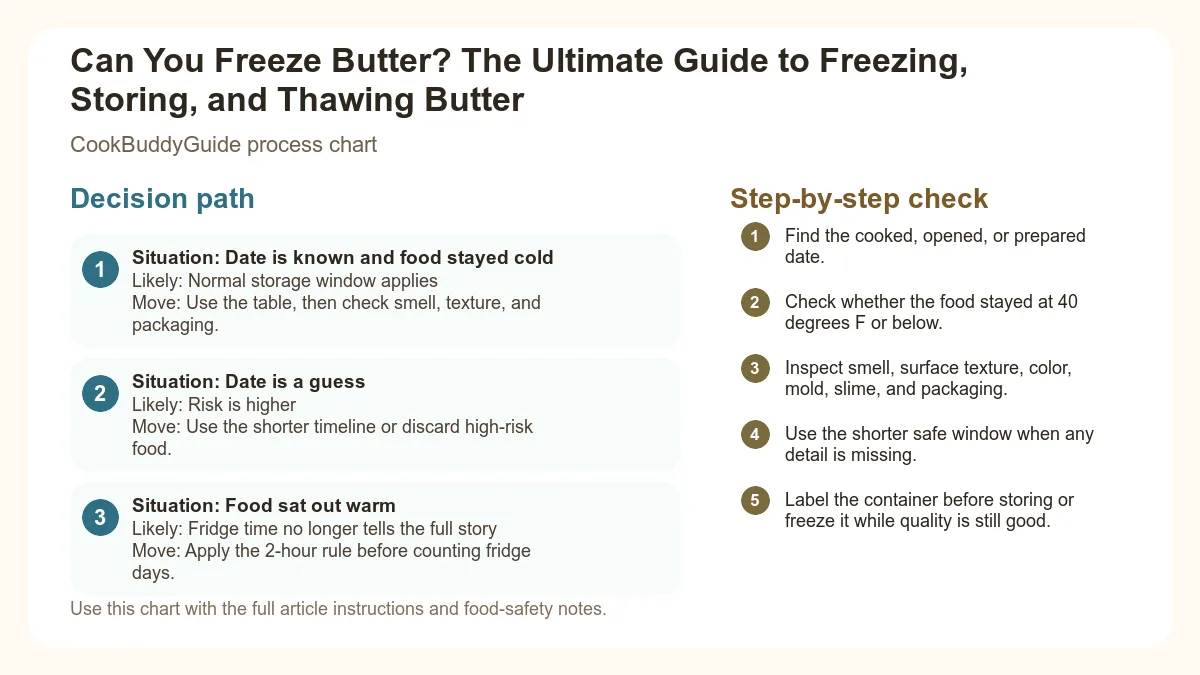
Step-by-step fix
- Freeze butter while it still smells and tastes fresh.
- Divide it into the amounts you normally use.
- Wrap opened portions tightly with minimal trapped air.
- Seal the portions in a labeled freezer bag or container.
- Thaw only what you need in the refrigerator.
Common mistakes
- Freezing opened butter in its paper wrapper alone.
- Leaving air around half-used sticks or small pieces.
- Storing butter beside strongly scented frozen food.
- Thawing and refreezing the same stick repeatedly.
Related topic hubs
Table of Contents
- Introduction: Why Freezing Butter is a Helpful Shortcut
- Salted vs. Unsalted Butter: Does the Type Matter?
- The Science of Freezing Dairy and Texture
- Step-by-Step: How to Prepare Butter for the Freezer
- Storage Timelines: How Long Does Butter Last?
- The Best Ways to Thaw Frozen Butter
- Cooking and Baking with Previously Frozen Butter
- Common Mistakes to Avoid
- Kitchen Tips for the Ultimate Butter Stash
Introduction: Why Freezing Butter is a Helpful Shortcut for Home Cooks
The Short Answer: Yes, You Can!
Why Stockpiling Butter Makes Financial Sense
Salted vs. Unsalted Butter: Does the Type Matter for Freezing?
Freezing Salted Butter: The Preservation Advantage
Freezing Unsalted Butter: Freshness Considerations
Unsalted butter is the gold standard for baking because it allows the cook to control the exact amount of sodium in a recipe. However, because it lacks that salt preservative, it is slightly more delicate. Unsalted butter is more prone to picking up "freezer flavors" (that weird, metallic taste from the frozen peas sitting next to it). While you can still freeze it successfully, consider a more rigorous wrapping process—which we will cover in the step-by-step section—to ensure the Emulsion stays pure and the flavor remains sweet and creamy.
The Science of Freezing Dairy: What Happens to the Texture?
Understanding Emulsification and Fat Crystals
Butter is a complex Emulsion of water droplets suspended in fat. When you freeze butter, the water molecules expand as they turn into ice crystals. If the freezing process is too slow, these crystals can grow large enough to disrupt the fat structure. However, because the moisture content in butter is quite low (usually around 16-18%), this disruption is minimal. This is why butter doesn't "break" or separate like frozen sour cream or yogurt often does. After Pasteurization, the fat globules are stable, making butter an ideal candidate for the sub-zero temperatures of your home freezer.
Does Freezing Cause Butter to Separate?
Step-by-Step: How to Prepare Butter for the Freezer
The CookBuddyGuide Double-Wrap Method
- Keep the original wrapper: Do not remove the parchment paper or wax paper wrapper from the individual sticks.
- First Layer: Wrap each individual stick tightly in plastic wrap. Ensure there are no air pockets.
- Second Layer: Wrap the plastic-covered stick in a layer of heavy-duty aluminum foil. This provides a barrier against light and odors.
- Final Seal: Place the wrapped sticks into freezer-safe bags. Squeeze out as much air as possible before zipping.
- Label: Use a permanent marker to write the date, the type (Salted/Unsalted), and the brand.
Method 3: Portioning Butter for Easy Access
If you often find yourself needing just a tablespoon for a quick sauté, try the "Flash Freeze" method. Cut a few sticks of butter into 1-tablespoon pats. Place them on a baking sheet lined with parchment paper, making sure they aren't touching. Freeze for one hour until solid, then toss the "butter coins" into an airtight container. This allows you to grab exactly what you need without thawing a whole stick. This technique is a lifesaver when you're following crockpot freezer meals that require a small fat component for the sauce.
According to practical advice on the best way to freeze butter, the double-wrapping technique is the single most important factor in preventing the absorption of odors from other frozen foods like onions or seafood.
Storage Timelines: How Long Does Butter Last?
Freezer vs. Refrigerator vs. Countertop
- Countertop (Butter Bell): 1-2 weeks (Salted only; unsalted spoils faster).
- Refrigerator: 1-3 months.
- Standard Freezer: 6-9 months.
- Deep Chest Freezer (-10°F): 12+ months.
The 'Sniff Test' and Other Signs of Spoilage
Butter rarely "spoils" in the freezer in a way that makes it dangerous, but it can go rancid. Rancidity occurs when the fats are exposed to oxygen (Oxidation). To check your butter, slice off a small piece and look at the color. If the outside is significantly darker than the inside, or if it has a sour, cheesy smell, it has likely oxidized. Additionally, look for Freezer burn, which appears as dry, white, or grayish spots on the surface. While not harmful, it will negatively impact the baking results and flavor.
The Best Ways to Thaw Frozen Butter
Method 1: The Overnight Fridge Thaw (The Gold Standard)
For the best baking results, you want the butter to return to its original state slowly. This preserves the Emulsion perfectly.
- Place the wrapped stick of butter in the refrigerator 24 hours before you need it.
- Once thawed in the fridge, it can stay there for up to 30 days.
The 'Emergency' Grating Hack
We’ve all forgotten to take the butter out. If you need room temperature butter for cookies but only have a frozen block, do NOT put it in the microwave. Microwaving creates hot spots where the butter melts into Clarified butter (oil and milk solids separate), which will ruin the texture of your cookies. Instead, use a box grater. Grating frozen butter creates small shreds that reach room temperature in about 10-15 minutes. This thawing butter for baking guide recommends this specific trick for making the fluffiest biscuits you've ever tasted.
Cooking and Baking with Previously Frozen Butter
When to Use Frozen Butter Directly
In some cases, frozen butter is actually better than fresh. For flaky pastries, scones, and pie crusts, you want the butter to remain in solid chunks until the moment the heat of the oven hits it. The water in the butter turns to steam, pushing the layers of flour apart to create that coveted "shatteringly crisp" texture. Keep a few sticks of frozen butter specifically for my pie dough. I simply grate the frozen butter directly into my flour mixture. This ensures the fat doesn't melt from the warmth of my hands during the mixing process.
Adjusting Recipes for Thawed Butter Texture
When using thawed butter for cakes or frostings, ensure it has truly reached room temperature (about 65-68°F). It should be soft enough to leave an indentation when pressed, but not so soft that it’s greasy. If your thawed butter feels a bit more "moist" than usual, it may have collected a little condensation. Simply pat it dry with a paper towel before creaming it with sugar. Protecting the butter from freezer burn as suggested by Martha Stewart’s storage tips ensures that the texture remains consistent for these delicate applications.
Common Mistakes to Avoid
The Danger of Temperature Fluctuations
Ignoring the 'Best By' Date Before Freezing
Freezing is not a time machine; it is a "pause" button. If you freeze butter that is already three days past its expiration date, it will still be three days past its prime when you thaw it. For the best results, freeze butter as soon as you bring it home from the store. This locks in the freshness at its peak. Also, ensure you are using airtight containers to prevent moisture loss, which can lead to a rubbery texture after thawing.
Kitchen Tips for the Ultimate Butter Stash
Freezing Compound Butters and Herb Butters
Which Brands Freeze Best?
- Top Tier: Kerrygold, Plugra, and Cabot Extra Creamy. These have higher fat percentages and hold their structure incredibly well.
Frequently Asked Questions
A: Yes, but with caution. Most vegan butters have a higher water content than dairy butter. They freeze well for cooking but may separate slightly if used for delicate frostings after thawing. Always wrap them twice!
A: It shouldn't. If the butter looks significantly darker or yellowed on the edges after thawing, it’s a sign of Oxidation and rancidity. It’s safe to eat but might taste "off."
A: You can freeze Clarified butter or Ghee, but standard melted butter will separate into layers of fat and milk solids when frozen. It’s better to freeze it in its solid state.
The Final Word on Freezing Butter
Mastering the art of freezing butter is a simple yet transformative skill for any home cook. By understanding the science of Emulsion and Oxidation, and by taking the extra two minutes to double-wrap your stash in aluminum foil and freezer-safe bags, you can ensure that you always have high-quality fat ready for your next culinary masterpiece. Whether you're saving money by bulk-buying or simply prepping for the holiday rush, your freezer is your best friend. Now that you know the answer to "can you freeze butter," you'll never have to experience that 8:00 PM Thanksgiving panic again. Happy cooking!