Quick Answer
The right substitute for worcestershire sauce depends on what that ingredient contributes: flavor, salt, acidity, fat, moisture, or structure. Use the comparison below to choose the closest match and adjust the amount for your recipe.
Practical note
For worcestershire sauce recipes substitutes, we judge swaps by job first: flavor, salt, acid, fat, moisture, or structure. That keeps a substitution from fixing one problem while creating another.
Decision table
| Situation | Likely cause or meaning | Best move |
|---|---|---|
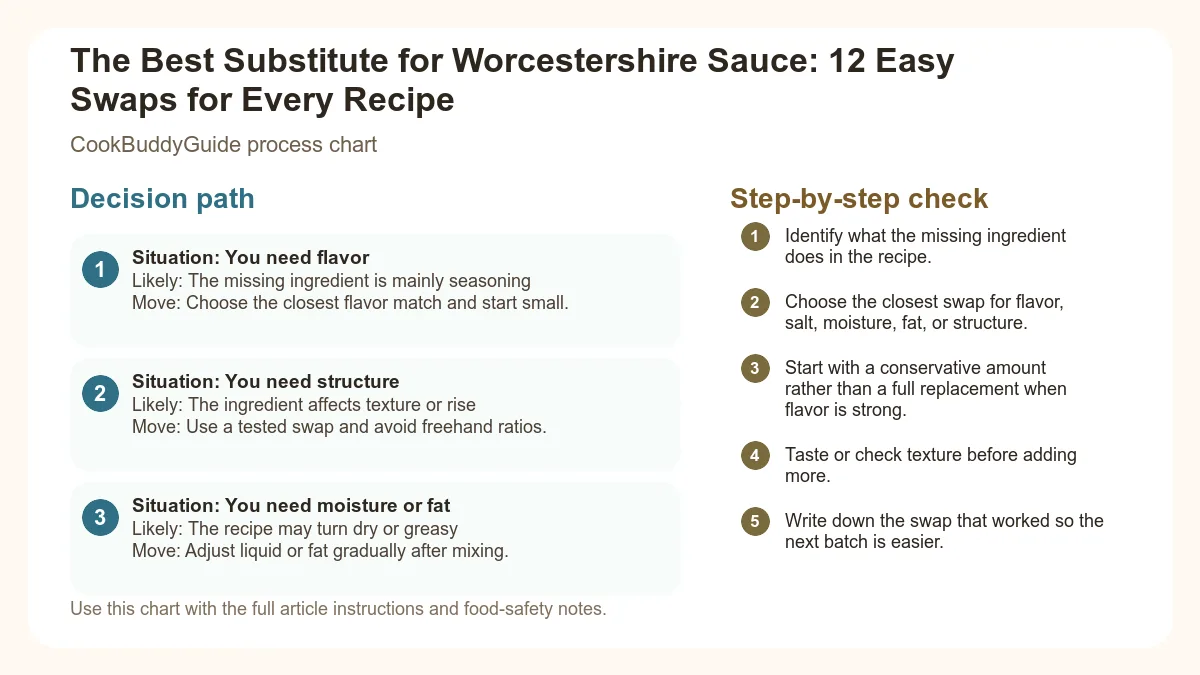
| You need flavor | The missing ingredient is mainly seasoning | Choose the closest flavor match and start small. |
| You need structure | The ingredient affects texture or rise | Use a practical swap and avoid freehand ratios. |
| You need moisture or fat | The recipe may turn dry or greasy | Adjust liquid or fat gradually after mixing. |
Step-by-step fix
- Identify what the missing ingredient does in the recipe.
- Choose the closest swap for flavor, salt, moisture, fat, or structure.
- Start with a conservative amount rather than a full replacement when flavor is strong.
- Taste or check texture before adding more.
- Write down the swap that worked so the next batch is easier.
Common mistakes
- Replacing a strong ingredient 1:1 before tasting.
- Choosing a flavor match when the recipe actually needs structure.
- Forgetting that salty swaps can change the whole dish.
- Adding extra liquid before the batter, dough, or sauce has time to hydrate.
Related topic hubs
It’s 6:15 PM on a Tuesday. You’re halfway through prepping a batch of savory ground beef recipes or perhaps whisking together a marinade for tonight’s dinner, and you reach for that iconic paper-wrapped bottle. You tilt it, shake it, and—nothing. Just a dry crust around the cap. We’ve all been there. Finding a reliable substitute for worcestershire sauce is a common kitchen emergency, but it’s also one of the trickiest to solve because of the sauce's incredibly complex DNA.
- Why Worcestershire Sauce is Hard to Replace
- The Best All-Purpose Substitute: Soy Sauce and Beyond
- The Closest Flavor Match: Tamarind Paste and Soy Sauce
- The Umami Powerhouse: Fish Sauce Alternatives
- Vegan and Vegetarian Worcestershire Sauce Replacements
- The Steakhouse Shortcut: A1 Steak Sauce
- Application Guide: Which Substitute to Choose?
- How to Make 5-Minute Homemade Worcestershire Sauce
- Common Mistakes When Substituting
Why Worcestershire Sauce is Hard to Replace (But Not Impossible)
The Anatomy of Umami: What’s Inside the Bottle?
The original Lea & Perrins recipe is a closely guarded secret, but we know the core components. It starts with a base of Malt Vinegar, which provides a sharp, grain-forward acidity. Then comes the Fermented Anchovies, which are cured in salt for up to 18 months. This fermentation process breaks down proteins into Glutamate, the molecule responsible for the "fifth taste," or umami. To balance the salt and acid, Molasses and sugar are added for a dark, syrupy sweetness, while Tamarind Paste contributes a unique, fruity tang that is hard to find elsewhere.
According to the nutritional profile of Worcestershire sauce, it is relatively high in sodium but packed with concentrated flavor. When we look for a replacement, we are looking for a combination of ingredients that can mimic this high-glutamate, high-acid profile.
The Role of Fermentation in Flavor Development
The Best All-Purpose Substitute: Soy Sauce and Beyond
Soy Sauce + Sugar + Lemon Juice: The Golden Ratio
- The Ratio: 1 tablespoon soy sauce + 1/4 teaspoon granulated sugar (or brown sugar) + a generous squeeze of fresh lemon juice.
- Best for: General cooking, gravies, meatloaf, and ground meat dishes.
Soy Sauce and Ketchup: The Thickened Alternative
If you are making a thick sauce or a glaze, mixing equal parts soy sauce and ketchup is a surprisingly effective worcestershire sauce replacement. The ketchup already contains vinegar, sugar, and spices (like clove and onion), which are also found in Worcestershire. While it's thicker than the original, it works beautifully in burger patties or as a base for a steak marinade.
Why Soy Sauce is the Ultimate Foundation
Soy sauce is naturally high in glutamates because of the fermented soybeans. When you add it to a dish, it triggers the Maillard Reaction more effectively than plain salt, helping meats brown and develop that rich, roasted flavor. For more specific ratios on using soy-based swaps, best Worcestershire sauce substitutes provide excellent guidance for different recipe types.
The Closest Flavor Match: Tamarind Paste and Soy Sauce
If you have a well-stocked pantry and are looking for a reliable swap, look no further than tamarind paste. Most people don't realize that tamarind is the "secret" ingredient that gives Worcestershire its signature mouth-puckering tang.
Replicating the Signature Tang
How to Balance Tamarind’s Acidity
The Umami Powerhouse: Fish Sauce Alternatives
For those who aren't afraid of a little "ocean" flavor, fish sauce is the most scientifically accurate substitute for worcestershire sauce. Why? Because both sauces rely on fermented fish for their savory backbone.
Fish Sauce + Lime Juice + Brown Sugar
Oyster Sauce: The Richer, Thicker Cousin
Oyster sauce is another great common pantry staples for substitution suggested by experts. It is sweeter and thicker than Worcestershire, making it ideal for stir-frys or as a steak marinade component.
- Warning: Because fish sauce and oyster sauce are so concentrated, consider a 1:2 ratio—use only half as much as the recipe calls for, then taste and adjust.
Vegan and Vegetarian Worcestershire Sauce Replacements
Traditional Worcestershire sauce contains anchovies, which makes it a no-go for vegans and many vegetarians. Finding a vegan Worcestershire sauce alternative requires finding plant-based sources of glutamate.
Miso Paste: The Fermented Secret Weapon
Balsamic Vinegar and Soy Sauce Blend
Liquid Aminos and Apple Cider Vinegar
If you need a gluten-free substitute, liquid aminos (like Bragg’s) are an excellent choice. They are naturally gluten-free and have a milder salt profile than soy sauce. Mix them with apple cider vinegar for a bright, tangy replacement that works well in light vinaigrettes and marinades.
The Steakhouse Shortcut: A1 Steak Sauce
If you’re standing at the grill and realize you’re out of Worcestershire for your burgers, reach for the A1. A1 Steak Sauce and Worcestershire sauce are cousins; they share many of the same ingredients, including vinegar, raisin paste (which mimics tamarind), and crushed orange purée.
A1 vs. Worcestershire: The Key Differences
The primary difference is the texture. A1 is thick and bold, while Worcestershire is thin and penetrating. A1 also lacks the fishy depth of anchovies. However, for meat-heavy dishes, it provides the exact same umami flavor profile and acidity needed to cut through the fat of a steak.
Thinning it Down for the Right Consistency
To use A1 as a 1:1 worcestershire sauce replacement, consider thinning it with a little bit of water or white vinegar. This allows it to incorporate into liquids (like a Bloody Mary or a soup) without leaving thick streaks.
- Pro-Tip: Use a ratio of 2 parts A1 to 1 part water.
Application Guide: Which Substitute to Choose?
| Recipe Type | Best Substitute | Why it Works |
|---|---|---|
| Steak Marinades | A1 Sauce + Soy Sauce | High sugar content helps with the Maillard Reaction and charring. |
| Caesar Dressing | Fish Sauce + Lemon | Replicates the essential fermented anchovy "bite." |
| Soups & Stews | Miso Paste + Balsamic | Adds deep, cooked-down flavor that holds up to long simmering. |
| Bloody Marys | Soy Sauce + Hot Sauce | Provides salt and spice without altering the thin consistency. |
| Burgers/Meatloaf | Soy Sauce + Ketchup | Adds moisture and a balanced sweet-savory profile. |
How to Make 5-Minute Homemade Worcestershire Sauce
Sometimes, the best substitute for worcestershire sauce is the one you make yourself. This recipe uses pantry staples and takes less than five minutes. It’s also easily adaptable if you need a gluten-free substitute (just use Tamari).
CookBuddy’s 5-Minute Emergency Worcestershire
- 1/2 cup Apple Cider Vinegar
- 2 tablespoons Soy Sauce (or Tamari for gluten-free)
- 2 tablespoons Water
- 1 tablespoon Brown Sugar
- 1/4 teaspoon Ground Ginger
- 1/4 teaspoon Onion Powder
- 1/4 teaspoon Garlic Powder
- 1/8 teaspoon Cinnamon (The "secret" warm spice note!)
- A pinch of Black Pepper
- In a small bowl or mason jar, combine all ingredients.
- Whisk vigorously until the sugar is completely dissolved.
- Taste and adjust: if you want more "funk," add a drop of fish sauce. If you want more "darkness," add a teaspoon of molasses.
- Storage: This will keep in the refrigerator for up to 2 months. Shake well before each use as the spices will settle.
Common Mistakes When Substituting Worcestershire Sauce
Over-Salting the Dish
The Fix: Always add your substitute *before* you add any additional salt. Taste the dish, then season with salt only if necessary.Ignoring the Acidity Balance
Worcestershire is surprisingly acidic. If you use a replacement that is purely savory (like plain beef bouillon or soy sauce), your dish might taste "heavy" or "flat." The Fix: Always include a splash of vinegar or citrus juice with your swap to provide that necessary "lift" to the flavors.
Using Too Much Liquid
If a recipe calls for a teaspoon of Worcestershire and you use a quarter cup of a diluted substitute, you can throw off the moisture balance of your dish—especially in baking or meatloaf. The Fix: Stick to concentrated swaps. If you must use a diluted version, reduce other liquids in the recipe accordingly.
Frequently Asked Questions
Not quite. While balsamic has the right color and sweetness, it lacks the salt and savory depth. Consider mixing 1 part balsamic with 1 part soy sauce for a much better result.
Tamari or coconut aminos are the best gluten-free options. Coconut aminos are slightly sweeter, so you may want to add an extra pinch of salt.
Yes! Use a combination of soy sauce, a dash of lemon juice, and an extra shake of celery salt. This maintains the savory profile without changing the drink's texture.
The Final Word on Flavor Swaps
Finding the right substitute for worcestershire sauce is about more than just matching a color; it's about layering flavors to create a balanced umami flavor profile. Whether you choose the simplicity of common pantry staples for substitution like A1 sauce or the complexity of a tamarind-soy blend, the key is to taste as you go.