Quick Answer
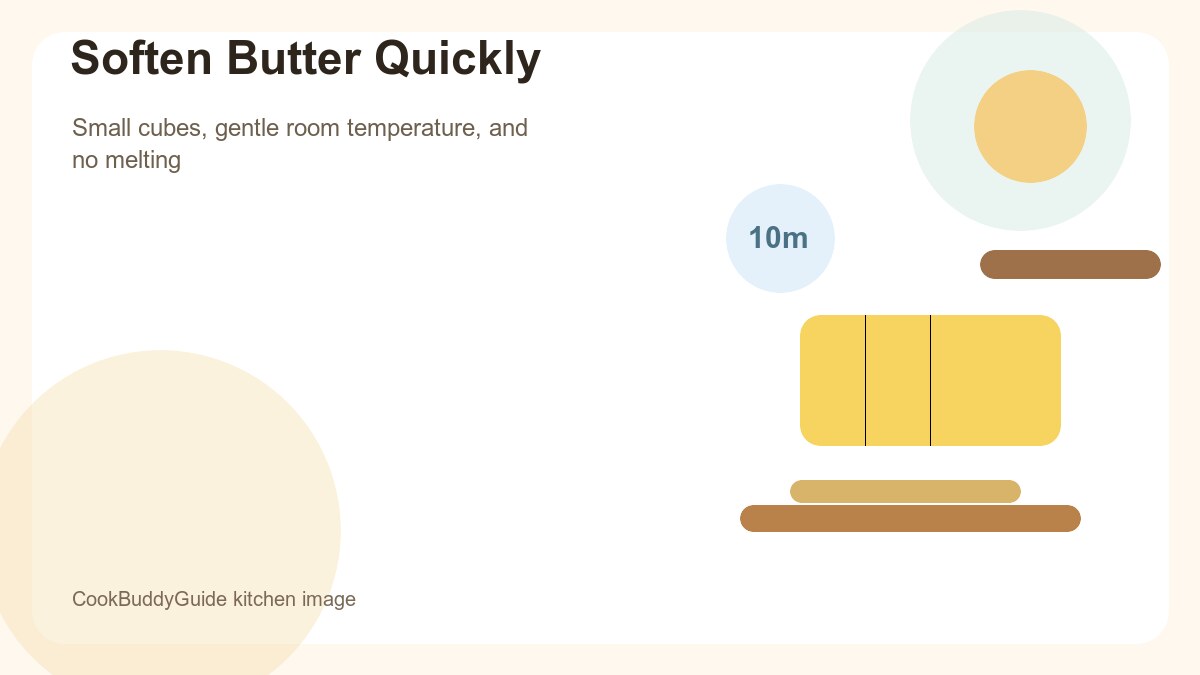
Compare 6 ways to soften butter without melting it, with practical options for cookies, cakes, and spreading.
Practical note
For How to Soften Butter Quickly, this guide centers on soften butter fast, cold sticks, softened state. Those are the checkpoints we would use first in a normal home kitchen before making a bigger change.
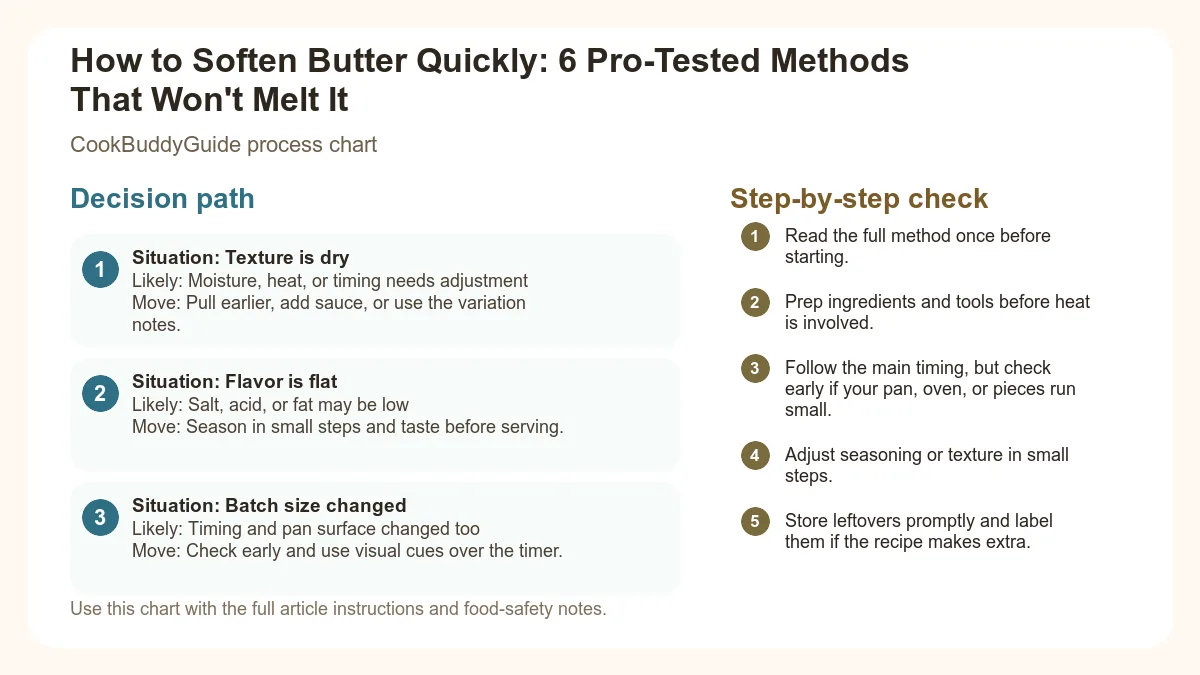
Decision table
| Situation | Likely cause or meaning | Best move |
|---|---|---|
| Texture is dry | Moisture, heat, or timing needs adjustment | Pull earlier, add sauce, or use the variation notes. |
| Flavor is flat | Salt, acid, or fat may be low | Season in small steps and taste before serving. |
| Batch size changed | Timing and pan surface changed too | Check early and use visual cues over the timer. |
Step-by-step fix
- Read the full method once before starting.
- Prep ingredients and tools before heat is involved.
- Follow the main timing, but check early if your pan, oven, or pieces run small.
- Adjust seasoning or texture in small steps.
- Store leftovers promptly and label them if the recipe makes extra.
Common mistakes
- Changing the recipe before trying the base method once.
- Measuring casually when texture depends on ratios.
- Waiting until the end to fix seasoning.
- Ignoring carryover heat or resting time.
Related topic hubs
How to Soften Butter Quickly: 6 Pro-Practical Methods That Won't Melt It
Table of Contents
- Why Butter Temperature is the Secret to Baking Success
- Method 1: The Warm Glass Trick (The Steam Method)
- Method 2: The Rolling Pin Method (The Mechanical Approach)
- Method 3: Grating Frozen or Cold Butter
- Method 4: The Microwave Burst (With Caution)
- Method 5: The Cube and Whisk Method
- Method 6: The Warm Water Bath (Double Boiler Lite)
- 3 Common Mistakes When Softening Butter
Why Butter Temperature is the Secret to Baking Success
In the world of baking chemistry, butter isn't just a flavor enhancer; it’s a structural component. When a recipe calls for properly softened butter for baking, it is referring to a very specific temperature range: 65°F to 67°F (18°C-19°C). This is significantly cooler than what most people consider "room temperature," which in a modern kitchen can often hover around 72°F.
The Science of the Creaming Method
The creaming method involves beating butter and sugar together at a moderate speed in a stand mixer. During this process, the sharp edges of the sugar crystals carve tiny pockets of air into the fat. These air bubbles are what allow your leavening agents (like baking powder or soda) to expand, creating a light, fluffy cookie texture. If the butter is too cold, it’s too plastic to hold these bubbles. If it’s too warm, the solid fat index drops, the air pockets collapse, and the emulsification of fat and liquid fails.
What Exactly is "Room Temperature" Butter?
How Temperature Affects Cookie Spread and Cake Rise
The temperature of your butter dictates the "spread" of your bake. Cold butter takes longer to melt in the oven, allowing the structure of the flour and eggs to set before the fat runs. This results in thicker cookies and taller cakes. Conversely, if you use the microwave and accidentally melt the core of the stick, you’ve essentially changed the butter’s molecular state, leading to heavy, dense, and greasy results.
Method 1: The Warm Glass Trick (The Steam Method)
This is perhaps the most "Instagrammable" way to soften butter fast, and for good reason—it’s gentle and effective for small quantities. I first discovered this trick while living in a drafty apartment in London where the kitchen never rose above 60°F. It uses trapped residual heat to create a mini proofing chamber for your butter.
The Warm Glass Technique
Step 1: Stand your stick of butter upright on a plate. If it’s a long West Coast stick, you may need to cut it in half so it fits under your glass.
Step 2: Fill a tall glass or a ceramic bowl with boiling water. Let it sit for 2 minutes until the vessel feels very hot to the touch.
Step 3: Pour out the water and quickly wipe the inside of the glass dry (you don't want water dripping onto your butter).
Step 4: Invert the hot glass over the butter, creating a sealed dome. Let it sit for 5 to 10 minutes.
Why It Works: Trapped Residual Heat
The glass acts as a radiator. Because you aren't applying direct flame or high-intensity radiation, the heat transfers slowly through the air. This is one of the best ways to soften butter because it minimizes the risk of melting the exterior while the interior remains a frozen block.
Best For: Spreading and Small Batches
Method 2: The Rolling Pin Method (The Mechanical Approach)
The Parchment Paper Technique
Place your cold stick of butter between two large sheets of parchment paper. Using a heavy rolling pin, give the butter a few firm whacks to flatten it slightly. Then, roll it out until it is about 1/8-inch thick. After rolling, let it sit for just 60 seconds. Because it is so thin, it will reach 65°F almost instantly.
Why Flattening Speeds Up Softening
A standard stick of butter is a dense cylinder. Heat has to travel a long way to reach the center. By rolling it out, you’ve eliminated the "core" and exposed every molecule of fat to the air. This is a favorite among professional pastry chefs who need to incorporate butter into simple 5-ingredient dinner recipes or quick doughs.
Best For: Pie Crusts and Quick Cookies
This is the gold standard for cookies. Once rolled, you can simply peel back the parchment and drop the butter directly into your stand mixer. It’s also excellent for pie crusts where you want the butter to be pliable but still distinctly cold.
Method 3: Grating Frozen or Cold Butter
The Box Grater Hack
Take a cold (or even frozen) stick of butter and use the large holes of a box grater to shred it into a bowl. The result is a pile of thin butter "curls." Because these curls are so small, they will soften within seconds of hitting the bowl. According to a soften butter in minutes study by America's Test Kitchen, this is the most consistent way to ensure even distribution in flour.
Using a Food Processor Attachment
If you're working with multiple pounds of butter, use the grating disk on your food processor. It’s faster and keeps your hands from melting the butter as you hold the stick. Baking tips: Toss the grated butter with a tablespoon of the recipe's flour to keep the shreds from clumping back together.
Best For: Biscuits, Scones, and Pie Dough
This method is specifically designed for recipes where the butter needs to be "cut in." The small surface area of the shreds means they incorporate into the dry ingredients perfectly, creating those sought-after flaky layers.
Method 4: The Microwave Burst (With Caution)
The microwave is the most dangerous tool in a baker's kitchen, but if used correctly, it’s the fastest. The mistake most people make is using the default "High" power. This sends waves of energy that vibrate water molecules so fast they melt the center of the butter before the outside even warms up.
The 10% Power Level Secret
The secret to using the microwave method for softening butter is to drop the power level to 10% (Power Level 1). At this low setting, the microwave pulses on and off, allowing heat to conduct through the fat slowly.
The Pro Microwave Method
- Place the butter stick on a microwave-safe plate.
- Set the power level to 10% (Power Level 1).
- Microwave in 8-second bursts.
- After each burst, rotate the stick one-quarter turn (flip it onto a new side).
- Repeat 3–5 times until the fingerprint test is successful.
Rotating the Stick for Even Softening
Microwaves have "hot spots." By rotating the stick, you ensure that no single side is absorbing all the energy. If you see even a tiny puddle of yellow liquid on the plate, stop immediately. Melted butter ruins the emulsification in cake batter, leading to a rubbery crumb.
Method 5: The Cube and Whisk Method
Small Cubes vs. Large Chunks
Instead of leaving the stick whole, use a sharp knife to cut the butter into 1/2-inch cubes. By breaking the stick into 16–20 smaller pieces, you increase the surface area significantly. Spread these cubes out on a plate so they aren't touching.
Using the Stand Mixer to Generate Friction
If you are in a real hurry, put those cold cubes directly into the bowl of your stand mixer. Fit the paddle attachment and run it on medium speed for 2 minutes *without* the sugar. The friction of the paddle hitting the butter and the bowl generates enough heat to raise the temperature of the fat quickly. This is particularly useful for making frostings where you need the butter to be exceptionally smooth.
Method 6: The Warm Water Bath (Double Boiler Lite)
In very cold kitchens, especially during winter, the air itself can prevent butter from softening. In these cases, you need a gentle, consistent heat source. A warm water bath (similar to a double boiler) is the safest way to apply heat without the radiation risks of a microwave.
Indirect Heat Techniques
Fill a large bowl with warm—not hot—water (about 100°F). Place your cubed butter in a smaller, separate bowl and set that bowl inside the water. Ensure no water splashes into the butter, as this will ruin the saturated fat structure.
Monitoring the Temperature
Use a kitchen thermometer to monitor the butter. You want to stir the cubes occasionally so the pieces at the bottom don't get too soft while the ones on top stay cold. This method is the most controlled way to reach that perfect 67°F softened state.
| Method | Time | Consistency | Best For |
|---|---|---|---|
| Grating | 1 min | Excellent | Pastry & Biscuits |
| Rolling Pin | 3 mins | Excellent | Cookies & Cakes |
| Microwave (10%) | 1 min | Variable | Last-minute spreading |
| Warm Glass | 8 mins | Good | Single sticks |
| Cubing | 15 mins | Perfect | General Baking |
| Water Bath | 5 mins | Great | Cold Kitchens |
The Winner for Baking: The Rolling Pin Method. It provides the most even softening and allows the butter to reach the perfect 65°F temperature without any risk of hot spots.
The Winner for Speed: The Grating Method. If you can handle a box grater, you can have "softened" butter in under 60 seconds.
3 Common Mistakes When Softening Butter
1. Overheating and Melting
Once butter melts, its molecular structure changes permanently. Even if you put it back in the fridge to solidify, the water and fat have separated. This is why "melted and cooled" butter is not a substitute for "softened" butter. Melted butter will result in a greasy, heavy texture in cakes and a lack of rise in cookies. If you accidentally melt it, save it for sautéing vegetables and start over with a fresh stick for your bake.
2. Using Salted vs. Unsalted Butter
Did you know that salted butter actually has a slightly lower melting point than unsalted butter? The salt content affects the solid fat index. If you are using salted butter, you need to be even more careful with heat-based methods like the microwave or the warm glass trick, as it will liquefy faster than its unsalted counterpart.
3. Ignoring the Ambient Kitchen Temperature
Your kitchen is an active participant in your baking. On a humid, 80°F summer day, your butter might soften on the counter in 15 minutes. In a 60°F winter kitchen, it might take two hours. Always adjust your timing based on the environment. Furthermore, remember butter at room temperature safety guidelines: the USDA notes that while butter is shelf-stable for short periods due to its high fat and low water content, it shouldn't be left out for more than 1-2 days to maintain peak freshness and safety.
Frequently Asked Questions
If your butter is frozen solid, the Grating Method is your best friend. It’s nearly impossible to soften a frozen stick evenly using the warm glass or microwave methods without melting the outside.
If the butter looks shiny or greasy, or if your finger slides through it with zero resistance, it is too soft. Pop it back in the fridge for 5–10 minutes to firm it up before creaming.
Final Thoughts from the CookBuddyGuide Kitchen
Learning how to soften butter quickly is a helpful shortcut for any busy home cook. Whether you choose the mechanical force of the rolling pin or the gentle radiation of a warm glass, the key is patience and monitoring. Remember, baking is a science, and temperature is one of your most important variables. By mastering these six methods, you’ll never have to delay a baking project again just because you forgot to plan ahead.
Now that your butter is perfectly softened, why not put it to use? Check out our guide to Breakfast Meal Prep Ideas for some buttery pastry inspiration, or dive into our 5-Ingredient Dinner Recipes for quick weeknight wins. Happy cooking!