Quick Answer
Stop buying bottled! This homemade teriyaki sauce is a helpful shortcut. It also explains our easy teriyaki sauce recipe using 5 pantry staples for the perfect glaze or marinade.
Practical note
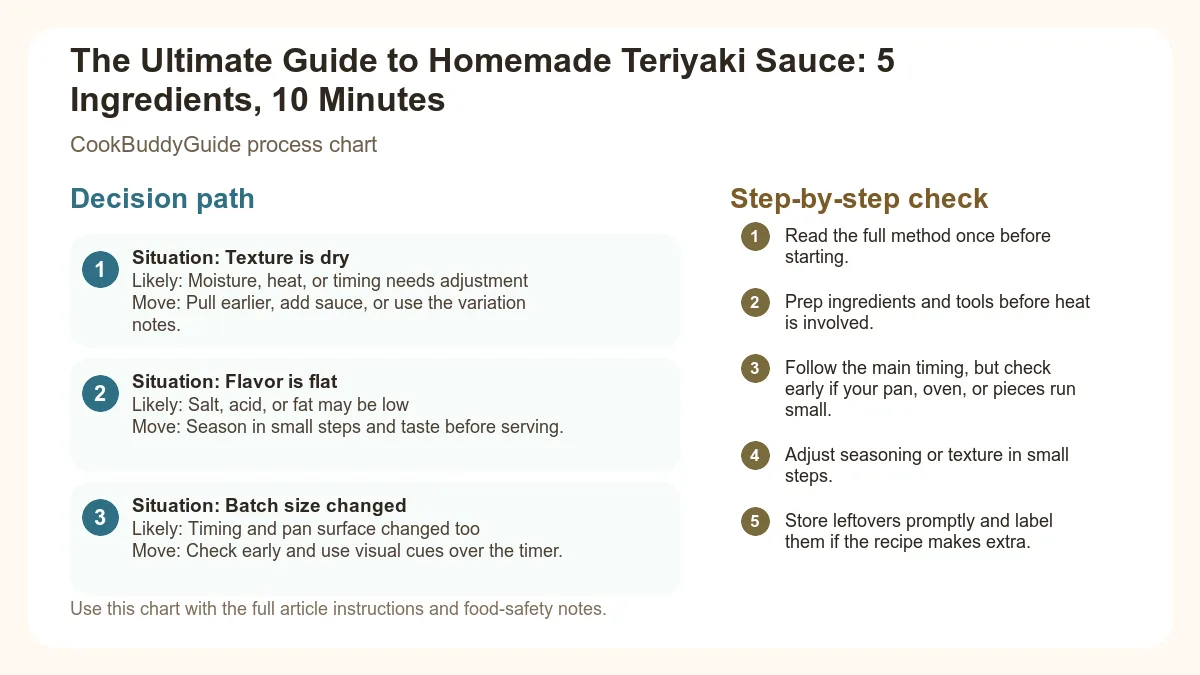
For Homemade Teriyaki Sauce, this guide centers on Mise en Place, Combine, Dissolve. Those are the checkpoints we would use first in a normal home kitchen before making a bigger change.
Decision table
| Situation | Likely cause or meaning | Best move |
|---|---|---|
| Texture is dry | Moisture, heat, or timing needs adjustment | Pull earlier, add sauce, or use the variation notes. |
| Flavor is flat | Salt, acid, or fat may be low | Season in small steps and taste before serving. |
| Batch size changed | Timing and pan surface changed too | Check early and use visual cues over the timer. |
Step-by-step fix
- Read the full method once before starting.
- Prep ingredients and tools before heat is involved.
- Follow the main timing, but check early if your pan, oven, or pieces run small.
- Adjust seasoning or texture in small steps.
- Store leftovers promptly and label them if the recipe makes extra.
Common mistakes
- Changing the recipe before trying the base method once.
- Measuring casually when texture depends on ratios.
- Waiting until the end to fix seasoning.
- Ignoring carryover heat or resting time.
Related topic hubs
Table of Contents
Why Homemade Teriyaki Sauce Beats Store-Bought Every Time
The Problem with Bottled Sauces
If you flip over a standard bottle of commercial stir-fry sauce, the first three ingredients are often water, sugar (or corn syrup), and modified food starch. These brands prioritize shelf-stability over flavor. They use thickeners to mimic the body of a properly reduced sauce and artificial "smoke" or "ginger" flavors that lack the punch of the real thing. When I first started testing this recipe, I did a side-by-side taste test with a popular brand. The bottled version tasted one-dimensional—just salt and sugar. The homemade version had layers: the bite of fresh ginger root, the aromatic pungency of garlic cloves, and the complex sweetness of fermented rice.
The Cost-Benefit Analysis of DIY Sauce
Let’s talk numbers. A high-end bottle of teriyaki sauce can run you $6 to $8. A homemade teriyaki sauce made with staples you already have—like Kikkoman soy sauce and brown sugar—costs pennies per serving. Because you are controlling the reduction yourself, you don't need to pay for the water and fillers that companies use to bulk up their products. You are investing in quality ingredients that last for months in your pantry rather than a single-use bottle.
Control Over Sodium and Sugar
The Core 5 Ingredients: A Deep Dive into Flavor Science
Soy Sauce: The Umami Foundation
Mirin vs. Rice Wine: Understanding the Sweetness
Mirin is a Japanese sweet rice wine that is essential for achieving the signature "teriyaki" shine. The word teriyaki actually comes from teri (luster) and yaki (grill). Mirin contains sugars that caramelize beautifully under heat, creating a distinct luster and sweetness that regular sugar can't replicate alone. If you can’t find mirin, you can substitute dry sherry or sake mixed with a little extra sugar, but the authentic flavor really comes from the mirin’s fermentation process.
Sugar: Balancing the Brine
Fresh Aromatics: The Power of Garlic and Ginger
Fresh ginger root and garlic cloves give the sauce a sharper aroma than their powdered versions. Grate the ginger directly into the pot so its juice disperses through the homemade teriyaki sauce.
The Master Recipe: Step-by-Step Instructions
The CookBuddy Master Teriyaki Sauce
This recipe makes approximately 1.5 cups of sauce. It is the perfect balance of sweet, salty, and aromatic.
Ingredients:- 1 cup soy sauce (standard or low-sodium)
- 1 cup mirin (or sake/water with 2 tbsp extra sugar)
- 1/2 cup brown sugar (packed)
- 1 tablespoon fresh ginger root, finely grated
- 2 large garlic cloves, minced or pressed
- Optional: 1 teaspoon sesame oil for finishing
- Mise en Place: Grate your ginger and mince your garlic before you turn on the stove. This process moves fast once the heat is on.
- Combine: In a small saucepan, combine the soy sauce, mirin, brown sugar, ginger, and garlic over medium-high heat.
- Dissolve: Whisk the mixture constantly until the sugar is fully dissolved.
- Simmer: Bring the liquid to a gentle boil, then immediately reduce the heat to low. Let it simmer for about 5 minutes. You will see the bubbles change from thin and watery to larger and more "soapy" looking—this is the sign of reduction.
Thin vs. Thick: Mastering the Consistency
The Thin Formula: Perfect for Marinating
If you are planning to soak proteins for several hours, you want a thin sauce. A thin marinade can penetrate the fibers of the meat more effectively than a thick glaze, which just sits on the surface. For a marinade, follow the master recipe but do not simmer it for more than 2 minutes. You want the flavors combined but the viscosity to remain like water. This allows the salt to brine the meat, keeping it juicy during high-heat cooking.
The Thick Formula: Creating the Ultimate Glaze
For that iconic restaurant-style "cling" on your chicken wings or salmon, you need a cornstarch slurry. Without it, you would have to reduce the sauce for 30 minutes to get it thick, which would make it far too salty. By using a starch, you get the body without the over-concentration of salt. This is the secret to a Japanese cuisine aesthetic where the sauce coats the back of a spoon perfectly.
The Cornstarch Slurry Technique
To thicken your easy teriyaki sauce recipe, mix 1 tablespoon of cornstarch with 1 tablespoon of cold water in a small bowl. Whisk until smooth. While the sauce is simmering, slowly pour in the slurry while whisking the sauce constantly. Continue to cook for exactly 1-2 minutes. You must bring it back to a boil for the starch to "activate" and clear up; otherwise, your sauce will look cloudy and taste floury. You can find more details on how to use cornstarch slurries to achieve that professional gloss.
Customizing Your Flavor Profile
Adjusting Sweetness and Saltiness
The beauty of a homemade teriyaki sauce is its flexibility. If you find the recipe too sweet, add a splash of rice wine vinegar. The acidity cuts through the sugar and brightens the entire profile. If it's too salty, don't just add water—add a tablespoon of honey or maple syrup. Honey provides a different type of viscosity and a floral note that pairs exceptionally well with pork.
Adding Heat: Spicy Teriyaki Variations
Fruit-Infused Teriyaki (Pineapple and Orange)
For a Hawaiian-style twist, replace half of the mirin with pineapple juice. The enzymes in pineapple juice (bromelain) act as a natural meat tenderizer, making this variation incredible for tougher cuts of beef. If you want a brighter, citrusy note for seafood, whisk in a tablespoon of orange zest and 2 tablespoons of fresh orange juice at the very end of the cooking process.
The Best Ways to Use Your Homemade Teriyaki Sauce
Teriyaki Chicken: The Gold Standard
For the best teriyaki chicken, consider using boneless, skinless chicken thighs. They have more fat than breasts, which means they won't dry out during the glazing process. Sear the chicken in a hot pan until 80% cooked, then pour in the sauce. The sauce will reduce and glaze the chicken simultaneously. If you're looking for more inspiration, check out our 15-minute chicken breast recipes for quick weeknight ideas.
Glazed Salmon: Achieving the Perfect Crust
Salmon and teriyaki are a match made in heaven. a practical method is to pan-sear the salmon skin-side down first to get it crispy. Then, use a basting brush to coat the top of the fish with a thick version of the sauce. Transfer the pan to the oven under the broiler for 2 minutes. The sugar in the sauce will bubble and slightly char, creating a polished crust that is sweet, salty, and smoky.
Tofu and Plant-Based Proteins
To get tofu to actually taste like something, you must press it first to remove excess water. Once pressed and cubed, toss it in cornstarch and pan-fry until crispy. Only then should you add the homemade teriyaki sauce. The crispy exterior of the tofu acts like a sponge, soaking up the sauce while maintaining its structural integrity. This technique works equally well with tempeh or seitan.
Roasted Vegetables and Stir-Fries
Practical Tips for Success (Testing Notes & Common Mistakes)
Why Your Sauce Might Be Too Salty
Achieving the 'Mirror Shine'
To get that perfect glaze and mirror shine, you must understand the role of residual heat. The sauce will continue to thicken as it cools. If it looks exactly the right thickness in the pan, it will be a solid brick once it hits the plate. Aim for a consistency that is slightly thinner than your target; by the time you serve it, it will be perfect.
The Importance of Cooling
Never put a hot homemade teriyaki sauce into a plastic container. The heat can cause the plastic to warp and leach chemicals. Furthermore, if you are using the sauce as a marinade, it must be completely cold before it touches raw meat. Adding warm sauce to raw chicken can raise the temperature of the meat into the "danger zone" for bacterial growth. Always chill your sauce in the fridge for at least 30 minutes if using it as a marinade.
Storage, Shelf Life, and Meal Prep
Fridge Storage Guidelines
Can You Freeze Teriyaki Sauce?
Yes, you can freeze it! However, if you have thickened it with a cornstarch slurry, the texture might become slightly spongy upon thawing. For the best results, freeze the "thin" version of the sauce in ice cube trays. Once frozen, pop the cubes into a freezer bag. You can then drop a couple of cubes directly into a hot pan with vegetables for an instant flavor boost.
Reheating Without Breaking the Emulsion
When reheating the sauce, do it gently. If you microwave it on high, the sugar can scorch at the edges of the bowl. Instead, use a small saucepan over low heat. If the sauce has thickened too much in the fridge, simply whisk in a teaspoon of water to loosen it back up to its original glory.
Dietary Adaptations
Gluten-Free Teriyaki (Tamari Substitution)
Keto-Friendly/Low-Carb Options
To make a keto version, you need to replace both the sugar and the mirin. Use a brown sugar substitute (like Swerve or Lakanto) and replace the mirin with rice vinegar plus a few drops of liquid stevia. Since cornstarch is high in carbs, use a 1/4 teaspoon of xanthan gum to thicken the sauce. Be careful: xanthan gum is very powerful, and a little goes a long way!
Vegan Considerations
While most teriyaki ingredients are naturally vegan, some highly processed sugars are filtered through bone char. To ensure your homemade teriyaki sauce is 100% vegan, use organic brown sugar or agave nectar. Also, check your mirin label; some cheaper "mirin-style" seasonings contain honey or other additives that may not align with a vegan diet.
Frequently Asked Questions
In a pinch, yes, but use only 1/4 teaspoon of ground ginger for every tablespoon of fresh. The flavor will be significantly different—less bright and more "warm" and spicy.
You can substitute with dry sherry or a sweet white wine. If you have neither, use rice wine vinegar but add an extra 2 tablespoons of sugar to counteract the acidity.
No! That is just the gelatin from the aromatics or the thickening of the sugar and starch. It will turn back into a liquid as soon as you heat it up.
Conclusion: Your Kitchen, Upgraded
Mastering a homemade teriyaki sauce is a rite of passage for any home cook looking to balance a busy schedule with a desire for high-quality food. By understanding the balance between the umami of the soy, the luster of the mirin, and the bite of fresh aromatics, you’ve moved beyond following a recipe—you’ve learned the science of flavor. Whether you’re glazing a piece of salmon for a fancy Friday dinner or tossing together a 10-minute vegetable stir-fry on a Monday night, this sauce is your secret weapon. Ditch the bottle, grab your ginger root, and taste the difference that ten minutes can make.