Quick Answer
A firm potato with a few small sprouts can be peeled and trimmed generously, but discard potatoes that are extensively green, bitter, soft, shriveled, or heavily sprouted. Sprouts and green areas can contain higher levels of glycoalkaloids, which cooking does not reliably remove.
Practical note
For Can You Eat Sprouted Potatoes? A Complete Food Safety Guide for Home Cooks, this guide centers on Under 1 inch, Over 1 inch, Inspect. Those are the checkpoints we would use first in a normal home kitchen before making a bigger change.
Decision table
| Situation | Likely cause or meaning | Best move |
|---|---|---|
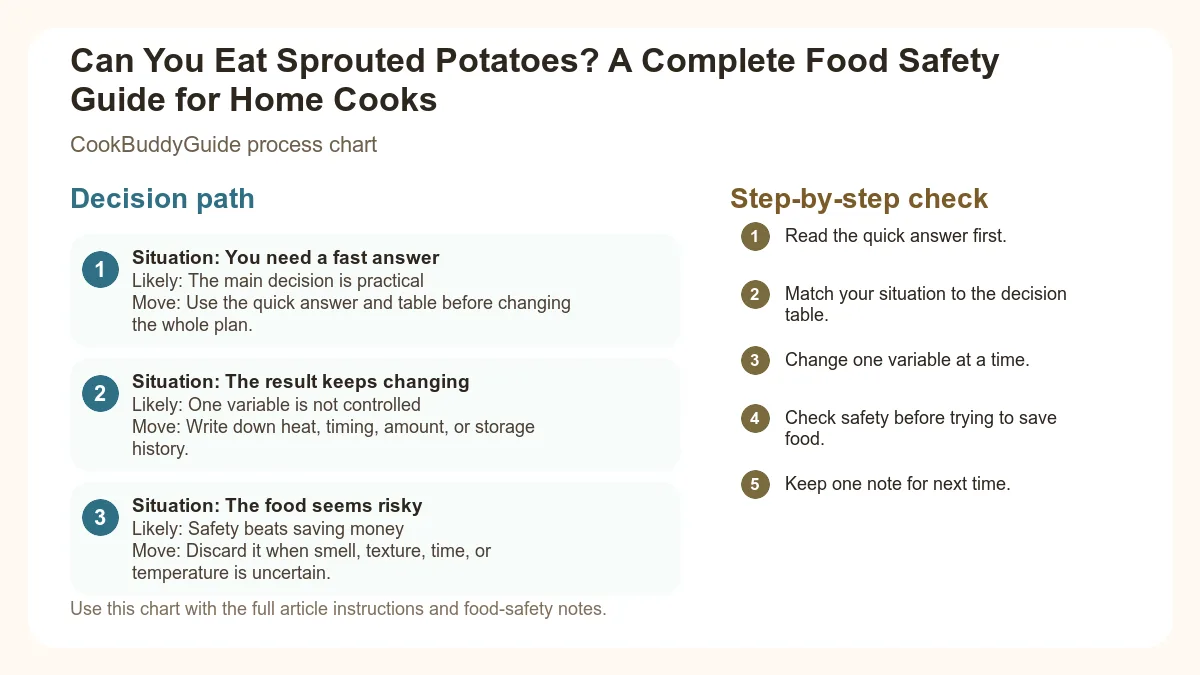
| You need a fast answer | The main decision is practical | Use the quick answer and table before changing the whole plan. |
| The result keeps changing | One variable is not controlled | Write down heat, timing, amount, or storage history. |
| The food seems risky | Safety beats saving money | Discard it when smell, texture, time, or temperature is uncertain. |
Step-by-step fix
- Read the quick answer first.
- Match your situation to the decision table.
- Change one variable at a time.
- Check safety before trying to save food.
- Keep one note for next time.
Common mistakes
- Skipping the quick answer and changing too much at once.
- Treating quality problems and safety problems the same way.
- Not writing down the detail that caused the repeat problem.
Related topic hubs
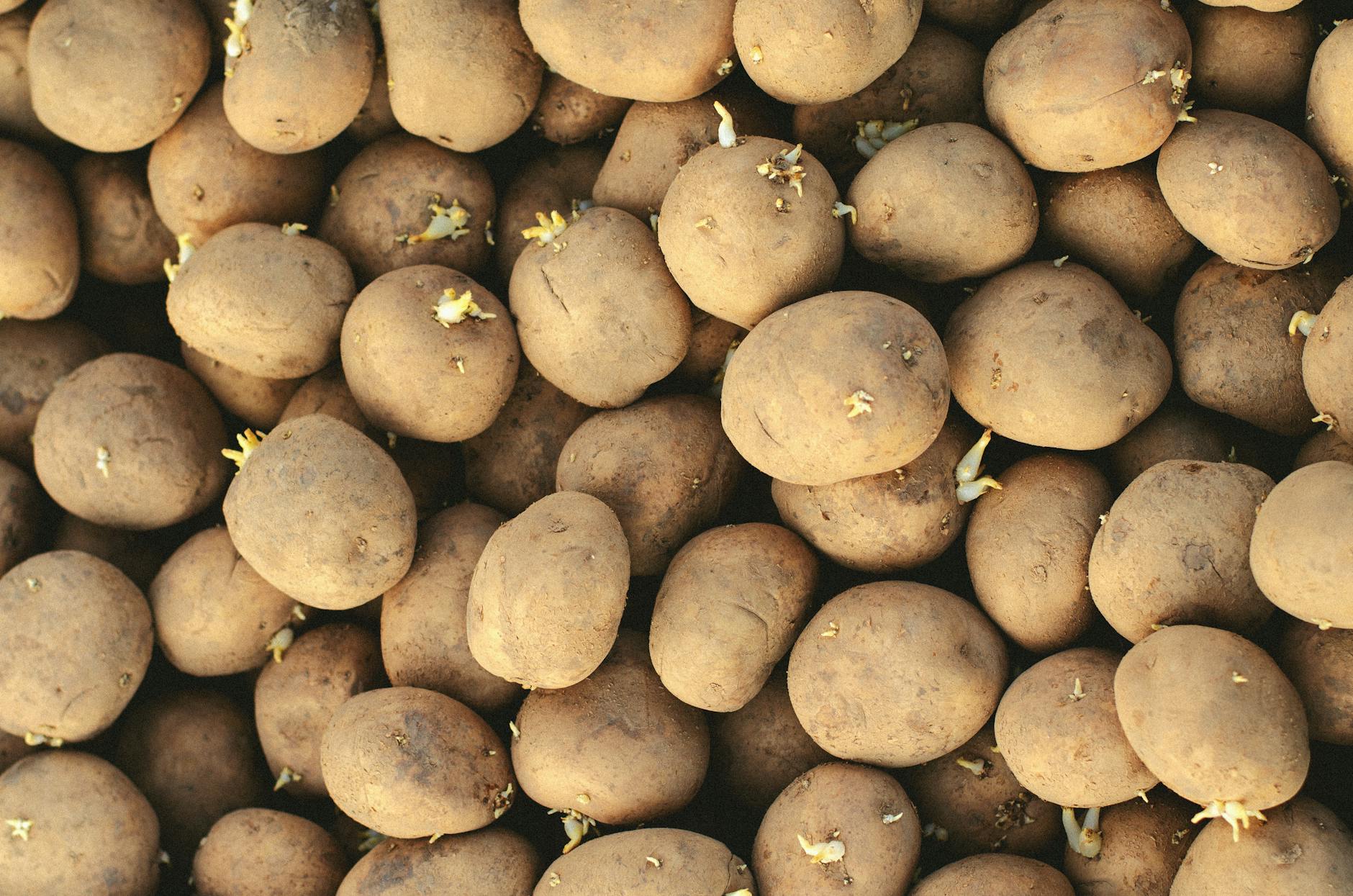
It’s 6:15 PM on a Tuesday. You’ve had a long day, and the plan is a simple, comforting batch of mashed potatoes to go with your roast chicken. You reach into the dark recesses of your pantry, pull out that five-pound bag of Russets you bought last week, and—bam. They look like they’re trying to grow a forest. Long, pale, spindly growths are reaching out from the "eyes" of your potatoes. You find yourself asking the age-old kitchen question: can you eat sprouted potatoes, or is this a one-way trip to the compost bin?
Table of Contents
- The Kitchen Dilemma: To Toss or to Peel?
- The Science of Sprouting: Solanine and Chaconine
- Are Sprouted Potatoes Safe to Eat? The Definitive Answer
- The Green Skin Connection: Is Green Always Bad?
- How to Safely Prepare Slightly Sprouted Potatoes
- Cooking Methods and Toxin Reduction
- When to Toss: 5 Signs Your Potato is Too Far Gone
- Symptoms of Solanine Poisoning
- Preventing Sprouts: Professional Storage Tips
- Summary: The CookBuddyGuide Safety Checklist
The Kitchen Dilemma: To Toss or to Peel?
Why potatoes sprout in your pantry
Potatoes are not just inert vegetables; they are living tubers. Their entire biological purpose is to store energy and eventually grow into a new potato plant. When you bring them home, they are essentially in a state of dormancy. However, once they are exposed to the right (or wrong) combination of light, warmth, and moisture, they "wake up."
The visual anatomy of a sprouted potato
To understand the safety, we have to understand the anatomy. The "eyes" of a potato are actually dormant buds. When these buds activate, they draw moisture and starch from the main body of the tuber to fuel the growth of the sprout. This is why a heavily sprouted potato often feels soft or shriveled—it is literally being eaten from the inside out by its own offspring.
The Science of Sprouting: Understanding Solanine and Chaconine
What are glycoalkaloids?
Potatoes are members of the Nightshade family (Solanaceae), which also includes tomatoes, eggplants, and peppers. While we love these vegetables, the family is famous for producing natural toxins called glycoalkaloids. In potatoes, the two primary toxins are Solanine and Chaconine.
According to the National Capital Poison Center, solanine and chaconine glycoalkaloids are found throughout the potato plant, but they are concentrated in the leaves, stems, and—crucially for us—the sprouts.
Why potatoes produce natural toxins
These toxins aren't there to ruin your dinner; they are a sophisticated natural defense mechanism. They protect the potato from pests, fungi, and bacteria. When a potato starts to sprout or is exposed to light, it ramps up the production of these alkaloids to protect the "new growth" (the sprouts) from being eaten by animals in the wild.
The role of light and temperature
Light exposure triggers a process where the potato produces chlorophyll. While chlorophyll itself is harmless and tasteless, its presence is a massive "red flag." The same conditions that cause a potato to turn green also cause a spike in solanine levels. This is why you should always be wary of green skin on your tubers.
Are Sprouted Potatoes Safe to Eat? The Definitive Answer
The 'Firmness' Test
The threshold of sprout length
- Under 1 inch: Generally safe to consume if the potato is firm. These are "young" sprouts that haven't had time to significantly alter the chemistry of the entire tuber.
- Over 1 inch: Proceed with extreme caution. Long sprouts indicate that the potato has been active for a significant amount of time. If there are multiple long sprouts, consider discarding the potato.
The Green Skin Connection: Is Green Always Bad?
Chlorophyll vs. Solanine
As mentioned, greening is caused by chlorophyll. However, because chlorophyll and solanine are produced simultaneously under light exposure, the green color is a reliable visual indicator of alkaloid toxicity. If you see green, you are seeing a "danger" sign.
Can you just peel the green parts off?
If the greening is localized to one small spot, you can often save the potato by peeling deeply. You need to remove all the green flesh plus about a quarter-inch of the white/yellow flesh underneath to be safe. If the greening extends deep into the center of the potato, toss it. No amount of cooking will make a high-solanine potato safe or tasty.
How to Safely Prepare Slightly Sprouted Potatoes
If you’ve determined your potatoes are firm and the sprouts are small, you can still use them in your budget friendly dinner recipes. But you can't just brush the sprouts off with your thumb.
The "Deep-Eye" Removal Method
- Inspect: Ensure the potato is firm and has no soft spots or shriveled skin.
- Snap: Snap off the long part of the sprout with your fingers and discard.
- Gouge: Using the tip of a vegetable peeler or a paring knife, gouge out the "eye" where the sprout was growing. You want to remove a cone-shaped piece of flesh about 1/8th to 1/4th of an inch deep.
- Peel: Peel the entire potato, even if you usually leave the skin on. Solanine is most concentrated in the skin and just below it.
- Check: Look for any remaining green tinges or translucent spots. If the interior is creamy and consistent, it’s ready for the pot.
Pro Tip: A melon baller is a fantastic tool for scooping out potato eyes quickly and cleanly!
For more details on this process, safely preparing sprouted potatoes involves a more aggressive approach than standard peeling.
Cooking Methods and Toxin Reduction
There is a common myth that boiling potatoes "kills" the toxins. Unfortunately, this is scientifically incorrect. Solanine is incredibly heat-stable. It has a melting point of about 545°F (285°C), which is far higher than any standard cooking temperature.
Does boiling kill solanine?
Boiling does not destroy solanine. In fact, because solanine is not very water-soluble, only a negligible amount leaches into the boiling water. If you boil a toxic potato, you simply end up with a toxic boiled potato.
Frying vs. Baking
Research suggests that deep-frying at high temperatures (around 338°F or 170°C) can slightly reduce glycoalkaloid levels, but it is not a "cure." You cannot rely on heat to make an unsafe potato safe. Physical removal—peeling and gouging—is the only effective way to reduce toxin levels in a sprouted tuber.
When to Toss: 5 Signs Your Potato is Too Far Gone
Sometimes, frugality needs to take a backseat to food safety. If you see any of these signs, it's time to let go. This is especially true if you are cooking for children or the elderly, who are more sensitive to glycoalkaloids.
- The "Squish" Factor: If you squeeze the potato and it feels soft or leaves an indentation, the internal structure has collapsed.
- Wrinkled Skin: Dehydration and shriveling mean the potato has spent all its energy on the sprouts.
- The "Medusa" Look: If there are sprouts coming out of every eye and they are several inches long, the when to discard sprouted potatoes guidelines suggest tossing them immediately.
- Musty Odor: A healthy potato smells like fresh earth. A toxic or rotting potato will have a sharp, fermented, or musty smell.
- Extensive Greening: If more than 20% of the potato is green, the toxin levels are likely too high to safely remove by peeling.
Symptoms of Solanine Poisoning: What to Watch For
While rare in modern times due to commercial food standards, solanine poisoning (or "potato poisoning") is a real medical concern. It typically occurs within 8 to 12 hours after ingestion, though it can happen as quickly as 30 minutes if concentrations are high.
Gastrointestinal Distress
The first signs are usually stomach-related: nausea, diarrhea, vomiting, and stomach cramps. Many people mistake this for a standard "stomach bug" or common food poisoning.
Neurological Symptoms
In higher doses, solanine can affect the nervous system. Symptoms include:
- Headaches and dizziness
- Flushing or a feverish feeling
- Confusion
- In extreme cases, vision changes or respiratory distress
If you experience any of these after eating potatoes that tasted bitter, seek medical attention immediately.
Preventing Sprouts: Professional Storage Tips
A Practical Potato Storage Guide
- Temperature: Aim for a cool dark place between 45°F and 50°F. Your refrigerator is actually too cold (it turns starches to sugar, making potatoes turn brown when fried), but a room-temperature pantry is often too warm. A cool basement or a dark corner of the floor is often best.
- Airflow: Never store potatoes in sealed plastic bags. They need to breathe! Use burlap, paper bags, or a mesh basket.
- Keep it Dark: Even a few hours of fluorescent light can trigger chlorophyll and solanine production.
For more deep-dive tips, check out this guide on how to properly store your potatoes.
By following these storage tips, your potatoes will stay firm and sprout-free, perfect for those sheet pan dinner ideas we all love on busy weeknights.
Summary: The CookBuddyGuide Safety Checklist
To wrap things up, let's look at a quick-reference checklist you can use the next time you find a sprouted tuber in your kitchen.
Yes: Proceed to the next step. No: Toss it.
Yes: Safe to remove and eat. No: Use extreme caution; discard if the potato shows any softness.
Small spots: Peel deeply (1/4 inch). Extensive greening: Toss it.
If you take a bite and it's bitter, stop eating immediately and discard the dish.
Final Thoughts from the Kitchen
We’ve all been there—trying to save a few dollars by stretching our groceries. In most cases, a few small sprouts are nothing to fear as long as you are diligent about peeling deeply and removing the eyes. However, your health is worth more than a 50-cent Russet. When in doubt, throw it out! To avoid waste in the future, try buying potatoes in smaller quantities or "loose" rather than in giant bags if you aren't planning to cook them all within a week.
Happy (and safe) cooking!