Quick Answer
A printed date on a commercially canned food is usually about quality, not an automatic safety cutoff. Discard any can that is bulging, leaking, badly rusted, or deeply dented at a seam, and never taste food from a container that spurts liquid or smells abnormal when opened.
Practical note
For Can You Eat Expired Canned Food? A Practical Safety and Quality Guide for Home Cooks, this guide centers on Safe Dents, Unsafe Dents, Rinse Thoroughly. Those are the checkpoints we would use first in a normal home kitchen before making a bigger change.
Decision table
| Situation | Likely cause or meaning | Best move |
|---|---|---|
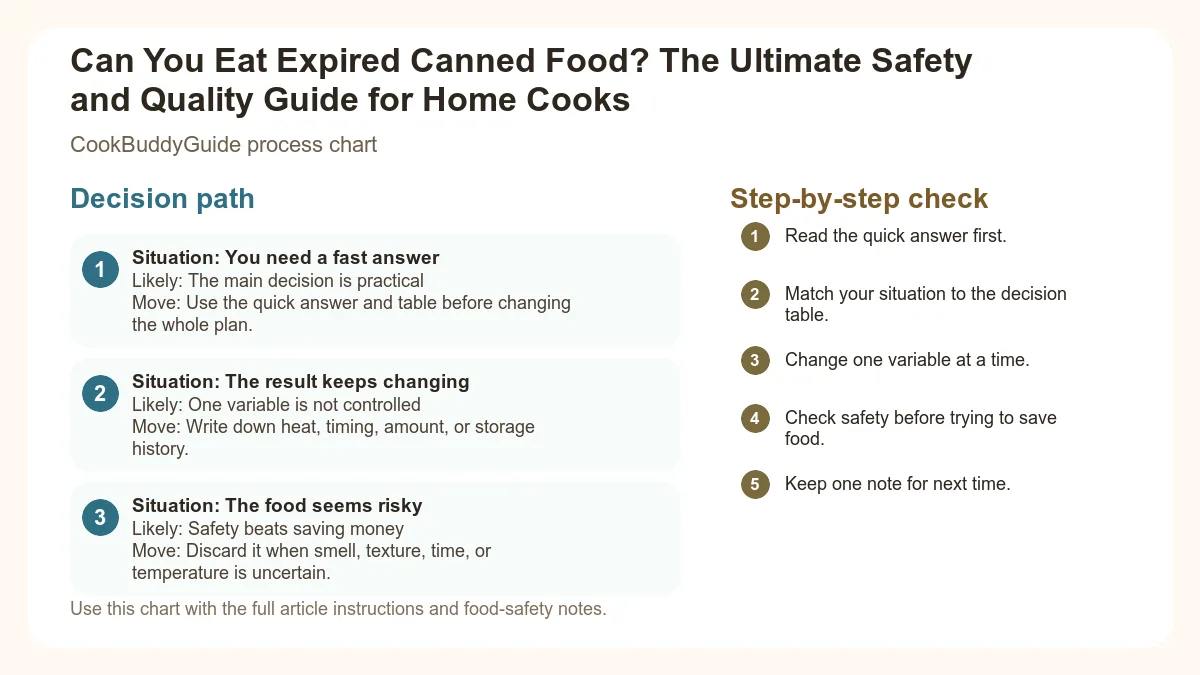
| You need a fast answer | The main decision is practical | Use the quick answer and table before changing the whole plan. |
| The result keeps changing | One variable is not controlled | Write down heat, timing, amount, or storage history. |
| The food seems risky | Safety beats saving money | Discard it when smell, texture, time, or temperature is uncertain. |
Step-by-step fix
- Read the quick answer first.
- Match your situation to the decision table.
- Change one variable at a time.
- Check safety before trying to save food.
- Keep one note for next time.
Common mistakes
- Skipping the quick answer and changing too much at once.
- Treating quality problems and safety problems the same way.
- Not writing down the detail that caused the repeat problem.
Related topic hubs
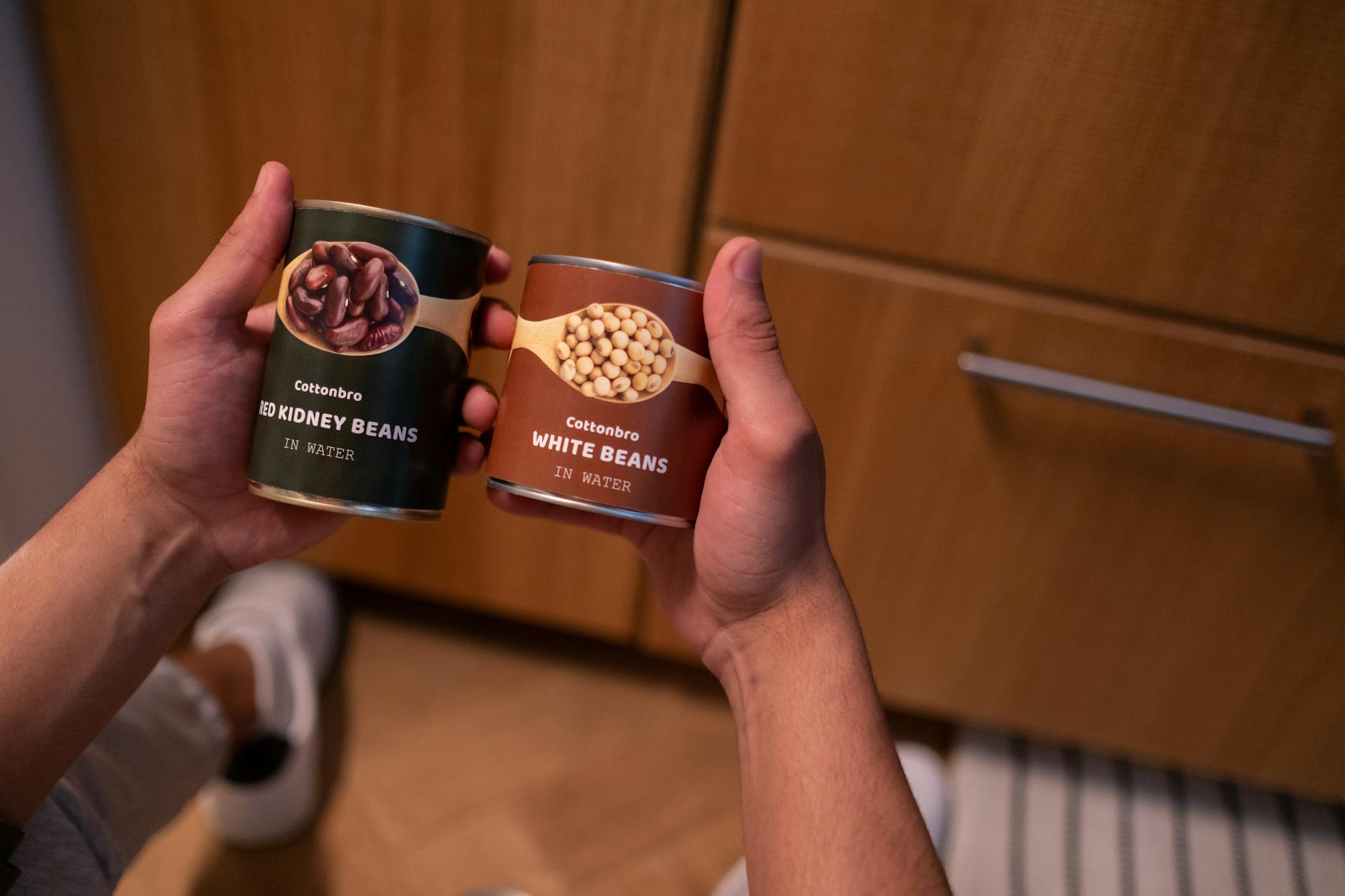
It is 6:15 PM on a Tuesday. You are staring into the depths of your pantry, trying to pull together a quick dinner, when you spot a lone can of black beans tucked behind a jar of specialty mustard. You pull it out, ready to make a quick batch of tacos, only to see the date stamped on the bottom: October 2021. Your heart sinks. You find yourself asking the question millions of home cooks face every year: can you eat expired canned food, or are you moments away from a trip to the emergency room?
Table of Contents
- Decoding the Dates: Best-By vs. Use-By vs. Expiration
- The Science of Canning: Why It Lasts So Long
- Safety Red Flags: When to Toss the Can Immediately
- The Botulism Risk: Rare but Real
- Shelf Life by Category: A Practical Reference Table
- Real-World Kitchen Experience: Cooking with 'Old' Canned Goods
- Storage Conditions: How to Make Cans Last a Decade
- Conclusion: Trust Your Senses, But Respect the Science
Decoding the Dates: Best-By vs. Use-By vs. Expiration
The first thing we need to clarify is that the "expiration date" you see on most cans isn't actually an expiration date at all. In the United States, there is a massive difference between a safety deadline and a quality suggestion. According to the USDA food product dating guidelines, most shelf-stable foods are safe indefinitely if the package is intact and shows no signs of damage.
What 'Best if Used By' actually means
When a manufacturer stamps a "Best if Used By" date on a can of soup, they are making a promise about quality, not safety. This date represents the manufacturer's estimate of how long the product will remain at its peak flavor, color, and texture. After this date, the food doesn't suddenly become toxic; instead, the beans might get slightly softer, the color of the peaches might fade, or the liquid might slightly separate. The FDA guide to date labels clarifies that manufacturers use these dates to indicate when a product will be at its peak flavor.
The myth of the 'Expiration Date' on cans
With the sole exception of infant formula, there are no federal regulations requiring expiration dates on food. This is a shock to many home cooks! We have been conditioned to treat these dates as law, but in the world of commercial canning, the seal is the law. If the vacuum seal is intact and the food was processed correctly, the contents are technically sterile.
The Science of Canning: Why It Lasts So Long
To understand why you can often safely eat "expired" canned food, you have to understand the rigors of the canning process. Commercial canning is a marvel of food science designed to create a shelf-stable environment that is hostile to bacteria.
During the process, food is placed in a container, which is then sealed and heated to a specific temperature—usually between 240°F and 250°F (116°C to 121°C). This high-heat treatment destroys pathogenic microorganisms and deactivates enzymes that would otherwise cause the food to spoil. As the can cools, a vacuum seal is formed, preventing any new bacteria from entering the environment. This creates an anaerobic (oxygen-free) environment that, when combined with the sterilization of the food itself, allows the contents to remain safe for years, and in some cases, decades.
Safety Red Flags: When to Toss the Can Immediately
While the date might be flexible, the physical condition of the can is not. When you are assessing whether can you eat expired canned food, you must perform a rigorous physical inspection. If you see any of the following spoilage signs, do not even think about opening the can.
The Danger of Bulging Lids
A bulging or "swollen" lid is the ultimate red flag. This indicates that gas-producing bacteria are active inside the can. Because the can is a sealed environment, the gas produced by these bacteria has nowhere to go, causing the metal to distend. This is often a sign of Clostridium botulinum, the bacteria responsible for botulism. If the lid gives even a little when you press it, or if it’s visibly domed, toss it immediately. Do not sniff it, and certainly do not taste it.
Rust and Corrosion: How deep is too deep?
Surface rust that wipes off with a finger is generally fine—it’s usually just a result of humidity in your pantry. However, deep pitting rust that has begun to eat into the metal is a major safety risk. Rust can create microscopic holes that allow air and bacteria to enter the can, compromising the sterile environment. If the rust is flaky or cannot be wiped away, the integrity of the seal is gone.
Dents: The 'Side Seam' and 'Rim' rule
- Safe Dents: Small dents on the smooth side of the can that do not have sharp edges.
- Unsafe Dents: Any dent located on the top or bottom rim, or any dent that intersects with the vertical side seam of the can. These areas are the most structurally vulnerable; a dent here can easily break the vacuum seal.
Spurting Liquid and Foul Odors
When you open the can, pay attention. A slight "hiss" of air being pulled into the can is normal—that’s the vacuum seal breaking. However, if liquid or foam spurts out of the can like a miniature volcano, it indicates internal pressure from gas-producing bacteria. Similarly, if the food has a "funky," sour, or putrid smell, trust your nose. Even if the date is current, an off-smell means the food is unsafe.
The Botulism Risk: Rare but Real
We cannot discuss expired canned food safety guide without mentioning botulism. Botulism is a rare but life-threatening form of food poisoning caused by toxins produced by Clostridium botulinum. This bacteria thrives in the low-oxygen, low-acid environments found in many canned goods.
The scariest part about botulism is that it is odorless and tasteless. You cannot "smell" botulism. This is why the physical integrity of the can is so much more important than the date. While modern commercial canning is incredibly safe, damaged cans provide the perfect entry point for these spores. The CDC instructions on preventing botulism emphasize that you should never taste food from a can that is bulging, leaking, or badly dented. If you suspect botulism, double-bag the can and dispose of it where no humans or pets can reach it.
Shelf Life by Category: A Practical Reference Table
How long can you actually push the limits? It depends heavily on the acidity of the food. High-acid foods (like tomatoes) react with the metal lining of the can over time, leading to faster quality degradation than low-acid foods (like corn or meat). Refer to this shelf-stable food storage chart for official timelines, but here is my practical breakdown for home cooks.
| Food Category | Examples | Quality Window (Past Date) | Safety Note |
|---|---|---|---|
| High-Acid Foods | Tomatoes, Pineapple, Pickles, Fruit Juices | 12–18 Months | Acidity can eventually cause the can to corrode from the inside. |
| Low-Acid Foods | Beans, Corn, Peas, Meats, Soups, Carrots | 2–5 Years | These are the most stable; texture remains decent for a long time. |
| Dry Canned Goods | Powdered Milk, Grains, Flour | 5–10 Years | If moisture is kept out, these last nearly indefinitely. |
Real-World Kitchen Experience: Cooking with 'Old' Canned Goods
Pro-Tip: How to Use 'Older' Canned Goods
If you find yourself using pantry staples that are 1-2 years past their date, follow these steps to ensure a great meal:
- Rinse Thoroughly: Older canned goods can sometimes develop a "tinny" or metallic taste from the can lining. Rinsing beans or vegetables under cold water for 60 seconds removes the excess brine and the metallic aftertaste.
- Choose the Right Dish: Don't use old canned veggies as a standalone side dish. Instead, incorporate them into dishes with long cook times like soups, chilis, or casseroles. This allows the flavors to meld and masks any minor texture changes.
- Check the Liquid: If the liquid in a can of fruit has turned cloudy (and it wasn't supposed to be), that's a sign of quality loss. Discard the liquid and rinse the fruit before using it in a bake.
Using these tips is a great way to create budget friendly dinner recipes without wasting perfectly good food.
Storage Conditions: How to Make Cans Last a Decade
Your pantry's environment is the single biggest factor in how long your canned food will stay high-quality. The food preservation process is robust, but it isn't magic; external factors can still take a toll.
The 'Cool, Dark, and Dry' Rule
The ideal temperature for storing canned goods is between 50°F and 70°F (10°C to 21°C). High temperatures—like those found in a garage, a shed, or even the cabinet above your oven—can accelerate the breakdown of nutrients and cause the food to spoil much faster. In fact, storing cans at temperatures above 95°F can cause even commercially sterile food to spoil as thermophilic bacteria (which survive the canning process in a dormant state) can become active.
Avoid Humidity
Humidity is the enemy of the metal can. Moisture leads to external rust, and as we discussed, rust can eventually compromise the vacuum seal. Never store your pantry storage items on the floor or against a damp exterior wall. Use wire shelving or wooden cabinets that allow for air circulation.
Conclusion: Trust Your Senses, But Respect the Science
So, can you eat expired canned food? In the vast majority of cases, the answer is a resounding yes—provided the can itself is in pristine condition. The "Best-By" date is a guide for flavor, not a warning of danger. By understanding the difference between a cosmetic dent and a structural failure, and by knowing the specific shelf life of high-acid vs. low-acid foods, you can significantly reduce food waste in your home.
Frequently Asked Questions
A: Yes! Once you open the can and verify the food is safe, you can treat it like any other food. If you only need half a can of beans, freeze the rest in a freezer-safe container for up to 3 months.
A: Monitor yourself for symptoms of food poisoning, specifically blurred vision, drooping eyelids, or difficulty swallowing (signs of botulism). Contact a healthcare provider immediately if you feel unwell.
The ultimate mantra for every home cook should be: "When in doubt, throw it out." If your gut tells you something is wrong when you open that can of corn, listen to it. But if the can is perfect and the beans look great, don't let a date from last year stop you from making a delicious, affordable meal for your family. Happy cooking!