Quick Answer
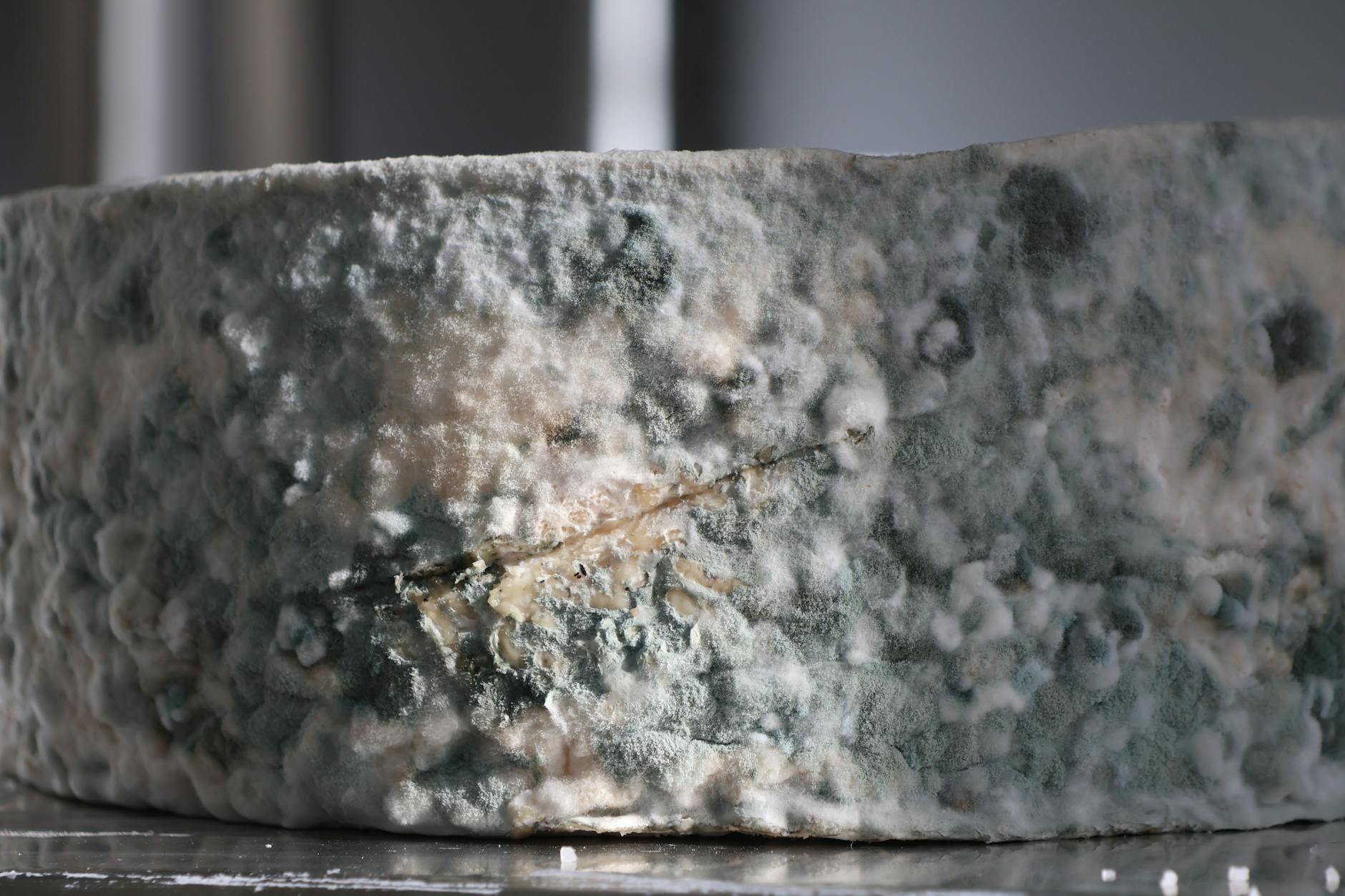
Discard soft, shredded, sliced, and crumbled cheese when mold appears because contamination can extend below the surface. For a hard cheese, USDA guidance allows cutting at least 1 inch around and below the mold without touching it with the knife.
Practical note
For Can You Eat Moldy Cheese? A Practical Guide to Safety, Savings, and Science, this guide centers on Step 1, Step 2, Step 3. Those are the checkpoints we would use first in a normal home kitchen before making a bigger change.
Decision table
| Situation | Likely cause or meaning | Best move |
|---|---|---|
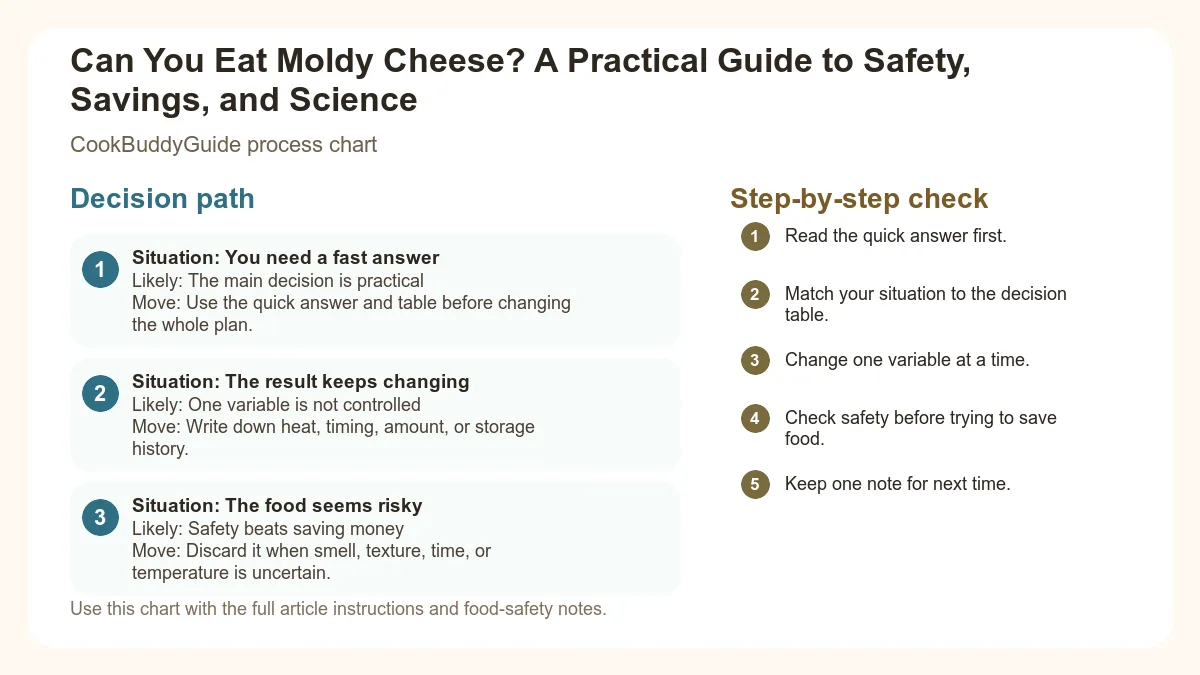
| You need a fast answer | The main decision is practical | Use the quick answer and table before changing the whole plan. |
| The result keeps changing | One variable is not controlled | Write down heat, timing, amount, or storage history. |
| The food seems risky | Safety beats saving money | Discard it when smell, texture, time, or temperature is uncertain. |
Step-by-step fix
- Read the quick answer first.
- Match your situation to the decision table.
- Change one variable at a time.
- Check safety before trying to save food.
- Keep one note for next time.
Common mistakes
- Skipping the quick answer and changing too much at once.
- Treating quality problems and safety problems the same way.
- Not writing down the detail that caused the repeat problem.
Related topic hubs
It’s 6:15 PM on a Tuesday. You’re halfway through prepping one of your favorite budget friendly dinner recipes—perhaps a sharp cheddar broccoli soup or a classic lasagna—when you reach for that block of cheese you bought last week. You pull it out of the drawer, and there it is: a fuzzy, bluish-green patch staring back at you. Your heart sinks. Do you toss the whole $8 block in the trash, or can you just perform a little "cheese surgery" and keep going?
Introduction: The Fridge Dilemma
When we see mold on food, our natural instinct is revulsion. This is a survival mechanism, and usually, it’s a good one. However, cheese is a unique biological product. Unlike a loaf of bread or a container of yogurt, many cheeses are actually born from mold. To understand is moldy cheese safe to eat, we first have to understand how mold travels.
The Science of Mold Growth in Dairy
Mold isn't just the fuzzy stuff you see on the surface mold. Think of mold like a dandelion in a yard. The fuzzy part you see is the "flower" (the spores), but underneath the surface, there is a complex network of "roots" called hyphae. In porous or high-moisture foods, these mold spores and hyphae can penetrate deep into the center long before you see any discoloration on the outside.
Why One Size Doesn't Fit All in Cheese Safety
The Golden Rule: Hard Cheese vs. Soft Cheese
If you take only one thing away from this guide, let it be this: Density is your best friend. When determining if is moldy cheese safe to eat, you must categorize your cheese immediately.
Why Hard Cheeses are Naturally Protective
The Danger of Moisture in Soft Cheeses
Soft cheeses—think Brie, Camembert, or fresh Mozzarella—are a different story. These have a high water activity level. If you see a spot of mold on a tub of cottage cheese or a ball of fresh mozzarella, you must assume the entire container is contaminated. The cross-contamination happens at a microscopic level. Soft cheese varieties provide the perfect environment for foodborne illness pathogens to thrive alongside the mold.
The "1-Inch Rule" for Hard Cheese
- Step 1: Identify the moldy patch on your hard or semi-hard cheese.
- Step 2: Use a clean knife to cut at least 1 inch (2.5 cm) around and below the mold spot.
- Step 3: Ensure the knife does not touch the mold itself to avoid spreading spores to the clean part.
- Step 4: Discard the moldy piece and the original airtight container or wrap.
Cheese-by-Cheese Safety Guide
Hard Cheeses: Cheddar, Parmesan, and Swiss
Semi-Hard Cheeses: Gouda, Havarti, and Gruyere
These are the "middle ground" cheeses. They have slightly more moisture than Parmesan but are still dense. You can still use the 1-inch rule here, but be more generous with your cuts. If the cheese feels particularly "squishy" or has a high fat content that has begun to separate, err on the side of caution.
Soft Cheeses: Mozzarella, Ricotta, and Cottage Cheese
Warning: If you see mold here, throw it out. There is no "cutting away" mold from a tub of ricotta. The mold spores are likely already swimming through the entire batch. This is especially true for unpasteurized cheese, which can harbor even more aggressive bacteria.
Processed Cheeses: Slices, Shreds, and Spreads
Good Mold vs. Bad Mold: Understanding the Difference
It can be confusing when we’re told mold is dangerous, yet we pay a premium for "moldy" Gorgonzola. The key lies in the strain of mold used.
Intentional Molds: Blue Cheese, Brie, and Camembert
Cheesemakers use specific, safe strains of mold like Penicillium roqueforti (for blue veins in Roquefort) and Penicillium camemberti (for the white cheese rind on Brie). These are controlled environments. These molds do not produce mycotoxins that are harmful to humans. You can find more about these types of safe moldy cheese to better understand which "fuzz" is actually flavor.
When 'Good' Cheese Goes 'Bad'
Identifying Toxic Mold Colors
- White/Grey: Usually the "safest" and most common on hard cheeses.
- Blue/Green: Common on bread and cheese; usually removable from hard cheese.
- Black: High red flag. Often associated with more toxic varieties. Toss it.
- Red/Orange/Pink: These are often bacteria (like Serratia marcescens) rather than mold. They can be very dangerous. Toss immediately.
How to Safely Remove Mold from Hard Cheese
If you've determined your cheese is a candidate for salvage, you must perform the removal correctly to avoid cross-contamination.
The 1-Inch Perimeter Technique
Don't just skim the surface. You need to cut deep. Consider using a ruler if you're unsure. A full inch ensures that you are getting past those invisible hyphae roots we talked about earlier.
Avoiding Cross-Contamination During the Cut
The biggest mistake people make is using the same knife for the "dirty" cut and the "clean" cut. If your knife blade touches the mold, and then you use that same blade to slice a piece of cheese to eat, you have just manually injected mold spores into your food. Wash the knife and the cutting board thoroughly with hot, soapy water after the mold is removed before proceeding with your recipe.
Post-Cut Storage Best Practices
Once you've performed cheese surgery, do not put the cheese back into its original packaging. That plastic wrap or container is crawling with spores you can't see. According to how to handle moldy cheese guides, you should re-wrap the cheese in fresh parchment paper and then place it in a clean zip-top bag.
Health Risks: What Happens if You Eat Moldy Cheese?
Most of the time, if you accidentally eat a small amount of mold, your stomach acid will handle it. However, it’s not a risk you want to take regularly.
Mycotoxins and Aflatoxins Explained
Allergic Reactions and Respiratory Issues
For some, the danger isn't food poisoning symptoms, but an allergic reaction. If you have a mold allergy, even the "safe" molds in blue cheese can cause respiratory distress or hives. Always disclose if you are serving intentional moldy cheeses to guests.
Short-term vs. Long-term Exposure
Short-term exposure usually results in nausea, vomiting, or diarrhea. Long-term exposure to certain mycotoxins can lead to more serious issues like immune deficiency or organ damage. This is why the is moldy cheese safe to eat advice from the Mayo Clinic emphasizes caution for vulnerable populations like children, the elderly, and the immunocompromised.
Kitchen Tips for Preventing Moldy Cheese
The CookBuddy Vinegar Hack
- Step 1: Dampen a paper towel with a small amount of white distilled vinegar.
- Step 2: Lightly wipe the surface of the cheese block before wrapping it.
- Step 3: The acidity of the vinegar creates an environment that is hostile to mold spores but doesn't affect the flavor of the cheese.
Proper Temperature and Humidity Control
Cheese is a living thing. It needs to breathe, but it also needs to stay hydrated. The vegetable crisper drawer is actually the best place for cheese because the humidity is slightly higher than the rest of the fridge, preventing the cheese from cracking and creating crevices where mold can hide.
The "Cheese Paper" Secret
Conclusion: Trust Your Senses but Respect the Science
Freezing doesn't kill mold; it just puts it into hibernation. Once thawed, the mold will continue to grow. Freezing also changes the texture of the cheese, making it crumbly.
Don't panic. Monitor yourself for 24 hours for signs of food poisoning symptoms like upset stomach or fever. Drink plenty of water and consult a doctor if symptoms persist.
Usually, no. On aged cheeses like Cheddar or Parmesan, white specks are often calcium lactate crystals—a sign of a well-aged, high-quality cheese. They are crunchy and delicious!
Saving money in the kitchen is all about being a smart consumer. By understanding the difference between a surface blemish on a block of Parmesan and a systemic contamination in a tub of cream cheese, you can cook with confidence and keep your family safe. Happy (and safe) cooking!