Quick Answer
Scrambled eggs usually turn watery because high heat squeezes moisture from the egg proteins, wet add-ins release liquid, or the eggs sit too long after cooking. Use medium-low heat, cook watery vegetables first, remove the eggs while they still look glossy, and serve them right away.
Practical note
For two or three eggs, an 8-inch skillet keeps the curds together and makes low heat easier to control. A large pan spreads a small batch too thin, so the eggs can overcook before you have time to fold them.
Decision table
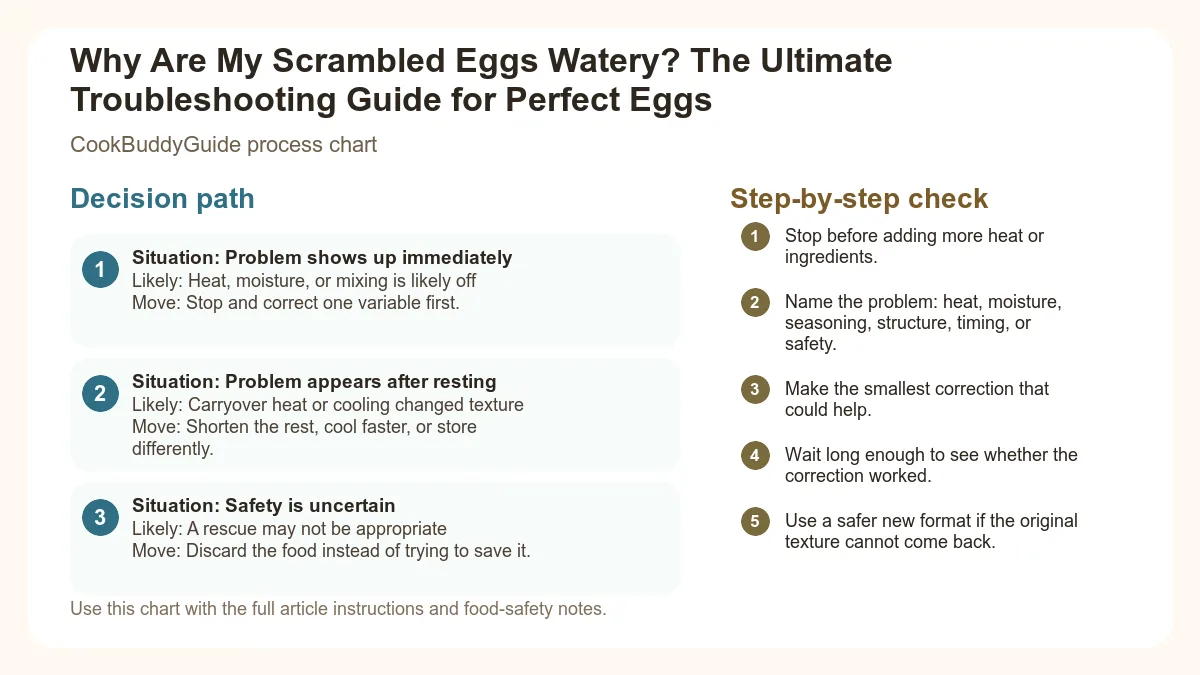
| Situation | Likely cause or meaning | Best move |
|---|---|---|
| Clear liquid appears in the pan | Heat is too high or the eggs are overcooked | Lower the heat and remove the next batch while glossy. |
| Water appears after plating | Carryover cooking or a long wait before serving | Plate on a warm dish and serve immediately. |
| Eggs are wet after adding vegetables | Mushrooms, tomatoes, or spinach released water | Cook and drain the add-ins before adding eggs. |
Step-by-step fix
- Whisk the eggs just until the whites and yolks are combined.
- Preheat a small skillet over medium-low heat and add butter.
- Add the eggs and fold slowly with a silicone spatula.
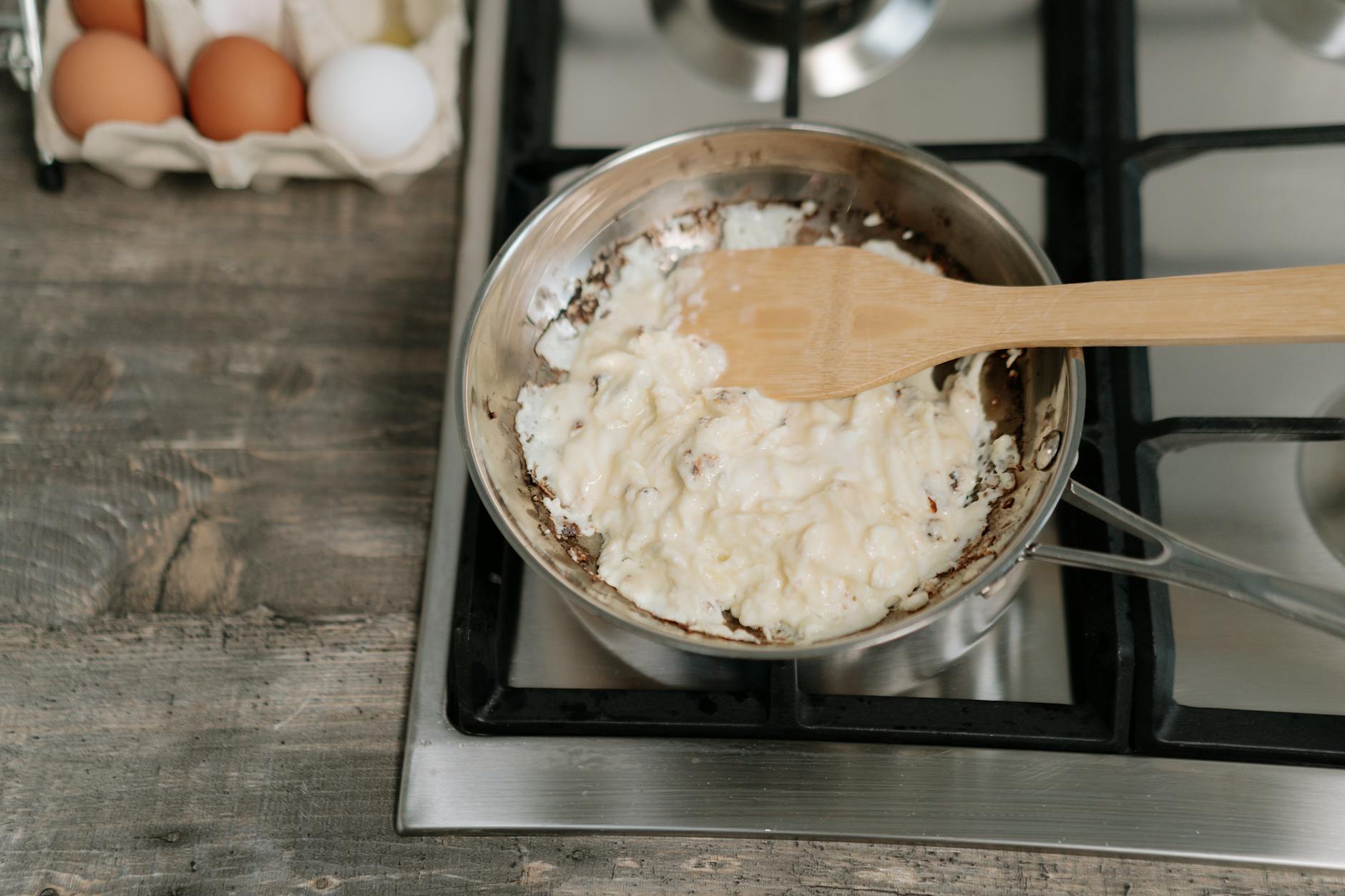
- Take the pan off the heat while the curds are soft and glossy.
- Season, plate, and serve before carryover heat firms them up.
Common mistakes
- Using high heat because eggs seem like a fast-cooking food.
- Adding raw tomatoes, mushrooms, or spinach directly to the eggs.
- Cooking until the eggs look completely dry in the pan.
- Leaving finished eggs in the hot skillet while making toast.
Related topic hubs
Watery scrambled eggs are usually a heat-and-timing problem, not a bad batch of eggs. High heat tightens the proteins too quickly, moist add-ins release water, and finished eggs continue cooking while they sit. The sections below separate those causes so you can change the right part of your method.
The frustration of soggy scrambled eggs is real, especially when you’re trying to kickstart a productive morning. We often think of eggs as one of the simplest things to cook, but they are actually a complex matrix of proteins and water. When that matrix fails, you end up with a rubbery texture and a pool of liquid at the bottom of the plate. The good news? To fix watery scrambled eggs, you don't need a complicated training; you just need to understand a little bit of kitchen science and adjust your technique. Let’s dive into the "mystery of the breakfast puddle" and ensure your next scramble is creamy, custard-like, and perfectly dry.
Table of Contents
- The Science of Syneresis: Why Eggs "Weep"
- Reason 1: Cooking on Too High Heat
- Reason 2: Adding Too Much Liquid (Milk vs. Cream)
- Reason 3: Salting Your Eggs Too Early
- Reason 4: Overcrowding the Pan
- Reason 5: Moisture from Vegetable Add-ins
- The CookBuddy Guide to the Perfect Scramble
- Essential Tools for Non-Watery Eggs
- Advanced Troubleshooting: Egg Quality and Freshness
- Frequently Asked Questions
The Science of Syneresis: Why Eggs "Weep"
Understanding Protein Coagulation
To understand why eggs turn watery, we have to look at what happens at a molecular level. Eggs are primarily composed of water and proteins. When you apply heat, these proteins undergo a process called denaturation—they uncoil from their tight little balls and begin to link up with one another. This linking process is known as protein coagulation. In a perfect world, these proteins form a loose, flexible web that traps moisture, giving you that soft, pillowy texture we all crave.
What Happens When Egg Proteins Over-Tighten
The problem arises when these protein bonds become too strong. Think of the proteins like a sponge. When they are relaxed, they hold water. But if you squeeze that sponge with all your might, the water is forced out. In culinary terms, this "squeezing" of the protein web is called syneresis. As the proteins over-cook and contract, they squeeze out the water they were supposed to hold, resulting in preventing syneresis in eggs. This is why you can have eggs that feel overcooked and rubbery on the tongue, yet are surrounded by a pool of liquid on the plate.
Egg whites and yolks set at different temperatures, which is why aggressive heat can firm one part of the mixture before the rest cooks evenly. Gentle heat gives the proteins more time to set without tightening enough to force liquid onto the plate.
Reason 1: Cooking on Too High Heat
The "Flash-Cook" Mistake
The most common answer to "why are my scrambled eggs watery" is simply that the stove is too hot. Many busy home cooks treat scrambled eggs like a stir-fry, cranking the heat to high to get breakfast on the table faster. This "flash-cook" method is a recipe for disaster. When eggs hit a scorching pan, the outer layer of the egg mass cooks instantly, while the interior remains raw. By the time the interior is safe to eat, the exterior has undergone massive syneresis.
How High Heat Forces Water Out
When you use high heat, you trigger a rapid contraction of the proteins. This is often accompanied by the Maillard reaction—that browning you see on fried eggs. While a crispy edge is great for a sunny-side-up egg, it’s the enemy of a creamy scramble. Browning indicates that the proteins have become tough and dehydrated.
The fix: use medium-low heat. For a small batch, aim for a gradual cook of roughly 3 to 5 minutes rather than trying to finish the eggs in under a minute. The exact time varies with pan size and burner strength, so use the glossy surface and soft curds as the doneness cues.
Visual cue: Add a small pat of butter to the pan. Gentle foaming means the pan is ready; immediate browning means it is too hot. Pull an overheated pan off the burner briefly before adding the eggs. This temperature check also helps prevent the common scrambled-egg mistakes associated with excessive heat.
Reason 2: Adding Too Much Liquid (Milk, Cream, or Water)
The Myth of Adding Milk for Fluffiness
We’ve been told for decades that adding a splash of milk makes eggs fluffier. However, if you add too much, or if you use the wrong type of liquid, you are literally adding the very water that will end up at the bottom of your plate. Skim milk, in particular, is mostly water. When the egg proteins coagulate, they can only hold onto so much extra liquid. Anything beyond their capacity will be expelled during cooking.
Fat vs. Water Content in Dairy
The science of emulsification plays a huge role here. Fat helps to stabilize the egg proteins, making them more resilient and less likely to over-tighten. This is why heavy cream vs milk is a major debate in the culinary world. Heavy cream has a high fat-to-water ratio, which actually helps create a richer, more stable curd. Skim milk, on the other hand, dilutes the proteins, making the structure of the scramble weak and prone to leaking.
The fix: keep added liquid modest. A useful starting point is no more than 1 tablespoon of liquid per 2 large eggs. For richer eggs without much extra water, whisk in a small amount of cold butter instead. Bon Appétit also explains how milk changes scrambled-egg texture.
Reason 3: Salting Your Eggs Too Early
Osmosis and the Egg Cell Structure
This is a controversial topic in the food world. Salt is a humectant, meaning it draws out moisture through a process called osmosis. If you salt your raw eggs and let them sit on the counter for ten minutes while you make coffee, the salt begins to break down the protein structure and draw water out of the yolks and whites before they even hit the pan. This results in runny eggs that never seem to set quite right.
The Debate: Salt Before or After?
The Fix: Salt at the Start or the Finish. To fix watery scrambled eggs caused by salt, consider salting the eggs immediately before they hit the pan, or even better, seasoning them when they are about 90% cooked. This ensures the salt enhances the flavor without having enough time to draw out significant moisture through osmosis.
Reason 4: Overcrowding the Pan
Surface Area and Evaporation
If you try to cook six eggs in a tiny 6-inch skillet, you’re going to have a bad time. When eggs cook, some of the moisture is supposed to evaporate as steam. When the pan is overcrowded, the eggs at the bottom cook while the ones on top remain raw. This creates a "steaming" effect rather than a "scrambling" effect. The steam gets trapped between the layers of egg, eventually condensing back into liquid as the eggs sit on your plate.
Choosing the Right Pan Size
Pan management is key to proper pan temperature management. You need enough surface area for the eggs to spread out so that the heat can be distributed evenly. This is especially important if you are making breakfast meal prep ideas for the whole family.
- 8-inch Pan: Best for 2-3 eggs.
- 10-inch Pan: Best for 4-6 eggs.
- 12-inch Pan: Best for 7+ eggs.
The Fix: Use a Larger Pan. If you’re unsure, always go one size up. A larger pan allows for better whisking technique and movement with your silicone spatula, ensuring every part of the egg hits the heat and sets properly. For more tips on managing pan heat, check out this proper pan temperature management guide.
Reason 5: Moisture from Vegetable Add-ins
The Spinach and Mushroom Trap
We all love a healthy vegetable scramble, but vegetables like spinach, mushrooms, tomatoes, and zucchini are over 90% water. If you throw raw spinach into your eggs, that spinach is going to release its water the moment it hits the heat. This water mixes with your eggs, diluting the proteins and ensuring a liquid at the bottom of the plate scenario.
Pre-Cooking Your Mix-ins
The Fix: The 'Sauté and Drain' Method. Always sauté your vegetables in the pan first. Cook them until they’ve released their moisture and have started to brown slightly. If you’re using particularly watery veggies like mushrooms or frozen spinach, drain them in a colander or pat them dry with a paper towel before adding your egg mixture. This keeps your eggs dry and your vegetables flavorful.
The No-Fail Creamy Scramble (No Water Guaranteed!)
This technique uses the "low and slow" method to ensure perfect protein coagulation without syneresis.
Ingredients:- 3 Large fresh eggs
- 1 tsp Cold unsalted butter (for whisking)
- 1 tbsp Heavy cream (optional, but recommended)
- 1/2 tsp Salt (added just before cooking)
- 1 tsp Butter (for the pan)
- Crack eggs into a bowl. Whisk vigorously for at least 30 seconds until no streaks of white remain. This incorporates air for fluffiness.
- Whisk in the heavy cream and the small pieces of cold butter.
- Heat a non-stick skillet over medium-low heat. Add the pan butter.
- When the butter foams, add the salt to the eggs, give one final whisk, and pour into the pan.
- Using a silicone spatula, constantly move the eggs from the edges to the center, creating soft curds.
- Remove from heat when the eggs look slightly "wet" or underdone. Carryover cooking will finish them on the plate.
The CookBuddy Guide to the Perfect Scramble
Step-by-Step Technique for No-Water Eggs
To truly master the scramble, you need to focus on two things: movement and timing. Consider the French style scrambled eggs technique for those who want a truly creamy result. This involves constant agitation, which breaks the protein bonds into smaller, creamier curds that are much better at holding onto moisture than large, chunky curds.
First, ensure your whisking technique is thorough. You shouldn't see "ropes" of egg white in your bowl. A uniform yellow color means the fats in the yolk have been properly distributed to coat the proteins in the white, which helps prevent over-tightening. This is a great addition to your high protein meal options, as eggs are a nutritional powerhouse.
The Importance of Carryover Cooking
Residual heat keeps cooking eggs after the pan leaves the burner. To avoid weeping eggs, remove them while the curds still look slightly glossy and loose, then plate them immediately. Waiting until they look completely dry in the pan usually means they will be overcooked at the table.
For more authoritative instructions on heat management, the American Egg Board offers excellent standard scrambled egg techniques that align with this "low and slow" approach.
Essential Tools for Non-Watery Eggs
The Non-Stick Advantage
A small nonstick or well-seasoned skillet makes gentle folding easier and reduces sticking. For two or three eggs, an 8-inch pan keeps the mixture deep enough to form soft curds; a much larger pan can spread the eggs so thinly that they cook before you can fold them.
Why a Silicone Spatula is Non-Negotiable
Forget the wooden spoon or the metal spatula. A flexible silicone spatula is essential. It allows you to scrape the bottom and the "corners" of the pan perfectly, ensuring that no thin layer of egg gets left behind to overcook and turn rubbery. The ability to fold the eggs gently is what creates that sought-after rubbery texture-free experience.
Advanced Troubleshooting: Egg Quality and Freshness
The Anatomy of an Older Egg
Sometimes, you do everything right and the eggs are still watery. In this case, the culprit might be the eggs themselves. As eggs age, the structural proteins in the egg white (albumen) begin to break down. The "thick" white becomes "thin" white. If you’ve ever cracked an older egg into a pan and noticed the white spreading out like water, you’ve seen this in action. These older whites are naturally more watery and have a harder time forming a stable curd.
The 'Float Test' for Freshness
If you suspect your eggs are past their prime, try the float test. Place an egg in a bowl of water.
- Sinks to the bottom and lays flat: Very fresh.
- Sinks but stands on one end: Getting older, use for hard-boiling.
- Floats: Toss it out.
Farm-fresh eggs often have much higher protein integrity than grocery store eggs that have been sitting in a refrigerated truck for two weeks. If you’re using older eggs, consider adding an extra yolk to the mix to increase the fat content and help stabilize those thinning whites.
Frequently Asked Questions
A: Unfortunately, once syneresis has occurred, you can't "put the water back" into the protein. However, you can save the meal by quickly draining the excess liquid and placing the eggs on a piece of toasted bread that can absorb the remaining moisture without becoming soggy.
A: Neither! For the fluffiest, most stable eggs, use a small amount of heavy cream or just a teaspoon of cold butter. Water evaporates too quickly, often causing the eggs to collapse and weep.
A: This is usually a result of overcooking on high heat, which causes a chemical reaction between the sulfur in the whites and the iron in the yolks. It’s another sign that your heat is too high!
Conclusion: Mastering the Dry, Creamy Scramble
Understanding why are my scrambled eggs watery is the first step toward breakfast mastery. It isn't just bad luck; it's a combination of protein science, temperature control, and moisture management. By embracing the "low and slow" method, being mindful of your liquid ratios, and pre-cooking your vegetables, you can say goodbye to the unappetizing puddle on your plate forever.
Remember, cooking is a journey of trial and error. Don't be afraid to pull those eggs off the stove while they still look a little "undone"—trust in the power of carryover cooking! With the right tools and these practical techniques, you'll be serving up café-quality scrambled eggs in your own kitchen every single morning. Happy cooking!