Quick Answer
Choose a substitute for heavy cream by matching its main job in the recipe, especially fat, moisture, flavor, or thickening power. The table below shows which options work best for cooking, baking, and finishing.
Practical note
For heavy cream? 10 practical swaps for every recipe recipes substitutes, we judge swaps by job first: flavor, salt, acid, fat, moisture, or structure. That keeps a substitution from fixing one problem while creating another.
Decision table
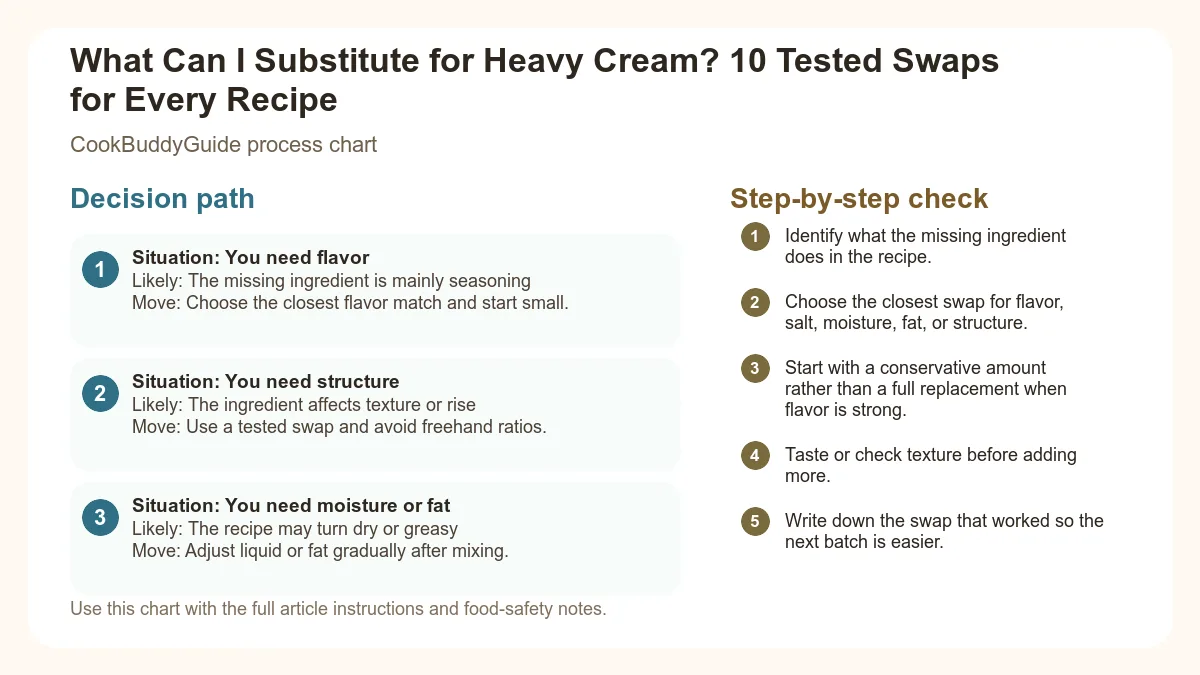
| Situation | Likely cause or meaning | Best move |
|---|---|---|
| You need flavor | The missing ingredient is mainly seasoning | Choose the closest flavor match and start small. |
| You need structure | The ingredient affects texture or rise | Use a practical swap and avoid freehand ratios. |
| You need moisture or fat | The recipe may turn dry or greasy | Adjust liquid or fat gradually after mixing. |
Step-by-step fix
- Identify what the missing ingredient does in the recipe.
- Choose the closest swap for flavor, salt, moisture, fat, or structure.
- Start with a conservative amount rather than a full replacement when flavor is strong.
- Taste or check texture before adding more.
- Write down the swap that worked so the next batch is easier.
Common mistakes
- Replacing a strong ingredient 1:1 before tasting.
- Choosing a flavor match when the recipe actually needs structure.
- Forgetting that salty swaps can change the whole dish.
- Adding extra liquid before the batter, dough, or sauce has time to hydrate.
Related topic hubs
Table of Contents
- The Science of Heavy Cream: Why Fat Content Matters
- 1. Whole Milk and Butter: The Reliable All-Rounder
- 2. Half-and-Half: The Easiest Direct Swap
- 3. Coconut Cream: The Best Dairy-Free Alternative
- 4. Evaporated Milk: The Pantry Hero for Soups
- 5. Greek Yogurt and Milk: The Tangy Twist
- 6. Cream Cheese: For Ultra-Thick Sauces
- 7. Cashew Cream: The Professional Vegan Choice
- 8. Silken Tofu and Soy Milk: High-Protein Swap
- 9. Cornstarch and Milk: The Low-Fat Hack
- 10. Sour Cream: Best for Baking
- Which Substitute Should You Use? (By Method)
- Common Mistakes to Avoid
The Science of Heavy Cream: Why Fat Content Matters
To understand how to replace heavy cream, we first have to understand what it actually is. According to the FDA standards for heavy cream, it must contain no less than 36 percent milkfat. This high butterfat concentration is what gives cream its luxurious mouthfeel and viscosity.
1. Whole Milk and Butter: The Most Reliable All-Rounder
If you have milk and butter in your fridge, you have the building blocks of heavy cream. This is my "old faithful" substitution. By melting butter into whole milk, you are essentially manually increasing the fat content of the milk to mimic cream.
The Milk & Butter Heavy Cream Substitute
Ratio: 3/4 cup whole milk + 1/4 cup melted butter = 1 cup heavy cream
Best for: Baking (muffins, cakes), pan sauces, and casseroles.
Instructions:
- Melt 1/4 cup (4 tablespoons) of unsalted butter.
- Let the butter cool slightly (it should be liquid but not scalding).
- Whisk the butter into 3/4 cup of room-temperature whole milk.
- Use immediately in your recipe.
2. Half-and-Half: The Easiest Direct Swap
Half-and-half is exactly what it sounds like: a mixture of half whole milk and half light cream. Its fat content usually hovers between 10.5% and 18%. Because it is already a stable dairy product, it is a very convenient heavy cream substitute for many everyday tasks.
Ratio: 1:1 replacement.
Best for: Coffee, creamy pan sauces, quiches, and simple ganaches. If you're making a quick dinner, this is often the best heavy cream substitute option for maintaining a smooth sauce consistency.
Pro Tip: If your recipe relies on heavy cream for thickening, you might find that half-and-half leaves the sauce a bit thin. In these cases, consider adding a "butter boost"—whisking in a tablespoon of cold butter at the very end of cooking (a technique called monter au beurre) to add that missing sheen and body.
3. Coconut Cream: The Best Dairy-Free Alternative
For those seeking plant-based alternatives, coconut cream is king. It is naturally high in fat and has a thick, luscious texture that behaves remarkably like dairy cream. It is one of the few substitutes that can actually be whipped into stiff peaks.
Ratio: 1:1 replacement.
Best for: Vegan desserts, curries, dairy-free whipped cream, and tropical-flavored baked goods.
4. Evaporated Milk: The Pantry Hero for Soups
Evaporated milk is fresh, homogenized milk from which about 60 percent of the water has been removed. It’s a shelf-stable heavy cream substitute that every home cook should keep in their pantry. Because it is concentrated, it has a much creamier texture than regular milk without the massive fat hit of heavy cream.
Ratio: 1:1 replacement.
Best for: Creamy soups, slow cooker recipes, and stews. It is incredibly stable under heat.
5. Greek Yogurt and Milk: The Tangy, Healthy Twist
If you want to add creaminess while boosting protein and cutting fat, Greek yogurt is a fantastic choice. However, it is much thicker than cream, so you’ll need to thin it out to match the proper viscosity.
The Greek Yogurt "Cream" Blend
Ratio: 1/2 cup Greek yogurt + 1/2 cup whole milk = 1 cup heavy cream substitute
Best for: Salad dressings, cold dips, muffins, and pancakes.
Instructions:
- Whisk the yogurt and milk together until completely smooth.
- If using in a hot sauce, remove the pan from the heat before stirring it in.
6. Cream Cheese: The Secret to Ultra-Thick Sauces
Ratio: 1/2 cup cream cheese thinned with 1-2 tablespoons of milk or pasta water.
Best for: Alfredo sauce, beef stroganoff, and thick pasta bakes.
Testing Note: Cream cheese adds a mild tang. In savory dishes, this usually enhances the flavor, acting much like a splash of lemon juice or vinegar would to brighten the dish. If you are using it in a sweet recipe, you may need to add a touch more sugar to balance the acidity.
7. Cashew Cream: The Professional Vegan Choice
If you want a truly neutral, high-end dairy-free alternative that chefs use in upscale vegan restaurants, cashew cream is the answer. When blended, cashews create a remarkably smooth emulsion that mimics the mouthfeel of heavy cream without the coconut flavor.
Ratio: 1 cup raw cashews + 3/4 cup water (blended).
Best for: Fine-dining vegan sauces, creamy tomato soup, and pasta carbonara substitutes.
Pro Tip: You must use raw cashews, not roasted. Soak them in hot water for at least 30 minutes (or overnight in cold water) to soften them. Use a high-speed blender to ensure there is zero grit. This substitute is surprisingly stable and can even be reduced on the stovetop to thicken sauces further.
8. Silken Tofu and Soy Milk: The High-Protein Swap
Silken tofu is a "soft" tofu that has a custard-like consistency. When blended with soy milk, it creates a stable, high-protein liquid that works wonders in baking tips and batters.
Ratio: 1:1 blend of silken tofu and unsweetened soy milk.
Best for: Vegan baking (like pumpkin pie or quiche), creamy salad dressings, and smoothies.
9. Cornstarch and Milk: The Low-Fat Thickening Hack
Sometimes you don't need the fat of heavy cream; you just need the thickness. If you’re making a gravy or a simple custard, a cornstarch slurry is your best friend. This is often cited as one of the best heavy cream substitutes for calorie-conscious cooking.
Ratio: 1 cup whole milk + 2 tablespoons cornstarch.
Best for: Thickening gravies, puddings, and pie fillings.
Instructions: Do not just dump cornstarch into hot milk! You must create a slurry first. Whisk the cornstarch into a small amount of cold milk until smooth, then whisk that mixture into the rest of the milk. Heat until it reaches a simmer; the cornstarch won't reach its full thickening power until the liquid almost boils.
10. Sour Cream: The Best for Baking and Moisture
Sour cream is a fermented dairy product with a fat content of about 20%. In the world of baking, it is actually superior to heavy cream in many cases because its acidity reacts with baking soda to produce a better rise and a more tender crumb.
Ratio: 1:1 replacement.
Best for: Coffee cakes, muffins, pound cakes, and pan sauces.
Which Substitute Should You Use? (By Cooking Method)
- For Whipping (Stiff Peaks): Only Coconut Cream (chilled) or specialized commercial non-dairy whipping creams. None of the other home-made dairy swaps will hold air effectively.
- For Soups and Stews (Heat Stability): Evaporated Milk or Cashew Cream. These are the most resilient against long simmer times and high heat.
- For Pasta Sauces (Silkiness): Cream Cheese or Half-and-Half with Butter. These provide the necessary fat to create a glossy, emulsified sauce.
- For Baking (Moisture and Fat): Sour Cream or Milk and Butter. These maintain the "fat-to-flour" ratio essential for a tender cake or muffin.
Common Mistakes When Substituting Heavy Cream
1. The Curdling Catastrophe
This usually happens when you add a cold substitute (like Greek yogurt or sour cream) directly into a boiling pot. The thermal shock causes the casein proteins to clump together. To prevent this, "temper" your substitute: whisk a ladle of the hot liquid into the substitute first to warm it up, then pour the mixture back into the pot.
2. The "Too Thin" Sauce Problem
If you use a low-fat substitute like whole milk or half-and-half, your sauce might end up watery. Don't try to fix this by boiling it for a long time; you'll just end up with a salty, over-reduced mess. Instead, use a thickening agent like a small cornstarch slurry or a "beurre manié" (equal parts softened butter and flour kneaded together) to reach the desired thickness.
3. Ignoring the Sugar Content
If you are using plant-based alternatives like soy or almond milk to make a substitute, ensure they are "Unsweetened." Many non-dairy milks have added vanilla and sugar, which will make your savory mushroom risotto taste like a dessert. Always check the label!
Frequently Asked Questions
On its own, no. Almond milk is far too thin and lacks the fat required for most cream-based recipes. However, you can use it if you thicken it with a cornstarch slurry or blend it with silken tofu as mentioned above.
No, half-and-half is designed for coffee. However, if your coffee is extremely acidic or very hot, and the dairy is close to its expiration date, curdling can occur. Always use fresh dairy for the best results.
Yes! If you have leftover cream, freeze it in ice cube trays. Once frozen, transfer the cubes to a freezer bag. They are perfect for dropping into a soup or sauce later. Note: Frozen cream will not whip well after thawing, but it's perfect for cooking.
Conclusion: Finding Your Perfect Kitchen Shortcut
While heavy cream is a unique ingredient, it is by no means irreplaceable. Whether you choose the richness of butterfat in a milk-and-butter blend or the high-heat stability of evaporated milk, there is a solution for every culinary scenario. The key is to identify what heavy cream was doing for your specific recipe—was it providing fat, thickness, or air? Once you know that, choosing the right heavy cream substitute becomes second nature.