Quick Answer: How do you cook a whole chicken in a slow cooker?
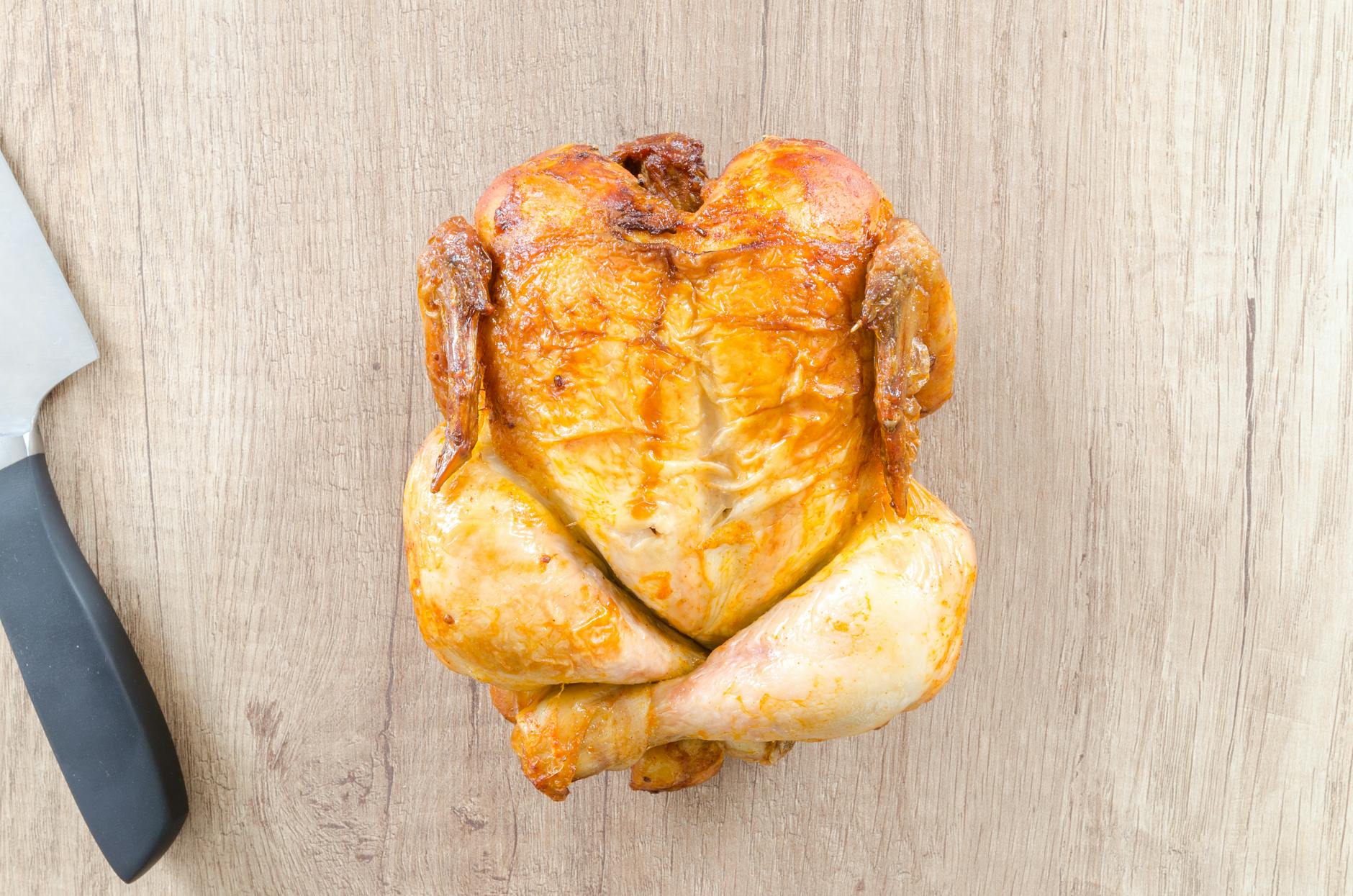
Use a fully thawed chicken that fits with the lid closed. For a 4 to 5-pound bird, a 6-quart cooker and about 7 hours on low are useful starting points. The chicken is ready only when the thickest breast and the innermost thigh and wing each reach 165°F. Broil briefly afterward if browned skin matters.
Practical note
A whole chicken can turn from sliceable to fall-apart tender while it waits in the cooker. Begin checking before the longest listed time, then stop cooking when all three temperature points are safe.
Match the chicken to the slow cooker
The lid must sit flat and close fully. Crock-Pot's current guidance says a whole chicken is suitable only when it fits comfortably and the lid remains snug. A 6-quart oval cooker is a practical match for many 4 to 5-pound chickens, which is also the pairing used by Food Network Kitchen.
Compare the package dimensions with the cooker's usable interior before opening the chicken. There should be room for the lid without pressing down on the bird. If the chicken is too tall, choose a smaller chicken or cook it by another method. Do not improvise a foil tent in place of the fitted lid.
| Chicken and cooker | Useful reference | What to verify |
|---|---|---|
| 3 to 4-pound chicken, 6-quart or larger cooker | Kitchn uses 2 1/2 to 3 1/2 hours on high or 4 to 5 hours on low | Lid closes and all three temperature points reach 165°F |
| 4 to 5-pound chicken, 6-quart cooker | Food Network Kitchen uses about 7 hours on low | Begin checking before 7 hours because appliances vary |
| Any different size or appliance | Use its manual and a recipe written for that size | Do not rely on a generic pounds-per-hour formula |
How long does a whole chicken take on low or high?
Timing varies enough that one range cannot cover every bird and cooker. A 3 to 4-pound chicken may finish within 4 to 5 hours on low, while a 4 to 5-pound chicken can take about 7 hours. Crock-Pot gives 7 to 8 hours on low as its general whole-chicken estimate.
Use those times to decide when to check, not when to serve. Keep the lid closed until the first check because lifting it releases heat. Check the breast, thigh, and wing quickly, replace the lid if any point is below 165°F, and continue cooking.
Low is convenient when the chicken needs a longer window. High is faster, but only use it when the appliance manual or the chosen recipe provides high-setting guidance for the bird's size. The warm setting is for holding cooked food, not for cooking raw chicken.
Slow cooker whole chicken method
Whole chicken with onion and carrots
Ingredients
- 1 fully thawed 4 to 5-pound whole chicken
- 1 large onion, cut into thick wedges
- 2 large carrots, cut into 2-inch pieces
- 1 tablespoon olive oil
- 2 teaspoons paprika
- 1 teaspoon garlic powder
- 1 teaspoon dried thyme
- 1 teaspoon kosher salt, or less if the chicken is pre-brined
- 1/2 teaspoon black pepper
Method
- Prepare the cooker. Spread the onion and carrots across the bottom of a clean 6-quart slow cooker. They form a sturdy bed and keep the chicken above most of the released liquid.
- Prepare the chicken. Remove the giblets and any loose excess fat. USDA does not recommend washing raw poultry because splashes can spread bacteria. Pat the surface dry with paper towels, then discard the towels.
- Season. Mix the oil, paprika, garlic powder, thyme, salt, and pepper. Rub the mixture over the outside. Leave the cavity empty so heat can circulate through it.
- Load the cooker. Set the chicken breast side up on the vegetables. Confirm that the lid closes flat. Keep the chicken refrigerated until this point, then start the cooker immediately.
- Cook on low. Cover and cook. Begin checking near 6 hours, then continue as needed. A 4 to 5-pound chicken often takes about 7 hours, but the thermometer decides.
- Check three places. Insert a food thermometer into the thickest breast, innermost thigh, and innermost wing without touching bone. Every reading must reach at least 165°F.
- Rest or broil. Transfer the chicken carefully to a rimmed pan. Broil it using the directions below, or rest it for 10 to 15 minutes before carving or pulling the meat.
The chicken and vegetables release moisture, so this version does not add broth. If the appliance manual requires liquid, follow the manual. The cooked vegetables will be soft and flavored by the drippings rather than browned.
Check temperature in the breast, thigh, and wing
FoodSafety.gov lists 165°F as the safe minimum internal temperature for all poultry. USDA gives three check points for a whole bird: the thickest part of the breast, the innermost part of the thigh, and the innermost part of the wing. Keep the probe away from bone.
Color, clear juices, loose legs, and fall-apart meat are not substitutes for those readings. Pink meat near a bone can remain after safe cooking, while an overcooked chicken can look fully white. Temperature provides the useful safety answer.
- Thaw first. USDA says to thaw meat and poultry before putting it in a slow cooker.
- Do not wash the bird. Rinsing can spread raw poultry juices around the sink and nearby surfaces.
- Do not stuff it. Cook stuffing separately so the chicken can heat evenly and each dish can be checked on its own.
- Keep the lid in place. Open it only when a temperature check is due.
How to keep the meat moist without making it mushy
A slow cooker traps steam. That moist environment helps tenderize the bird, but extra time can make the breast dry and the joints collapse. Removing the chicken soon after it reaches a safe temperature protects the texture better than adding more liquid.
For meat that can be carved, check at the early end of the range and lift it out before it becomes fall-apart tender. For shredded chicken, a softer texture is useful, but continued cooking after 165°F can still dry the breast fibers. Save some defatted cooking liquid to moisten shredded meat after carving.
The skin will be soft and pale in the covered cooker. An onion-and-carrot bed keeps it above pooled juices, but it does not create oven-style crispness. Patting the chicken dry helps the seasoning adhere and reduces surface moisture before the final broil.
How to brown the skin under the broiler
Kitchn recommends a 3 to 5-minute broil after slow cooking. The exact distance from the element and the broiler's strength matter, so stay at the oven and judge the skin by color. Broiling improves browning, but deeply crisp skin is not guaranteed after hours in steam.
- Line a rimmed, broiler-safe pan with foil. Set an oven rack several inches below the broiler and preheat it.
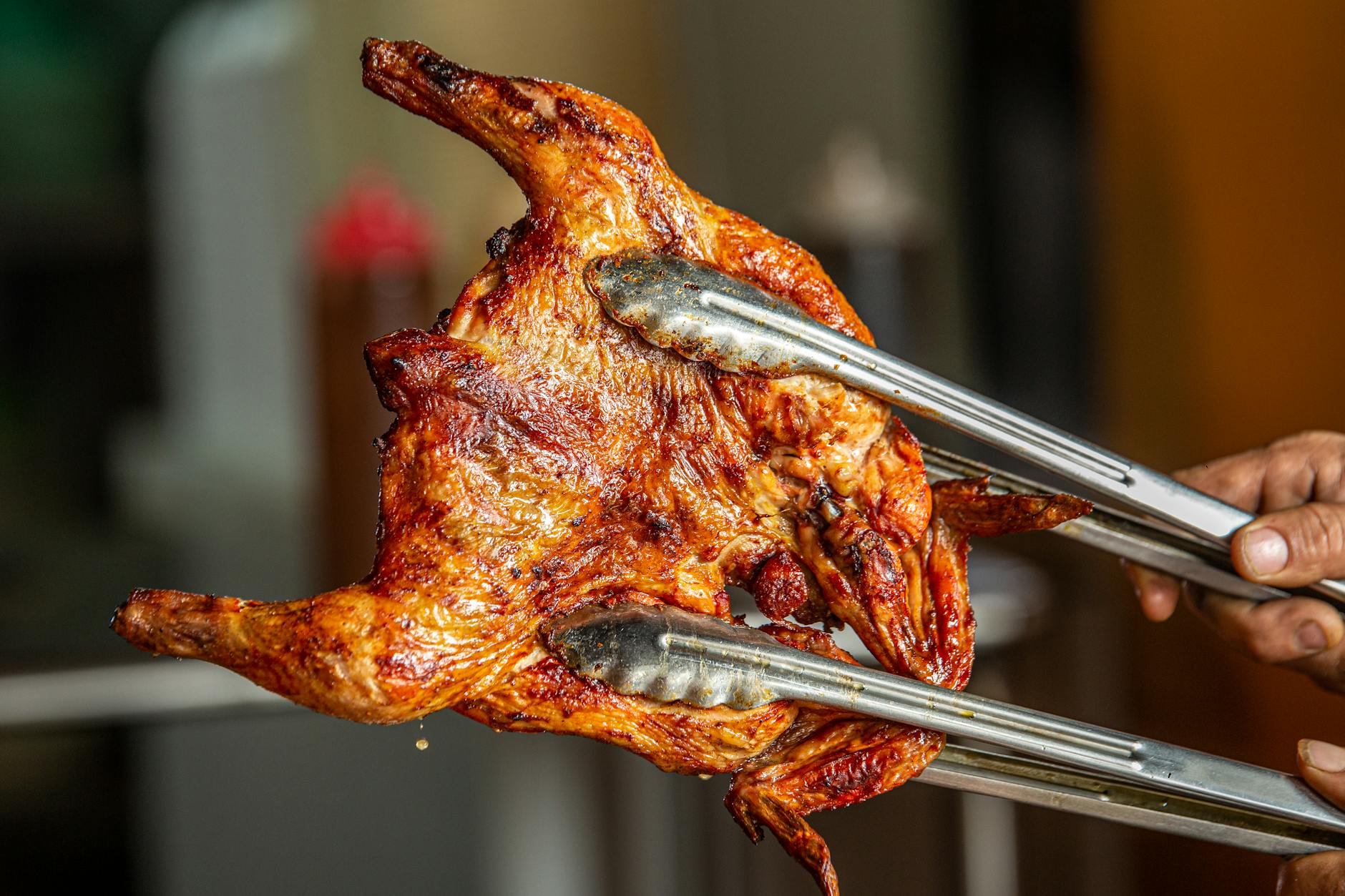
- Support the chicken with a wide spatula under the breast and tongs at the cavity. Move it gently because the joints may be loose.
- Blot pooled moisture from the top of the skin. Brush on a thin layer of oil.
- Broil for 3 to 5 minutes, rotating the pan if one side colors faster. Watch continuously and remove it before the spice rub burns.
- Rest the chicken for 10 to 15 minutes before carving.
Use the drippings for a simple gravy
Pour the hot drippings through a strainer into a heat-safe container and let the fat rise. Skim most of the fat, then measure the liquid. Taste before adding salt because a pre-brined chicken can produce salty drippings.
For each cup of defatted liquid, cook 1 tablespoon butter with 1 tablespoon flour in a saucepan for about one minute. Whisk in the liquid gradually and simmer until the gravy coats a spoon. Add unsalted broth only if more volume is needed. For alternatives, see the gravy without drippings guide.
Troubleshoot fit, texture, and browning
| Problem | Likely cause | Next move |
|---|---|---|
| The lid will not close | The bird is too large or tall for the insert | Use a smaller chicken or a different cooking method. Do not tent the cooker with foil. |
| Breast is dry | The chicken cooked past the point needed for safety | Begin checking earlier next time and serve this batch with defatted juices or gravy. |
| Chicken falls apart during transfer | Connective tissue softened during a long cook | Use a wide spatula plus tongs and plan to pull rather than carve the meat. |
| Skin stays pale | Steam prevents surface browning | Blot the skin, brush lightly with oil, and broil while watching continuously. |
| One temperature point is below 165°F | The bird has not heated evenly yet | Replace the lid and continue cooking before checking all three points again. |
| Drippings are very salty | The chicken was enhanced, injected, or pre-brined | Dilute with unsalted broth and skip added salt until the gravy is finished. |
Store leftover chicken promptly
Remove the meat from the carcass, divide it into shallow containers, and refrigerate it within 2 hours of cooking. FoodSafety.gov advises eating refrigerated leftovers within 3 to 4 days. Freeze portions that will not be used in that window.
Keep some defatted cooking liquid with shredded meat to reduce drying during reheating. The cooked chicken refrigerator guide covers cooling and discard decisions, while the cooked chicken freezing guide covers longer storage. Leftover meat also works in the site's rotisserie chicken meal ideas.
Frequently asked questions
Can you put a frozen whole chicken in a slow cooker?
No. USDA guidance says to thaw meat and poultry before slow cooking. Thaw a whole chicken in the refrigerator, remove the giblets, and keep it chilled until the slow cooker is ready. Do not use the warm setting to cook raw poultry.
Do you need liquid for a whole chicken in a slow cooker?
Not for this method. The chicken releases liquid as it cooks, and a bed of onion and carrots keeps it above those juices. If your appliance manual requires liquid, follow the manual and use the amount it specifies.
Is low or high better for a whole chicken?
Either setting can work when the recipe and appliance manual support it. Low gives a longer cooking window, while high finishes sooner. Size and cooker performance change the timing, so use the clock only to decide when to begin checking for 165°F in the breast, thigh, and wing.
How do you crisp slow cooker chicken skin?
Move the cooked chicken to a foil-lined rimmed pan, blot pooled moisture from the skin, brush it lightly with oil, and broil for 3 to 5 minutes. Keep the pan at least several inches from the element and watch continuously because the skin can darken quickly.
Sources
- USDA FSIS: Slow Cookers and Food Safety
- USDA FSIS: Chicken from Farm to Table
- USDA FSIS: Food Thermometers
- FoodSafety.gov: Safe Minimum Internal Temperatures
- Crock-Pot: Slow Cooker Size, Fit, and Timing Guidance
- Food Network Kitchen: Slow-Cooker Whole Chicken
- Kitchn: How to Cook a Whole Chicken in the Slow Cooker
- FoodSafety.gov: Refrigerating and Using Leftovers