Quick Answer
This guide covers easy gluten free dinner recipes that taste amazing. Our beginner's guide covers simple meals, pantry swaps, and tips for stress-free GF cooking today.
Practical note
For 25+ Easy Gluten Free Dinner Recipes That Actually Taste Good (A Beginner’s Guide), this guide centers on Soy Sauce, Malt Vinegar, Spice Blends. Those are the checkpoints we would use first in a normal home kitchen before making a bigger change.
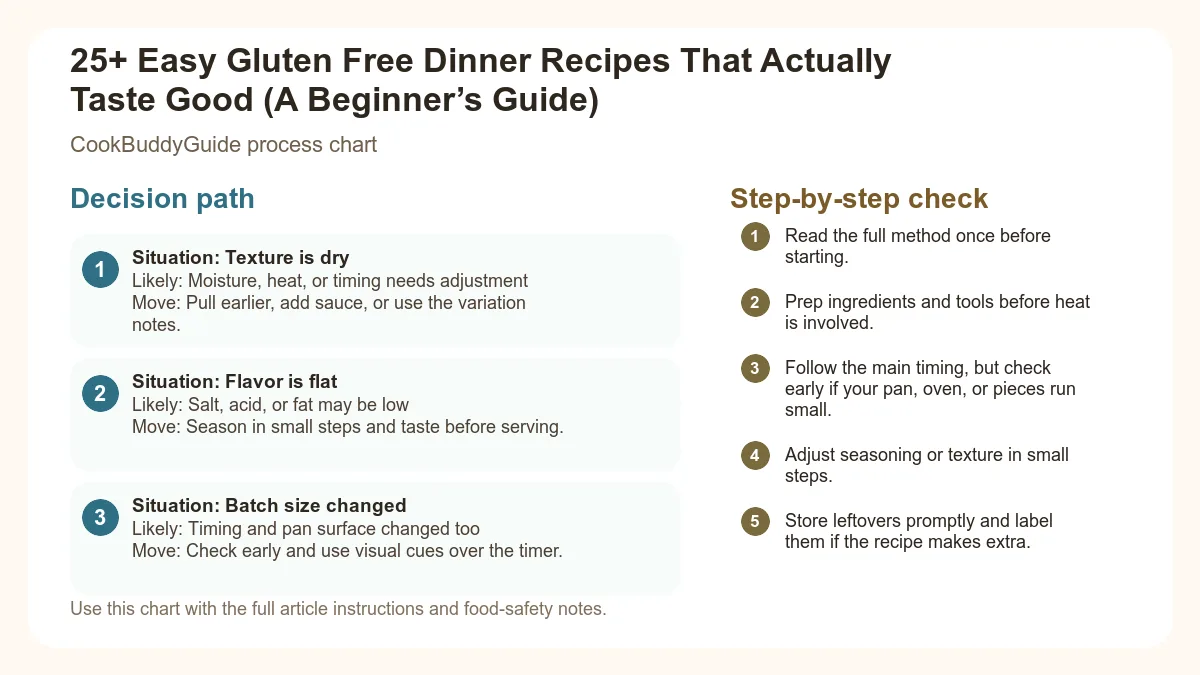
Decision table
| Situation | Likely cause or meaning | Best move |
|---|---|---|
| Texture is dry | Moisture, heat, or timing needs adjustment | Pull earlier, add sauce, or use the variation notes. |
| Flavor is flat | Salt, acid, or fat may be low | Season in small steps and taste before serving. |
| Batch size changed | Timing and pan surface changed too | Check early and use visual cues over the timer. |
Step-by-step fix
- Read the full method once before starting.
- Prep ingredients and tools before heat is involved.
- Follow the main timing, but check early if your pan, oven, or pieces run small.
- Adjust seasoning or texture in small steps.
- Store leftovers promptly and label them if the recipe makes extra.
Common mistakes
- Changing the recipe before trying the base method once.
- Measuring casually when texture depends on ratios.
- Waiting until the end to fix seasoning.
- Ignoring carryover heat or resting time.
Related topic hubs
The Foundation: Naturally Gluten-Free Dinner Recipes
When you're starting out, the easiest path to success is to avoid "replacement" foods. Instead, look toward quick weeknight meals that rely on meat, fish, beans, and rice. These ingredients are inherently safe and incredibly versatile.
Sheet Pan Dinners: A Practical Beginner Hack
Recipe 1: Lemon Herb Salmon with Roasted Asparagus and Potatoes
Ingredients: 2 salmon fillets, 1 lb baby potatoes (halved), 1 bunch asparagus, 3 tbsp olive oil, 1 tsp dried dill, salt, pepper, and fresh lemon slices.
Stir-Fries and the Tamari Switch
Recipe 2: Honey Garlic Chicken Stir-Fry
Ingredients: 1 lb chicken breast (cubed), 2 cups broccoli florets, 1 red bell pepper (sliced), 1/4 cup Tamari, 2 tbsp honey, 1 tsp grated ginger, 1 tbsp cornstarch.
Instructions: Whisk Tamari, honey, ginger, and cornstarch in a small bowl. Sear chicken in a hot skillet with oil until cooked through (165°F). Remove chicken, stir-fry veggies for 4 minutes. Add chicken back in, pour sauce over, and stir for 1-2 minutes until thickened. Serve over jasmine rice.
Power Bowls and Grain-Based Meals
Grain bowls are the ultimate meal prep solution. Consider using Quinoa or certified gluten-free oats as your base. Quinoa is a complete protein and cooks in just 15 minutes, making it a staple for healthy dinner ideas.
Recipe 3: Mediterranean Quinoa Bowls
Ingredients: 1 cup quinoa, 2 cups chicken broth (GF), grilled chicken strips, cucumbers, cherry tomatoes, kalamata olives, and store-bought Tzatziki (check label for gluten).
Instructions: Cook quinoa in broth for extra flavor. Once fluffed, top with the fresh vegetables and chicken. Drizzle with Tzatziki. This meal is naturally low carb gluten free and incredibly filling.
Other Naturally GF Ideas to Try:
- Grilled Steak with Chimichurri and Sweet Potatoes
- Baked Cod with Cherry Tomatoes and Olives
- Roasted Whole Chicken with Root Vegetables
- Black Bean and Sweet Potato Chili
- Shrimp Scampi over Zucchini Noodles (Zoodles)
Comfort Food Classics: Gluten-Free Adaptations
Eventually, you’re going to want pasta. You’re going to want tacos. You’re going to want the "heavy" stuff. The good news? Modern gluten-free flour blends and pasta alternatives have come a long way. But there are rules you must follow to avoid a mushy mess.
The Secret to Perfect Gluten-Free Pasta
Tacos and Enchiladas: Corn vs. Flour
Tacos are a beginner's best friend. However, you must be careful with "flour" tortillas. Always opt for 100% corn tortillas. To make them taste restaurant-quality, char them directly over a gas flame for 10 seconds per side or in a dry cast-iron skillet. This prevents them from breaking under the weight of your fillings.
Recipe 4: 30-Minute Ground Turkey Tacos
Ingredients: 1 lb ground turkey, 1 packet GF taco seasoning (or cumin/chili powder/garlic powder), corn tortillas, shredded cabbage, lime juice.
Instructions: Brown the turkey. Add seasoning and a splash of water. Simmer until thickened. Serve in charred corn tortillas with a squeeze of lime. This is one of the most budget friendly dinner options in the GF world.
Hearty GF Casseroles and Stews
Recipe 5: Creamy Chicken and Wild Rice Casserole
Ingredients: 2 cups cooked wild rice, 2 cups shredded chicken, 1 cup frozen peas, 1.5 cups chicken broth, 1/2 cup heavy cream, 2 tbsp cornstarch, 1/2 tsp Xanthan gum (optional for extra thickness).
Instructions: Whisk broth, cream, and cornstarch. Heat in a saucepan until thickened. Mix with rice, chicken, and peas. Bake at 350°F for 25 minutes until bubbly. No "hidden gluten" from canned soups!
More Comfort Classics:
- GF Spaghetti Bolognese (using Jovial pasta)
- Beef Stew thickened with potato starch
- Shepherd’s Pie (naturally GF if you check your broth)
- GF Mac and Cheese (using a 1-to-1 flour blend for the roux)
- Chicken Enchiladas with Corn Tortillas and GF Red Sauce
The Beginner’s Gluten-Free Pantry Swap Guide
Success with gluten free dinner recipes starts with your pantry. You don't need to buy every expensive bag of flour on the shelf. Start with these essentials for a smooth transition.
Essential Flour Blends and Thickeners
For most family-friendly recipes, a "1-to-1" or "Measure for Measure" blend is your best bet. Brands like King Arthur or Cup4Cup include Xanthan gum, which acts as the "glue" that gluten usually provides. If you are making gravies or thickening sauces, consider keeping cornstarch or arrowroot powder on hand. They provide a much cleaner finish than flour-based thickeners.
Hidden Gluten: Sauces and Condiments to Watch
- Soy Sauce: Swap for Tamari or Coconut Aminos.
- Malt Vinegar: Swap for Apple Cider or White Wine Vinegar.
- Spice Blends: Look for "Certified Gluten-Free" to avoid anti-caking agents that contain wheat.
- Salad Dressings: Many use flour as a thickener.
Breadcrumbs and Binders
Kitchen Safety: Avoiding Cross-Contamination
If you are cooking for someone with Celiac disease, the "how" you cook is just as important as the "what" you cook. Cross-contamination is the accidental transfer of gluten to gluten-free food.
The Shared Kitchen Survival Guide
If your home isn't 100% gluten-free, you need a system. Consider using color-coded cutting boards—red for "regular" and green for "gluten-free." This simple visual cue has saved me from many mistakes over the years.
High-Risk Kitchen Tools
Some tools are "gluten traps." Because gluten is a protein that acts like glue, it sticks in porous surfaces.
- The Toaster: You cannot share a toaster. Even a tiny crumb can cause a reaction. Get a dedicated GF toaster or use "toaster bags."
- Wooden Spoons: Wood is porous. If you’ve used a wooden spoon to stir wheat pasta for years, it likely holds gluten. Switch to silicone or metal.
- Scratched Non-Stick Pans: Gluten can hide in the scratches. If your pans are beat up, it’s time for a fresh set.
- Colanders: It is nearly impossible to get every bit of wheat pasta out of those tiny holes. Keep a separate colander for your GF pasta.
Label Reading 101
Don't just look for "Gluten-Free" on the front of the box. Familiarize yourself with the FDA gluten-free labeling regulations. A product labeled "Gluten-Free" must contain less than 20 parts per million (ppm) of gluten. However, "Certified Gluten-Free" (often a circle with a GF) usually meets even stricter standards (often 10 ppm or less).
Meal Prep Strategies for Busy Weeknights
The hardest part of a gluten-free diet is the "I'm tired and there's nothing to eat" moment. You can't always just grab a pizza. That’s why meal prep is your best defense.
Batch Cooking Proteins
- Night 1: Shredded chicken tacos with corn tortillas.
- Night 2: Chicken and quinoa bowls with roasted veggies.
- Night 3: GF Pasta with chicken and marinara.
Storage Tips for GF Leftovers
Gluten-free breads and pastas dry out faster than their wheat counterparts because they lack the moisture-retaining properties of gluten. Always store leftovers in airtight containers. If you are reheating GF pasta, add a teaspoon of water before microwaving to "steam" it back to life.
Freezing GF Meals
Most one-pot meals and stews freeze beautifully. However, avoid freezing meals with heavy dairy or GF pasta already mixed in, as the texture can become grainy upon thawing. Freeze the sauce/meat and cook fresh pasta when you're ready to eat.
Frequently Asked Questions
A: Not necessarily. Many processed GF snacks are higher in sugar and fat to compensate for texture. Focusing on naturally gluten-free whole foods is the healthiest approach.
A: No. Almond flour is much denser and contains more fat. Use a specifically formulated gluten-free flour blend for 1:1 swaps in most dinner recipes.
A: You are likely overcooking it or not rinsing it. GF pasta releases a lot of starch; rinsing it with cold water immediately after cooking is the secret to a better texture.
Conclusion: Your Journey to Gluten-Free Mastery
Starting a gluten-free journey can feel overwhelming, but remember: you aren't losing flavor; you're just changing your toolkit. By focusing on easy gluten free meals for beginners like sheet pan salmon, vibrant stir-fries with Tamari, and hearty Quinoa bowls, you’ll realize that "gluten-free" can simply mean "better food."
Tonight’s Dinner Checklist:
- Check your sauce labels for hidden gluten.
- If using pasta, set the timer for 2 minutes less than the box says.
- Ensure your workspace is free of breadcrumbs or cross-contamination risks.
- Enjoy a meal that tastes so good, you forgot it was "special diet" food!
Want more tips and practical recipes? Join our community at CookBuddyGuide.com by signing up for our weekly newsletter!