Quick Answer
Dark chocolate vs milk chocolate baking: learn which to choose. Master dark or milk chocolate for baking cookies, brownies, and ganache with our practical tips.
Practical note
For Dark Chocolate vs Milk Chocolate Baking, the most useful home checks are temperature, measuring, resting time, and visible texture. Those details tell you more than guessing, especially before adding extra flour, liquid, heat, or leavening.
Decision table
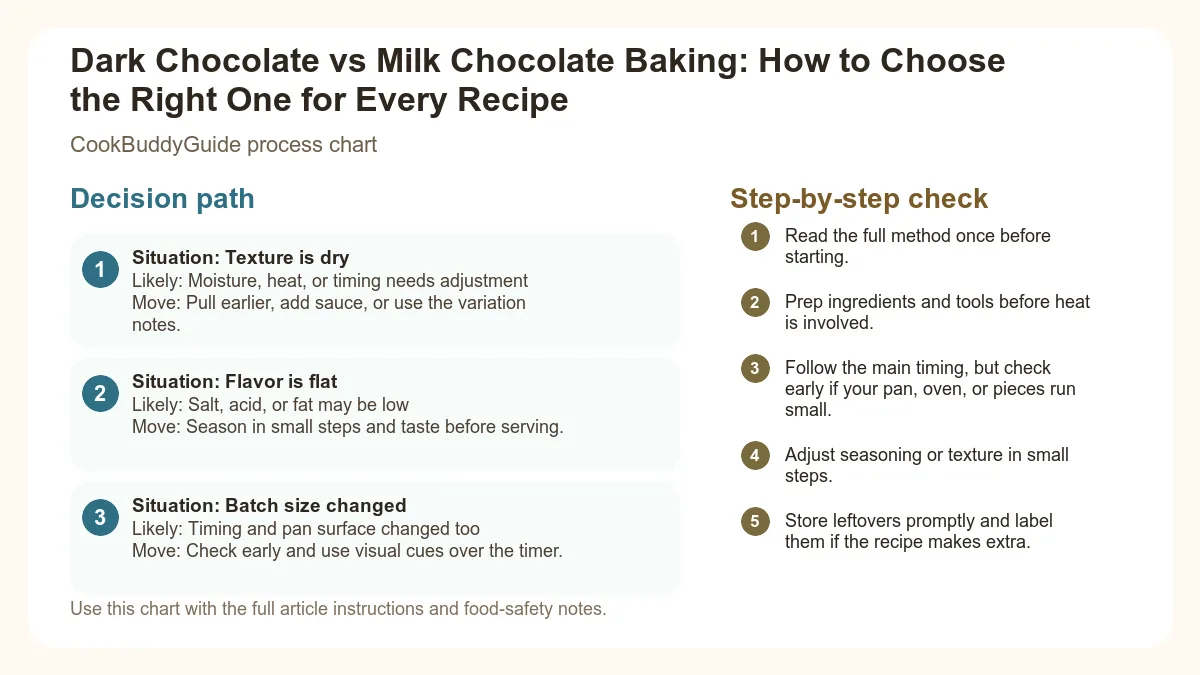
| Situation | Likely cause or meaning | Best move |
|---|---|---|
| Texture is dry | Moisture, heat, or timing needs adjustment | Pull earlier, add sauce, or use the variation notes. |
| Flavor is flat | Salt, acid, or fat may be low | Season in small steps and taste before serving. |
| Batch size changed | Timing and pan surface changed too | Check early and use visual cues over the timer. |
Step-by-step fix
- Read the full method once before starting.
- Prep ingredients and tools before heat is involved.
- Follow the main timing, but check early if your pan, oven, or pieces run small.
- Adjust seasoning or texture in small steps.
- Store leftovers promptly and label them if the recipe makes extra.
Common mistakes
- Changing the recipe before trying the base method once.
- Measuring casually when texture depends on ratios.
- Waiting until the end to fix seasoning.
- Ignoring carryover heat or resting time.
Related topic hubs
Introduction: Why Your Choice of Chocolate Can Make or Break a Recipe
It’s 9:00 PM on a Tuesday, and you have a sudden, undeniable craving for the kind of fudgy, decadent brownies that make the world stand still. You pull out your favorite recipe, and it calls for 4 ounces of 70% bittersweet chocolate. You look in your pantry and find… a lonely bag of milk chocolate chips. You might think, "It’s all chocolate, right? What’s the worst that could happen?"
The Science of Flavor and Texture
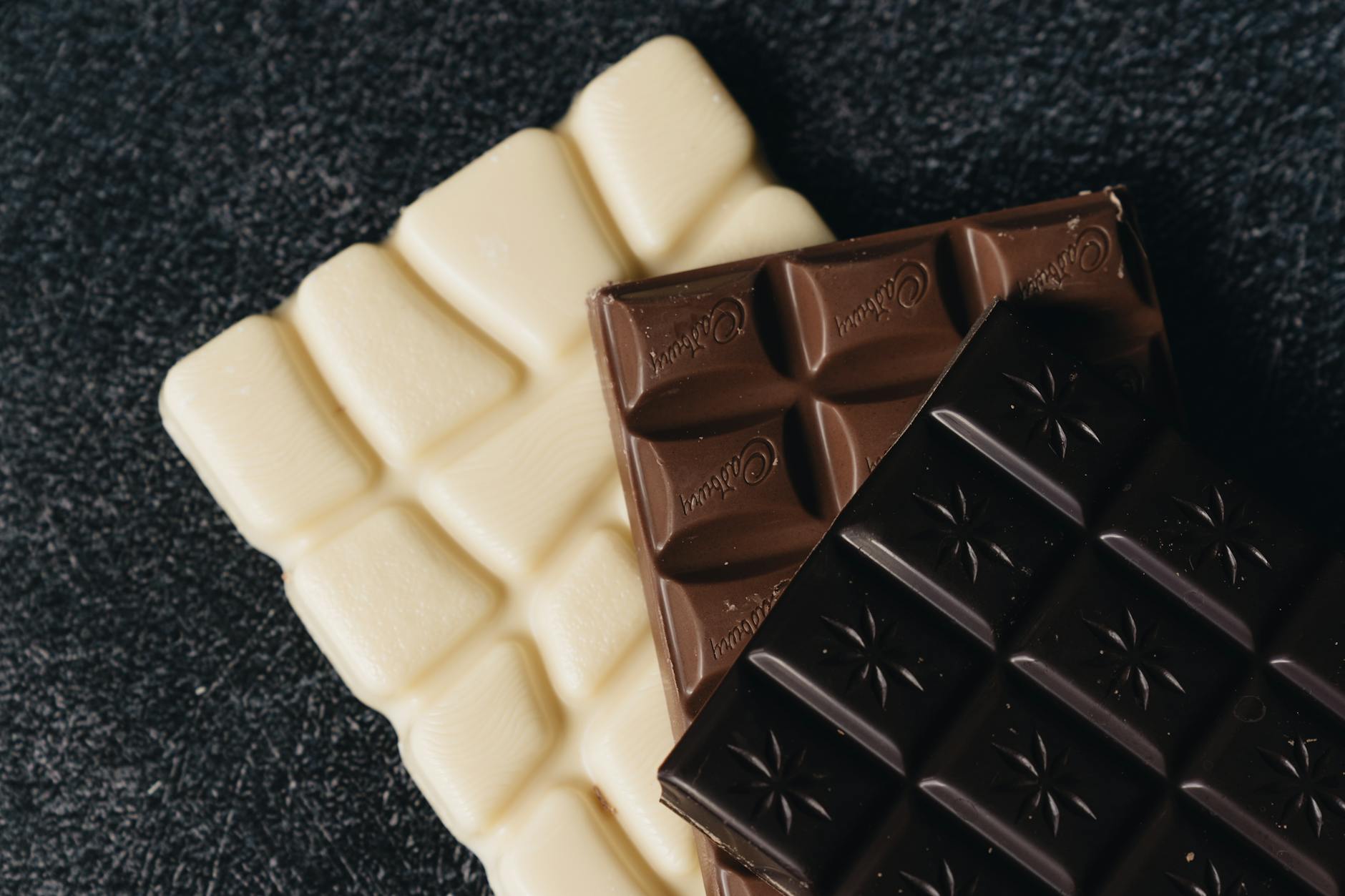
The fundamental difference between dark and milk chocolate lies in the ratio of cocoa solids and cocoa butter to sugar and dairy. Dark chocolate is a purist’s game: it consists of chocolate liquor (the ground-up nibs of the cacao bean), extra cocoa butter, and sugar. Milk chocolate introduces dairy solids into the mix, which completely alters the melting point and the way the chocolate interacts with other fats in your batter. When you bake with dark chocolate, you are adding structure and intensity. When you bake with milk chocolate, you are adding creaminess, sugar, and a softer texture that can sometimes compromise the "set" of a dessert.
Why Home Cooks Often Get It Wrong
Most home cooks choose their chocolate based on what they like to snack on. While that’s a great starting point, "eating chocolate" and "baking chocolate" serve different masters. Many commercial milk chocolates are loaded with lecithin and stabilizers to keep them shelf-stable, but these can interfere with the Maillard reaction—the chemical process that gives baked goods their browned, complex flavors. Understanding whether to use dark or milk chocolate for baking requires looking past the wrapper and into the percentages. This guide will share practical selection criteria to help you choose the right chocolate every single time.
Table of Contents
The Anatomy of Chocolate: Cocoa Solids, Fats, and Sugars
To master dark chocolate vs milk chocolate baking, we first have to understand what’s actually inside that bar. According to the FDA standards for chocolate, dark chocolate must contain at least 35% chocolate liquor, while milk chocolate must contain at least 10% chocolate liquor and 12% milk solids. But for the high-quality baking we do here, those minimums are just the beginning.
What is Dark Chocolate? (Percentages Explained)
When you see a percentage on a bar of semisweet chocolate or bittersweet chocolate, that number represents the total weight that comes from the cocoa bean (both the solids and the cocoa butter). A 70% bar means 70% of the bar is cacao, and the remaining 30% is mostly sugar, vanilla, and lecithin.
- 50% - 60% (Semisweet): The "workhorse" of baking. It has enough sugar to be palatable but enough cocoa to provide structure.
- 70% - 85% (Bittersweet): Intense, fruity, and acidic. This chocolate has a high fat content from cocoa butter, which makes for a very firm set in ganache or tarts.
What is Milk Chocolate? (The Role of Dairy)
Milk chocolate is a different beast entirely. The addition of milk powder or condensed milk solids creates a much lower melting point. Because dairy fat is softer at room temperature than cocoa butter, milk chocolate will always result in a softer final product. This is why a milk chocolate bar feels "bendy" compared to the brittle snap of a dark bar. The presence of dairy also means it is more prone to scorching; milk proteins burn at much lower temperatures than cocoa solids.
The "Snap" Test: Identifying Quality in Baking Bars
Before you even preheat your oven, you can test the quality of your chocolate. A high-quality couverture chocolate or a premium baking bar should have a clean, audible "snap" when broken. This indicates that the cocoa butter is properly crystallized—a process known as tempering chocolate. If the chocolate crumbles or feels soft, it likely has a high sugar ratio or vegetable fat replacements, which will lead to a greasy mouthfeel in your cookies. While you're prepping your ingredients, you might want to check out our breakfast meal prep ideas to save time later in the week!
Dark Chocolate vs Milk Chocolate Baking: Performance in the Oven
Heat Resistance and Melting Points
Dark chocolate, particularly bittersweet chocolate, has a higher melting point (around 90°F to 96°F). In the oven, dark chocolate chunks will hold their shape longer before eventually softening. Milk chocolate, however, begins to melt at a lower temperature (around 86°F to 90°F) due to the milk solids and melting points associated with dairy fats. If you are making chocolate chip cookies, milk chocolate chips will often "puddle" more than dark chocolate chunks.
The Sugar Factor: How Sweetness Impacts Browning
Milk chocolate contains significantly more sugar than dark chocolate. During baking, this extra sugar undergoes the Maillard reaction and caramelization faster. If you swap dark for milk in a long-bake recipe like a pound cake, you might find the edges of the cake browning—or even burning—before the center is cooked through. This is a critical consideration when deciding between dark or milk chocolate for baking.
Fat Content and Crumb Structure
The type of fat matters. Cocoa butter (found in higher concentrations in dark chocolate) sets firmly. Dairy fat (found in milk chocolate) stays soft. In a brownie recipe, using 70% dark chocolate will result in a fudgy, dense center that holds its shape. Using milk chocolate will result in a brownie that is almost "gooey" or "mushy" because the dairy fats don't provide the same structural "backbone" once cooled. As noted in this guide on cocoa butter and sugar ratios, the balance of these ingredients is what determines the final bite of your dessert.
The Ganache Guide: Achieving the Perfect Emulsion
Ganache is the ultimate test of a baker's chocolate knowledge. It is an emulsion of chocolate and heavy cream, and the rules change completely depending on your choice of chocolate.
The Master Ganache Ratio Guide
- Dark Chocolate (60% - 70%): Use a 1:1 ratio (e.g., 8oz chocolate to 8oz cream). This creates a firm, pipeable ganache perfect for truffles or thick frosting.
- Milk Chocolate: Use a 2:1 or 3:1 ratio (e.g., 12oz-16oz chocolate to 8oz cream). Because milk chocolate has less cocoa butter and more dairy fat, it needs more solids to reach the same thickness as dark chocolate.
- Technique Tip: Never boil your cream until it’s volcanic. Bring it to a gentle simmer, pour over finely chopped chocolate, and let it sit for exactly 5 minutes before stirring from the center outward to create the emulsion.
Troubleshooting Broken Ganache
If your ganache looks grainy or oily, it has "broken." This often happens with milk chocolate because the extra dairy solids make the emulsion unstable. To fix it, whisk in a tablespoon of room-temperature milk or a tiny bit of extra warm cream. The goal is to re-establish the bond between the fats and the liquids. Chocolate seizing is a different beast—that happens when a tiny drop of water hits melting chocolate, causing the sugars to clump. If your chocolate seizes, you usually have to start over or turn it into a chocolate sauce by adding significantly more liquid.
Best Uses by Recipe Type: A Practical Breakdown
When should you reach for the dark, and when is milk the winner? Here is my practical guide for the most common recipes.
Cookies: Chips, Chunks, and Puddles
Brownies: Fudgy vs. Cakey Dynamics
Brownies are all about the fat content. If you want that crackly, paper-thin top, you need the sugar and cocoa butter found in a 60-70% dark chocolate bar. Milk chocolate brownies tend to have a "malted" flavor profile which is delicious but lacks the "punch" most people expect from a brownie. If you must use milk chocolate, consider adding 2 tablespoons of unsweetened cocoa powder to the batter to deepen the flavor.
Cakes and Frostings: Balancing the Richness
In a heavy layer cake, dark chocolate is usually the better choice for the batter because it stands up to the flour and eggs. For the frosting, however, milk chocolate is a superstar. A milk chocolate Swiss meringue buttercream is light, airy, and tastes like a premium milkshake. When choosing the right chocolate for cakes, consider the other flavors. Raspberry and coffee pair better with dark; peanut butter and caramel are best friends with milk.
The Substitution Guide: How to Swap Dark and Milk Chocolate
Can you swap them? Yes, but you can’t just do a 1:1 swap and expect the same results. You have to play chemist.
The "Pro-Swap" Mathematical Formula
If a recipe calls for Dark Chocolate and you only have Milk Chocolate:
- Reduce Added Sugar: Milk chocolate is roughly 50-60% sugar. Reduce the granulated or brown sugar in your recipe by 2 tablespoons for every 4 ounces of chocolate swapped.
- Increase Cocoa: Add 1 tablespoon of Dutch-processed cocoa powder to the dry ingredients to compensate for the lower cocoa solids in milk chocolate.
- Reduce Liquid: If making a ganache or pudding, reduce the cream or milk by 15% to account for the softer dairy fats in the milk chocolate.
For more details, check out these kitchen tips on modifying sugar and fat ratios.
When NOT to Swap (The Dealbreakers)
There are some recipes where dark chocolate vs milk chocolate baking choices are non-negotiable.
- Chocolate Soufflé: The structure depends on the specific fat-to-protein ratio of dark chocolate. Milk chocolate is too heavy and fatty, and the soufflé will likely collapse.
- Chocolate Glaze (Mirror Glaze): Milk chocolate won't provide the same high-gloss shine or firm set as a dark couverture.
- Temper-Sensitive Candy: If you are dipping truffles, dark chocolate is much easier for beginners to temper than milk chocolate, which has a very narrow temperature window.
Kitchen Tips and Common Mistakes to Avoid
The Seizing Nightmare: How to Save Your Chocolate
Overheating: The Silent Killer of Milk Chocolate
Milk chocolate is extremely sensitive. If you heat it above 110°F, the milk solids will begin to cook and clump, giving the chocolate a "gritty" texture that you can't fix. Dark chocolate is more resilient and can handle up to 120°F. Always use a digital thermometer if you’re unsure.
Storage Secrets: Preventing Fat Bloom
Have you ever opened a bar of chocolate and seen a white, chalky film? That’s "bloom." It’s not mold; it’s just the cocoa butter or sugar migrating to the surface due to temperature changes. While it looks unappealing, bloomed chocolate is perfectly fine for baking! It will melt down and reintegrate into your batter just fine. To prevent it, store your chocolate in a cool, dark place (60-65°F)—never the fridge, as the moisture can cause sugar bloom.
Frequently Asked Questions
A: Chocolate chips contain lecithin and less cocoa butter to help them keep their shape. They won't melt into a smooth liquid as easily as baking bars. Use bars for ganache and chips for cookies where you want defined chunks.
A: For everyday baking, Ghirardelli is excellent. For special occasions, Guittard or Valrhona offer superior flavor profiles and higher cocoa butter content.
A: Yes, but much less than dark. Caffeine is found in the cocoa solids, so the higher the percentage, the higher the caffeine.
Conclusion: Finding Your Personal Baking Style
Choosing between dark chocolate vs milk chocolate baking eventually comes down to the "vibe" of the dessert you want to create. Do you want a sophisticated, slightly bitter, and structurally sound tart? Go dark. Do you want a comforting, creamy, and nostalgic cookie? Go milk.
If the summer heat is making your kitchen too hot for these chocolate experiments, you can always take a break and try some of our no-cook summer meal ideas until the temperature drops. Until then, keep your chocolate cool, your whisk ready, and remember: there are no mistakes in baking, only "accidental" chocolate lava cakes! Happy baking!