Quick Answer
Master dairy free baking substitutes in this guide. It also explains to use milk and butter substitutes for baking cakes, cookies, and crusts with perfect results.
Practical note
For Dairy Free Baking Substitutes, the most useful home checks are temperature, measuring, resting time, and visible texture. Those details tell you more than guessing, especially before adding extra flour, liquid, heat, or leavening.
Decision table
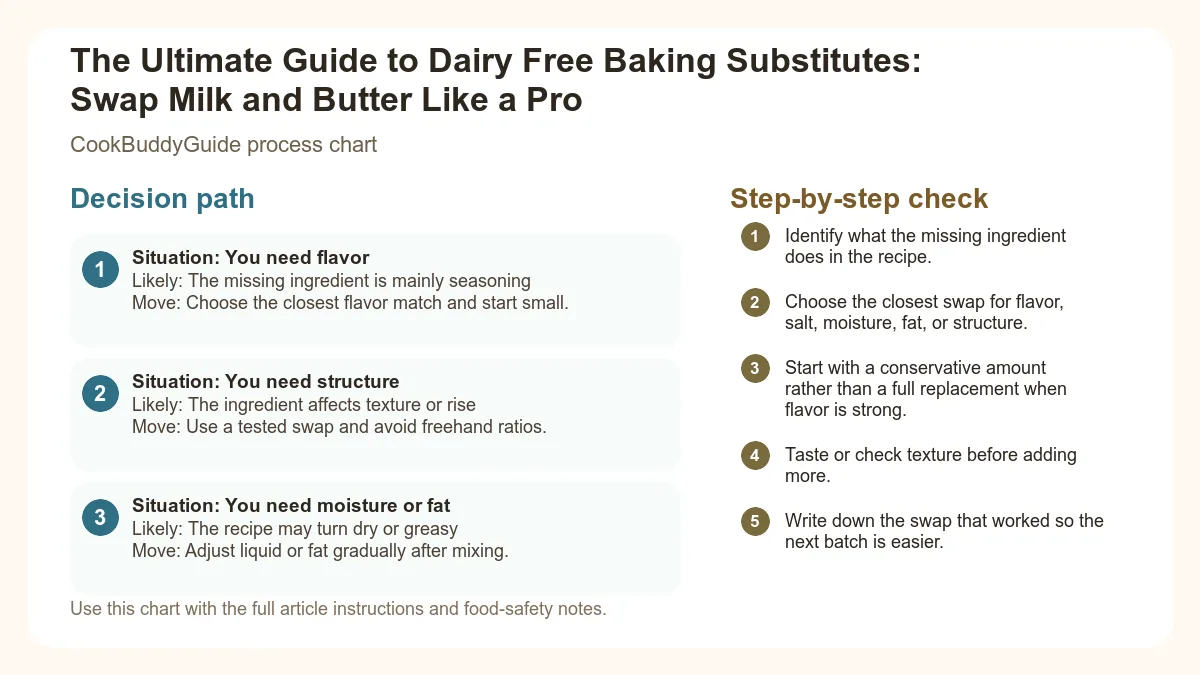
| Situation | Likely cause or meaning | Best move |
|---|---|---|
| You need flavor | The missing ingredient is mainly seasoning | Choose the closest flavor match and start small. |
| You need structure | The ingredient affects texture or rise | Use a practical swap and avoid freehand ratios. |
| You need moisture or fat | The recipe may turn dry or greasy | Adjust liquid or fat gradually after mixing. |
Step-by-step fix
- Identify what the missing ingredient does in the recipe.
- Choose the closest swap for flavor, salt, moisture, fat, or structure.
- Start with a conservative amount rather than a full replacement when flavor is strong.
- Taste or check texture before adding more.
- Write down the swap that worked so the next batch is easier.
Common mistakes
- Replacing a strong ingredient 1:1 before tasting.
- Choosing a flavor match when the recipe actually needs structure.
- Forgetting that salty swaps can change the whole dish.
- Adding extra liquid before the batter, dough, or sauce has time to hydrate.
Related topic hubs
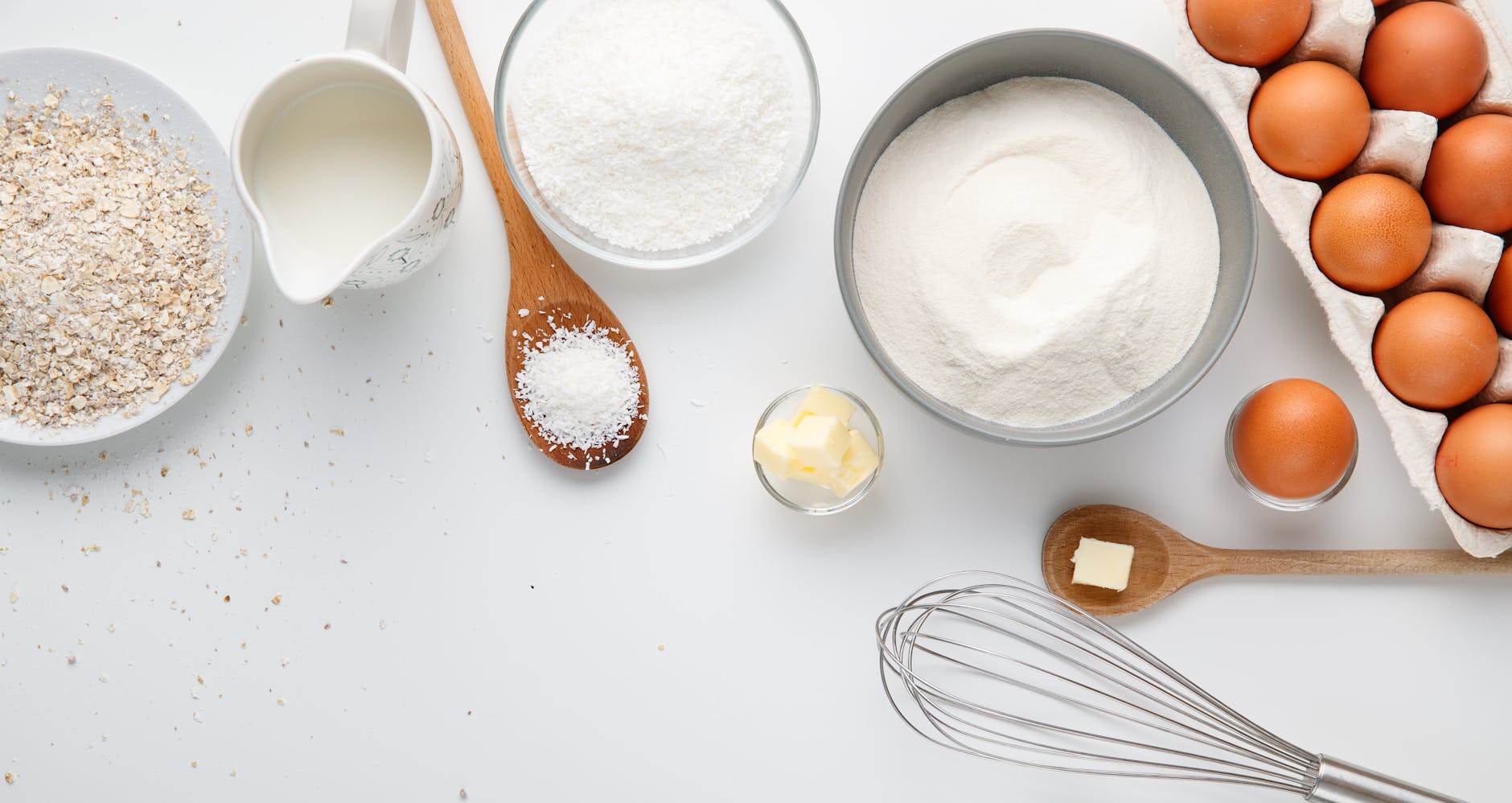
Baking is a science, and dairy plays a specific role in that science. Butter provides fat for tenderness and air pockets for leavening, while milk provides moisture, protein for structure, and lactose for browning. When we remove these, we have to replace those functions intentionally. Whether you are dealing with lactose intolerance or simply looking for non-dairy alternatives, this guide will show you how to achieve professional-level results without a single drop of cow’s milk.
Introduction: Why Dairy-Free Baking Doesn’t Have to Be Difficult
The Science of Dairy in Baking
In traditional baking, dairy is the "glue" and the "softener." Butter is a saturated fat that remains solid at room temperature, which is vital for creating flaky layers in biscuits and pie crusts. During the creaming process, butter traps air bubbles that expand in the oven, giving your cakes a lift. Milk, on the other hand, contributes casein and whey proteins. These proteins strengthen the dough and interact with sugars to create the "Maillard reaction"—that beautiful golden-brown crust we all love.
When searching for milk and butter substitutes for baking, we aren't just looking for liquid and fat; we are looking for emulsification. This is the process of combining oil and water into a smooth, stable mixture. Many plant-based milks use lecithin or gums to mimic this, which is why some brands perform better than others in the oven.
The Best Dairy-Free Milk Substitutes for Baking
Choosing the right plant-based milk depends entirely on what you are making. A heavy chocolate cake can handle a different milk than a light, airy angel food cake.
Oat Milk: The Creamy All-Rounder
Almond Milk: The Light and Nutty Choice
Soy Milk: The Protein Powerhouse for Browning
Coconut Milk: Richness and Fat Content
There is a massive difference between the coconut milk in a carton and the canned variety. Canned coconut milk is extremely high in saturated fat, making it an excellent substitute for heavy cream or half-and-half. Use it for rich ganaches or fudgy brownies. If a recipe calls for whole milk, stick to the refrigerated carton to avoid an overwhelming coconut flavor and an overly oily texture.
Pro-Tip: The Dairy-Free "Buttermilk" Hack
Many recipes call for buttermilk to activate baking soda. You can easily replicate this with non-dairy alternatives.
- Ratio: 1 cup soy milk + 1 tablespoon Apple Cider Vinegar or Lemon Juice.
- Method: Stir and let sit for 5-10 minutes until it curdles.
- Why it works: The acid reacts with the soy protein to thicken the liquid, providing the same tang and leavening power as traditional buttermilk.
Essential Butter Substitutes for Baking Success
Butter is 80-82% fat and about 16-18% water. When you look for milk and butter substitutes for baking, you must account for this balance.
Vegan Butter: The Direct 1:1 Replacement
Modern plant-based butter has come a long way. Brands like Miyoko’s or Country Crock Plant Butter are designed to behave exactly like dairy butter. They are excellent for creaming with sugar. However, be wary of "tub" margarines, which have a high water content and can cause your cookies to spread into thin pancakes. Always use "sticks" for baking. For more technical advice on ratios, check out this guide on substituting for butter in recipes.
Coconut Oil: Solid vs. Melted Applications
If coconut oil is unavailable or unsuitable, our guide to replacing coconut oil separates 1:1 liquid-oil swaps from solid fats for cookies, pastry, and chilled desserts.
Avocado: The Nutrient-Dense Fat Swap
If you are looking for a heart-healthy option, avocado is a brilliant swap, especially for toddler dinner ideas or healthy snacks. You can use a 1:1 ratio of mashed avocado for butter. It works best in chocolate-based recipes (like brownies or devil's food cake) because the dark cocoa hides the green tint. It provides an incredibly moist, dense crumb. Learn more about how to bake with avocado to maximize its benefits. This is a great way to incorporate more nutrients, which is a key part of the benefits of a dairy-free diet.
Application Guide: Swapping by Baked Good Type
Cakes and Cupcakes: Achieving the Perfect Crumb
For a standard vanilla cake, Use plant-based butter (sticks) and soy milk. The key to a perfect crumb is ensuring your "butter" and "milk" are at room temperature. If you add cold almond milk to creamed vegan butter, the fat will seize, and your batter will look curdled. If this happens, don't panic! Simply whisk in a tablespoon of your flour to help re-emulsify the mixture.
Muffins and Quick Breads: Moisture Without the Weight
Ratio: Use 3/4 cup of oil for every 1 cup of butter called for in muffin recipes.Cookies: Managing Spread and Chewiness
Pie Crusts: The Secret to Dairy-Free Flakiness
For a flaky crust, you need solid chunks of fat. Consider a 50/50 mix of frozen plant-based butter and vegetable shortening. Shortening has a higher melting point than butter, which helps the crust hold its shape in the oven. For a deep dive into how these fats behave differently, see these essential vegan baking substitutions.
The "Perfect Spread" Dairy-Free Cookie Formula
Use this adjustment for any standard chocolate chip cookie recipe to ensure they don't turn into a single giant sheet-pan cookie.
- The Swap: Replace 1 cup butter with 1 cup cold Vegan Butter Sticks (not tub).
- The Secret: Add 1 teaspoon of cornstarch to your dry ingredients. This helps with the "chew" that is often lost when removing dairy.
- The Rule: Chill the dough! If the dough is warm, the cookie will fail.
Common Mistakes and Troubleshooting
Why My Cake is Gummy
Gumminess usually happens for two reasons: over-mixing or too much moisture. Plant milks, especially oat milk, can become "slimy" if over-worked. When you add the liquid to the dry ingredients, fold it gently until just combined. Also, ensure you aren't using a "light" or "low-fat" plant milk, which is mostly water and will ruin the emulsification of your batter.
The Problem with Over-Mixing Dairy-Free Batters
Adjusting Sugar Levels for Sweetened Milks
If you accidentally bought "Original" soy milk instead of "Unsweetened," you must reduce the granulated sugar in your recipe by about 1-2 tablespoons per cup of milk used. Otherwise, the extra sugar will cause the cake to brown too quickly on the outside while remaining raw in the middle.
The Dairy-Free Baker’s Pantry Checklist
To be ready for any baking emergency, keep these casein-free staples in your cupboard:
- Soy Milk (Unsweetened): For general baking and browning.
- Canned Coconut Milk: For richness and "heavy cream" replacements.
- Vegan Butter Sticks: Look for brands with oil blends (like olive or avocado oil).
- Refined Coconut Oil: For a neutral-tasting solid fat.
- Apple Cider Vinegar: For making "buttermilk."
- Applesauce: A great fat-reducer that adds moisture to healthy toddler dinner ideas and snacks.
Frequently Asked Questions
Technically, yes, but your bake will be less flavorful and will go stale much faster. If you must use water, add a teaspoon of oil for every cup of water to mimic the fat in milk.
Not necessarily. Some margarines contain whey or lactose. Always check the label to ensure it is 100% plant-based and casein-free.
The solid "cream" at the top of a chilled can of full-fat coconut milk is the best 1:1 substitute for heavy whipping cream.
Conclusion: Your Path to Dairy-Free Mastery
Transitioning to dairy free baking substitutes doesn't mean sacrificing the joy of a warm, flaky biscuit or a moist birthday cake. It simply means becoming a more intentional baker. By choosing soy milk for browning, oat milk for creaminess, and vegan butter sticks for that perfect cookie spread, you can create treats that even the most devoted dairy-lovers will enjoy. Remember, the secret is in the baking science—control your temperatures, don't over-mix, and always keep a can of coconut milk in the pantry. Happy baking from all of us at CookBuddyGuide.com!