Quick Answer
Brown rice contains the bran and germ, so it generally provides more fiber and has a chewier texture; white rice cooks faster and has a softer, more neutral texture. Choose by nutrition goals, digestion, cooking time, and the dish rather than treating either one as universally better.
Practical note
For White Rice vs Brown Rice, this guide centers on The Bran, The Germ, The Endosperm. Those are the checkpoints we would use first in a normal home kitchen before making a bigger change.
Decision table
| Situation | Likely cause or meaning | Best move |
|---|---|---|
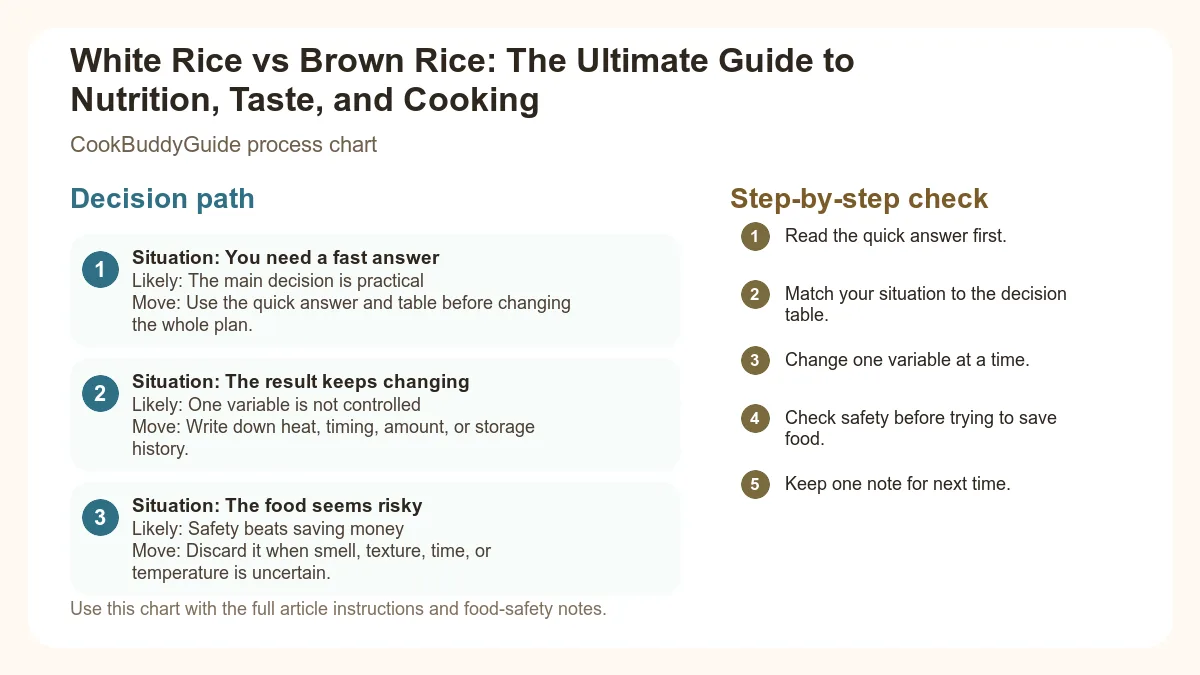
| You need a fast answer | The main decision is practical | Use the quick answer and table before changing the whole plan. |
| The result keeps changing | One variable is not controlled | Write down heat, timing, amount, or storage history. |
| The food seems risky | Safety beats saving money | Discard it when smell, texture, time, or temperature is uncertain. |
Step-by-step fix
- Read the quick answer first.
- Match your situation to the decision table.
- Change one variable at a time.
- Check safety before trying to save food.
- Keep one note for next time.
Common mistakes
- Skipping the quick answer and changing too much at once.
- Treating quality problems and safety problems the same way.
- Not writing down the detail that caused the repeat problem.
Related topic hubs
You’re standing in the pantry at 6:15 PM, a hungry family waiting in the next room, and you’re holding two bags of grain. In one hand, the familiar, snowy-white jasmine rice; in the other, a bag of hearty, tan brown rice. You’ve heard the whispers in health magazines that white rice is "empty calories," but you also know that your favorite stir-fry never tastes quite right with the chewy texture of the whole-grain alternative. This white rice vs brown rice dilemma is one of the most common hurdles for home cooks trying to balance nutrition with culinary satisfaction.
Table of Contents
- The Anatomy of a Grain: What’s the Real Difference?
- Nutritional Breakdown: White Rice vs Brown Rice
- Is White Rice or Brown Rice Healthier? The Nuanced Truth
- Culinary Comparison: Flavor, Texture, and Versatility
- Cooking Mastery: How to Get Perfect Results Every Time
- The Verdict: When to Choose Which Rice
- Frequently Asked Questions
The Anatomy of a Grain: What’s the Real Difference?
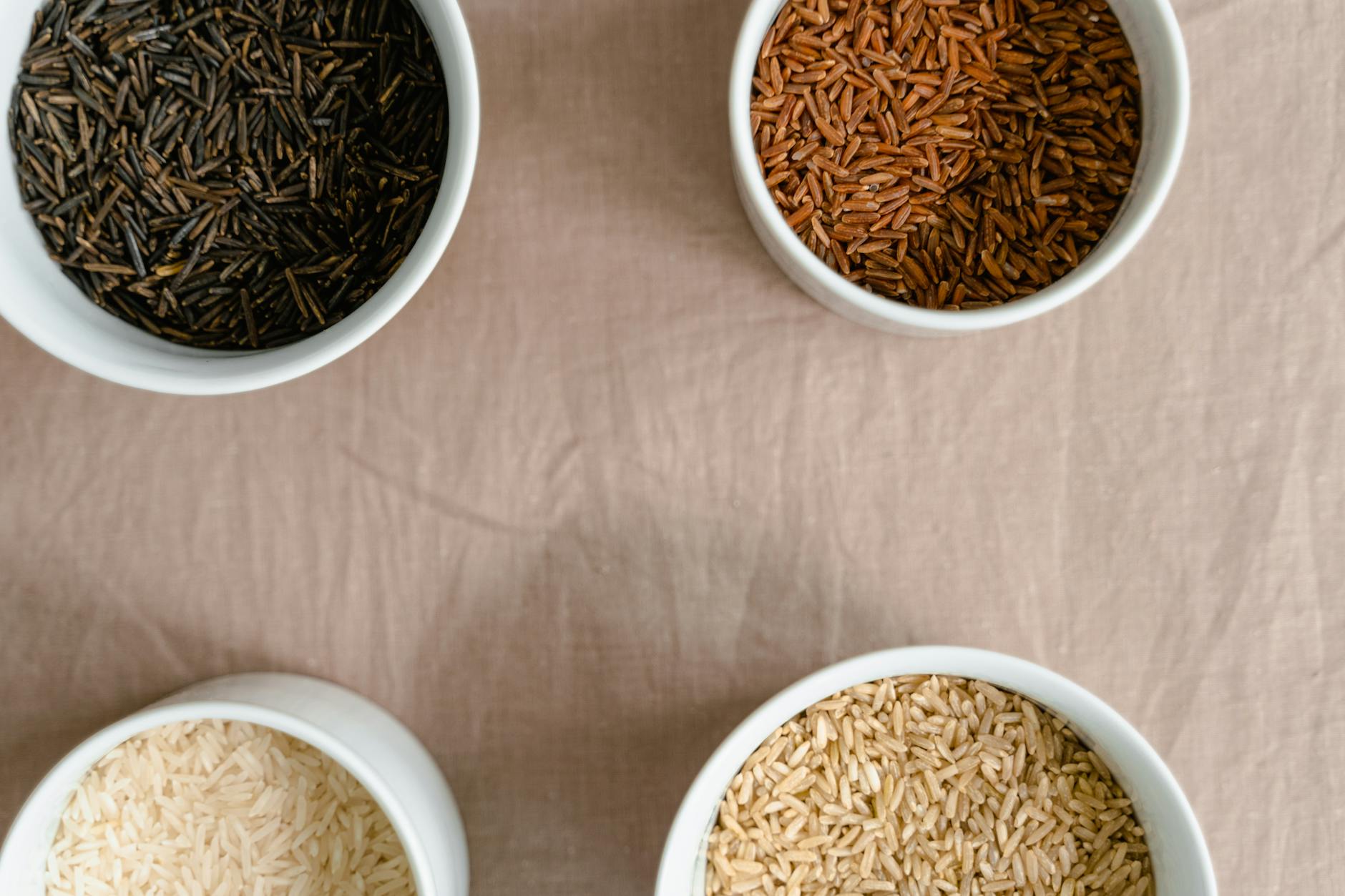
To understand the white rice vs brown rice debate, we have to look at what happens at the mill. Every grain of rice harvested from the field starts as a "paddy" grain, protected by a tough, inedible outer hull. Once that hull is removed, you are left with brown rice. It is a whole grain in its truest form, consisting of three distinct layers:
- The Bran: The multi-layered outer skin that contains the bulk of the dietary fiber.
- The Germ: The nutrient-dense embryo of the seed, packed with B vitamins, minerals, and healthy fats.
- The Endosperm: The starchy interior that serves as the energy source for the germ.
The hulling process for white rice goes one step further. To create those pearly white grains, the germ and bran are polished away, leaving only the starchy endosperm. While this process significantly extends the shelf life of the rice (the oils in the germ can go rancid over time), it also removes a significant portion of the grain’s natural nutrient density. However, as we will discuss, modern food processing often adds these nutrients back in through "enrichment."
Nutritional Breakdown: White Rice vs Brown Rice
When people ask me, "Is white rice or brown rice healthier?", they are usually looking at the fiber count. On paper, brown rice wins the fiber battle handily. A cup of cooked brown rice offers about 3.5 grams of fiber, while white rice provides less than 1 gram. This fiber is crucial for digestive health and helps prevent the blood sugar spikes often associated with refined carbohydrates.
However, the story doesn't end there. Let’s look at the micronutrients. Brown rice is a powerhouse of magnesium and manganese. Magnesium is essential for over 300 biochemical reactions in the body, including muscle and nerve function, while manganese plays a vital role in bone formation and blood clotting. You can view the specific USDA food composition databases to see the exact milligram differences, but generally, brown rice contains significantly higher levels of these minerals naturally.
The "Enriched" Factor
In the United States and many other countries, white rice is typically "enriched." This means that after the hulling process, manufacturers add back B vitamins (thiamin, niacin, folic acid) and iron. Because of this, white rice actually contains more folic acid than brown rice, which is a critical nutrient for pregnant women. When comparing the nutritional profile of rice varieties, you’ll see that white rice isn't "empty" calories—it’s just a different delivery system for nutrients.
Glycemic Index and Energy
The Glycemic Index (GI) is a measure of how quickly a food raises blood glucose levels. Brown rice generally has a GI of around 50-55 (low to medium), while white rice sits around 70 or higher (high). If you are sedentary, these blood sugar spikes can lead to insulin resistance over time. However, for athletes or those needing quick complex carbohydrates before a workout, the faster absorption of white rice can actually be an advantage.
Is White Rice or Brown Rice Healthier? The Nuanced Truth
If brown rice has more fiber and minerals, why isn't it the undisputed champion? The answer lies in two controversial topics: phytic acid and arsenic in rice.
The Phytic Acid Myth
The Arsenic Concern
Digestibility and Gut Health
Culinary Comparison: Flavor, Texture, and Versatility
From a culinary perspective, white rice vs brown rice is like comparing a blank canvas to a textured tapestry. They serve different purposes in the kitchen.
The Nutty Profile of Brown Rice
The Floral and Neutral Notes of White Rice
White rice varieties like basmati and jasmine are prized for their aroma. Jasmine rice has a buttery, floral scent that is essential for Thai curries, while Basmati offers long, separate grains that are the hallmark of a great Indian pilaf. White rice is also superior for absorbing sauces. If you’re making a stir-fry with a delicate ginger-soy glaze, white rice acts as a sponge, carrying the flavor of the dish. For a deeper look at these varieties, check out this guide to different rice types.
Kitchen Tip: The "Resistant Starch" Trick
If you prefer the taste of white rice but want the metabolic benefits of brown rice, try this: Cook your white rice, let it cool completely in the fridge for 12-24 hours, and then reheat it. This process creates resistant starch, which acts like fiber in your gut, slowing down digestion and reducing the blood sugar spikes significantly. Use this method for all my weekday fried rice recipes!
Cooking Mastery: How to Get Perfect Results Every Time
The Golden Rule: Rinsing
Whether you are cooking white rice or brown rice, you must rinse it. Put the rice in a fine-mesh sieve and run cold water over it until the water runs clear. This removes excess surface starch that causes clumping. The only exception is risotto, where you actually want that starch to create creaminess.
Perfect Stovetop White Rice (Jasmine/Basmati)
- Ratio: 1 cup rice to 1.5 cups water.
- Method: Bring water and rice to a boil. Turn heat to the absolute lowest setting. Cover tightly.
- Time: Simmer for exactly 15 minutes. Do not peek!
- The Secret: Remove from heat and let it sit, covered, for 5 more minutes. This allows the steam to redistribute, ensuring the bottom isn't scorched and the top isn't dry.
Perfect Stovetop Brown Rice (The Pasta Method)
- Method: Bring a large pot of water to a boil (like you're cooking pasta).
- Cook: Add rinsed brown rice and boil uncovered for 30-35 minutes until tender.
- Drain: Drain the rice in a colander.
- Steam: Return the rice to the empty (but warm) pot, cover with a lid, and let it steam for 10 minutes. This produces the fluffiest brown rice you've ever tasted.
Rice Cooker Instructions
The Verdict: When to Choose Which Rice
So, in the white rice vs brown rice battle, who wins? It’s a tie, depending on the context.
Choose Brown Rice If:
- You are focused on weight loss: The higher fiber content keeps you full for longer, preventing mid-afternoon snacking.
- You are managing Type 2 Diabetes: The lower GI helps maintain stable blood sugar levels.
- You are meal prepping: It holds its texture significantly better over 4-5 days than white rice.
- You want more minerals: It’s a natural source of magnesium and manganese.
Choose White Rice If:
- You have digestive issues: It is the ultimate "safe" carb for those with sensitive guts.
- You are an athlete: You need fast-acting complex carbohydrates for glycogen replenishment after a heavy lifting session or a long run.
- You are on a budget: White rice has a nearly indefinite shelf life and is usually the most affordable staple in the grocery store.
- The dish demands it: You simply cannot make authentic sushi, creamy risotto, or a delicate Cantonese stir-fry with brown rice. The culinary experience matters!
Frequently Asked Questions
A: Yes, because arsenic is concentrated in the bran. However, by using the "pasta method" (boiling in excess water and draining), you can significantly reduce the levels, making it safe for regular consumption.
A: Nutritionally, they are very similar. Jasmine rice is a long-grain white rice. The main difference is the aroma and the slightly stickier texture when cooked.
A: Not exactly. Brown rice requires more liquid and more time. If you swap it in a "one-pot" meal designed for white rice, the rice will likely be undercooked while the other ingredients are overcooked. Always adjust your liquid and timing.