Quick Answer
Master this Starbucks egg bites recipe at home! Our copycat Starbucks egg bites are silky, custardy, and easy to meal prep using an oven or Instant Pot.
Practical note
For A Practical Starbucks Egg Bites Recipe, this guide centers on The Setup, The Cover, The Timing. Those are the checkpoints we would use first in a normal home kitchen before making a bigger change.
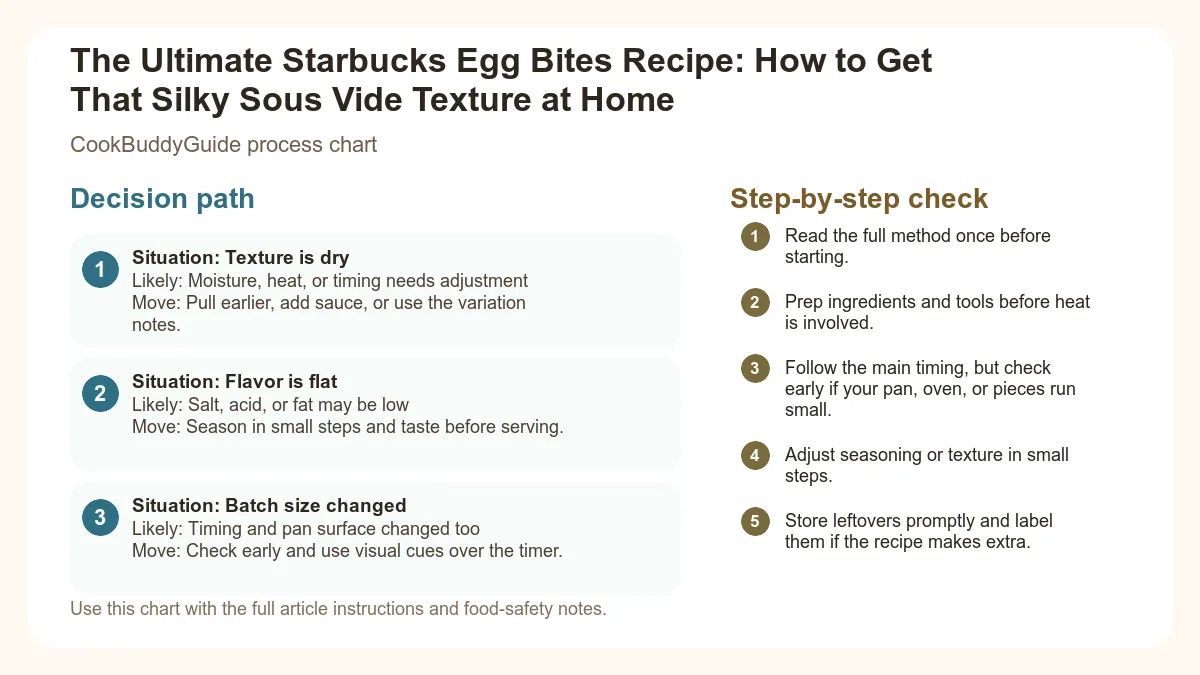
Decision table
| Situation | Likely cause or meaning | Best move |
|---|---|---|
| Texture is dry | Moisture, heat, or timing needs adjustment | Pull earlier, add sauce, or use the variation notes. |
| Flavor is flat | Salt, acid, or fat may be low | Season in small steps and taste before serving. |
| Batch size changed | Timing and pan surface changed too | Check early and use visual cues over the timer. |
Step-by-step fix
- Read the full method once before starting.
- Prep ingredients and tools before heat is involved.
- Follow the main timing, but check early if your pan, oven, or pieces run small.
- Adjust seasoning or texture in small steps.
- Store leftovers promptly and label them if the recipe makes extra.
Common mistakes
- Changing the recipe before trying the base method once.
- Measuring casually when texture depends on ratios.
- Waiting until the end to fix seasoning.
- Ignoring carryover heat or resting time.
Related topic hubs
You stand in the drive-thru line, the clock ticking toward 8:30 AM, watching the barista pull a small plastic tray of perfectly golden, custardy rounds from a high-speed oven. You know that first bite—the one that yields with a velvety texture so smooth it almost feels like a savory cheesecake. It is the gold standard of high protein breakfast options, but at nearly $5 for a pair, your daily habit is costing you over $1,200 a year.
Table of Contents
- The Secret Science: Replicating Sous Vide
- Essential Equipment for Success
- The Master Base Recipe: Ingredients and Ratios
- Step-by-Step Guide: The Oven Water Bath Method
- The Instant Pot Variation
- Flavor Variations: The Big Three
- Common Mistakes and Troubleshooting
- Meal Prep, Storage, and Reheating
- Cost Comparison: Homemade vs. Starbucks
The Secret Science: How to Replicate Sous Vide Without the Machine
What is Sous Vide?
The term "sous vide" literally means "under vacuum." In a commercial kitchen, Starbucks cooks their egg bites in vacuum-sealed pouches submerged in a temperature-controlled water bath. This ensures the eggs never exceed a specific temperature (usually around 172°F), which prevents the proteins from tightening and squeezing out moisture. When egg proteins get too hot, they become tough and rubbery—the exact opposite of the velvety texture we want. To understand the thermal dynamics of this process, consider reading about the science of sous vide eggs.
The Role of the Oven Water Bath (Bain-Marie)
Since most home cooks don't want to vacuum-seal individual egg portions, we use a Bain-marie. By placing our egg bites mold inside a larger pan filled with hot water, we create a protective buffer. The water cannot exceed 212°F, which regulates the heat reaching the silicone. This gentle, moist environment is the only way to get that custardy finish in a standard home oven. If you've never used this technique before, check out this guide on setting up a water bath for reliable results.
Why Blending is Non-Negotiable
Essential Equipment for Success
Choosing the Right Silicone Molds
You cannot make these in a standard metal muffin tin. Metal conducts heat too quickly, browning the edges before the center sets. You need a high-quality, 100% food-grade silicone mold. Choose the circular molds designed for pressure cooker eggs because they are deep and narrow, which helps maintain moisture. Look for "platinum-cured" silicone; it’s more durable and won't leach a plastic smell at 300°F.
The Best Blender for the Job
While a high-powered Vitamix is great, even a basic NutriBullet or a standard kitchen blender works perfectly here. The goal is to pulverize the curds of the cottage cheese until the mixture is as smooth as heavy cream. If you see any white lumps in your batter, keep blending.
Sheet Pans and Deep Baking Dishes
The Master Base Recipe: Ingredients and Ratios
The Master Copycat Egg Base
Ingredients:
- 4 large eggs (pasture-raised preferred for color)
- 1/2 cup shredded Gruyère cheese (or Monterey Jack for a milder taste)
- 1/4 tsp Kosher salt
- 1/8 tsp black pepper
- 1/4 tsp hot sauce (Sriracha or Cholula adds that signature Starbucks "tang" without the heat)
Instructions:
- Preheat your oven to 300°F (150°C). This low temp is crucial!
- Combine eggs, cottage cheese, salt, pepper, and hot sauce in a blender.
- Blend on high for 30-45 seconds until completely smooth and frothy.
- Stir in the shredded Gruyère by hand (don't blend the hard cheese, or the bites will be too dense).
Step-by-Step Guide: The Oven Water Bath Method
1. Prepping the Molds
Even though silicone is non-stick, eggs are notoriously clingy. Lightly spray each well with a neutral oil (like avocado oil) or use a paper towel to rub a tiny amount of melted butter inside. This ensures a clean release every time.
2. Executing the Perfect Pour
3. The Steam Bake Technique
Place the filled mold into a large roasting pan. Boil a kettle of water and carefully pour the hot water into the roasting pan until it reaches halfway up the sides of the egg mold. Slide the pan into the center rack of the oven. Bake for 25-30 minutes.
The Jiggle Test: At 25 minutes, gently shake the pan. The centers should have a very slight jiggle, similar to Jell-O, but the edges should look set. If they look liquid, give them 5 more minutes. Do not wait until they are firm, or they will be dry once they cool.
The Instant Pot Variation: For the Ultimate Shortcut
If you own a pressure cooker, you can get even closer to the commercial sous vide texture. The high pressure forces moisture into the eggs, creating an incredibly dense yet soft crumb. This is a favorite for those focused on high protein meals because it's so hands-off. For a detailed technical walkthrough, refer to the Instant Pot egg bite method.
- The Setup: Add 1 cup of water to the bottom of your Instant Pot. Place the filled silicone mold on the trivet.
- The Cover: This is vital—cover the mold loosely with a piece of foil. This prevents condensation from dripping onto the eggs and making them soggy.
- The Timing: Cook on High Pressure for 8 minutes, followed by a 10-minute natural release.
- The Result: The texture will be slightly more "bouncy" than the oven method, but even more moist.
Flavor Variations: The Starbucks 'Big Three' and Beyond
Now that you have the master base, you can customize your starbucks egg bites recipe to match your favorite menu item. These are perfect for breakfast meal prep ideas for a busy work week.
Bacon & Gruyère (The Classic)
To replicate the original, you must pre-cook your bacon until it is very crispy. If the bacon is soft, it will become chewy and unappealing inside the egg. Chop 4 slices of crispy bacon and divide them among the molds before pouring in the base mixture. Use a high-quality aged Gruyère for that nutty, sophisticated flavor profile.
Egg White & Roasted Red Pepper (The Healthy Choice)
For this version, replace the 4 whole eggs with 1 cup of liquid egg whites. Use Monterey Jack cheese instead of Gruyère for a creamier melt. Pro Tip: If using jarred roasted red peppers, pat them extremely dry with paper towels. Excess vinegar or oil from the jar will cause the egg bites to separate and become watery.
Spinach & Feta (The Vegetarian Favorite)
Sauté 1 cup of fresh spinach until wilted, then squeeze out every drop of moisture. Mix the spinach with 1/4 cup of crumbled feta. The saltiness of the feta pairs beautifully with the creamy egg base. A useful option is to add a pinch of nutmeg to this version to elevate the spinach flavor.
Custom Creations: Chorizo and Goat Cheese
Common Mistakes and Troubleshooting
This usually happens because the oven was too hot or the eggs were over-blended. If the eggs rise like a cake, they will inevitably collapse. Stick to 300°F and blend just until smooth, not until the mixture is 50% foam.
Wait! The biggest mistake is trying to remove them while hot. You must let the bites cool in the mold for at least 10 minutes. As they cool, they slightly contract, pulling away from the edges for a perfect release.
This is "syneresis," where the egg proteins tighten too much and push out water. It's caused by overcooking. Next time, pull them out when they still have a slight jiggle in the center.
Meal Prep, Storage, and Reheating Tips
- Fridge: Store in an airtight container for up to 5 days. Consider lining the container with a paper towel to absorb any residual moisture.
- Freezer: Yes, they freeze! Wrap individual bites in plastic wrap and store in a freezer bag for up to 2 months. Thaw in the fridge overnight before reheating.
- Reheating (The Microwave Method): Place 2 bites on a plate and cover with a damp paper towel. Microwave for 30-45 seconds at 50% power. This prevents them from becoming rubbery.
- Reheating (The Air Fryer Method): For that "oven-finished" look, pop them in the air fryer at 350°F for 3-4 minutes. This crisps up the edges of the bacon and cheese beautifully.
Cost Comparison: Homemade vs. Starbucks
Let's talk numbers. A standard order of two egg bites at Starbucks costs roughly $4.95 plus tax.
When you make them at home using my copycat starbucks egg bites recipe, the breakdown looks like this (based on average grocery prices):
- 4 Eggs: $1.20
- 1 cup Cottage Cheese: $1.00
- 1/2 cup Gruyère: $1.50
- Bacon/Add-ins: $0.80
- Total for 8 bites: $4.50
That is $0.56 per bite, or $1.12 for a serving of two. You are saving nearly $4.00 every single morning. Over a month, that’s $80 back in your pocket—enough to buy that high-end blender or a dozen more egg bites molds!
Final Thoughts from the Kitchen
Mastering the starbucks egg bites recipe at home is a helpful shortcut for any busy cook. It bridges the gap between a "fast food" convenience and a high-quality, keto-friendly meal you can feel good about eating. Remember: don't skip the water bath, don't over-blend, and for heaven's sake, use the cottage cheese! It's the secret to that velvety texture that makes these so addictive. Happy cooking, and enjoy your extra 15 minutes of sleep now that breakfast is already made!