Quick Answer
Master low sodium meals in this guide. These low sodium dinner recipes heart healthy options use herbs and acid for maximum flavor without the salt.
Practical note
For 15+ Flavorful Low Sodium Meals, this guide centers on Sodium-Free, Very Low Sodium, Reduced Sodium. Those are the checkpoints we would use first in a normal home kitchen before making a bigger change.
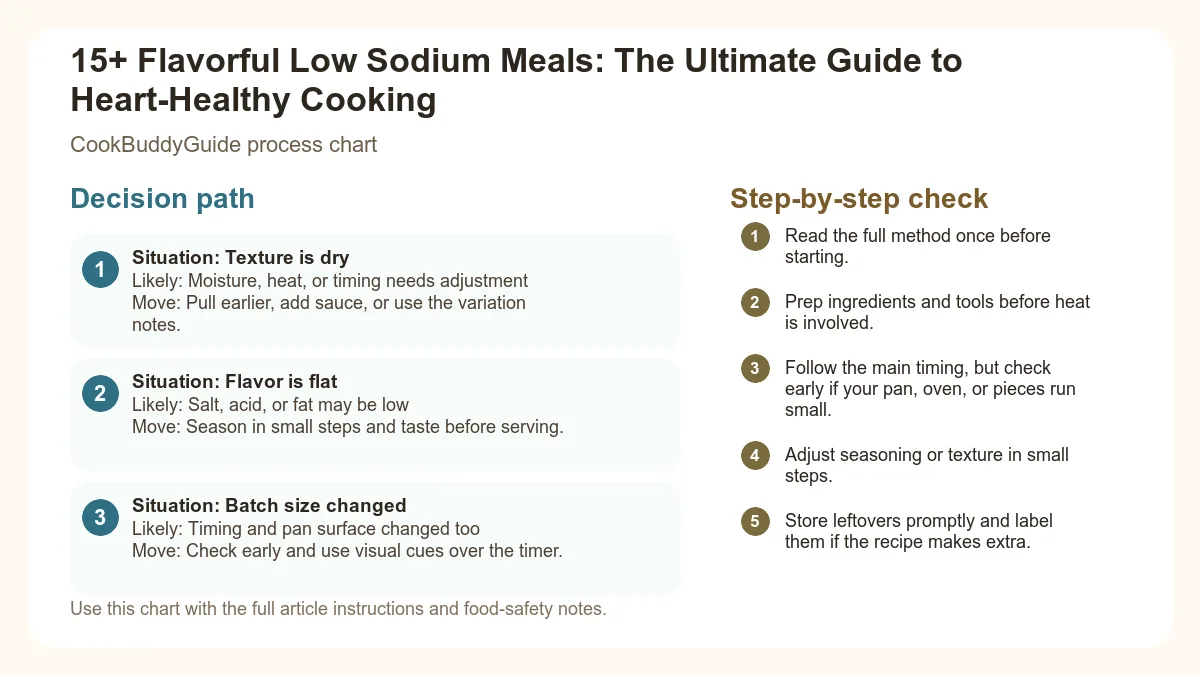
Decision table
| Situation | Likely cause or meaning | Best move |
|---|---|---|
| Texture is dry | Moisture, heat, or timing needs adjustment | Pull earlier, add sauce, or use the variation notes. |
| Flavor is flat | Salt, acid, or fat may be low | Season in small steps and taste before serving. |
| Batch size changed | Timing and pan surface changed too | Check early and use visual cues over the timer. |
Step-by-step fix
- Read the full method once before starting.
- Prep ingredients and tools before heat is involved.
- Follow the main timing, but check early if your pan, oven, or pieces run small.
- Adjust seasoning or texture in small steps.
- Store leftovers promptly and label them if the recipe makes extra.
Common mistakes
- Changing the recipe before trying the base method once.
- Measuring casually when texture depends on ratios.
- Waiting until the end to fix seasoning.
- Ignoring carryover heat or resting time.
Related topic hubs
Why Transitioning to Low Sodium Meals is a Helpful Shortcut
The Link Between Sodium and Heart Health
Understanding Sodium Labels: What 'Low' Really Means
- Sodium-Free: Less than 5mg per serving.
- Very Low Sodium: 35mg or less per serving.
- Low Sodium: 140mg or less per serving.
- Reduced Sodium: At least 25% less sodium than the original version (careful: this can still be very high!).
The Science of Flavor: Building Taste Without the Salt Shaker
The Power of Acid: Lemon, Lime, and Vinegars
Fresh vs. Dried Herbs: When to Use Which
- Rosemary & Thyme: These are "hard" herbs. Use them at the beginning of cooking (roasting or stewing) to let their oils infuse the entire dish.
- Cilantro, Basil, & Dill: These are "soft" herbs. They lose their flavor with heat. Always stir these in at the very last second or use them as a fresh garnish.
The Umami Factor: Using Mushrooms and Nutritional Yeast
Umami is the "fifth taste"—that savory, meaty sensation. Since many high-sodium foods (like aged cheeses and soy sauce) are umami-rich, we have to find low-sodium alternatives. I rely heavily on **nutritional yeast**, which has a nutty, cheesy flavor but is naturally low in sodium. Mushrooms, especially dried porcinis or shiitakes, are another secret weapon. When ground into a powder, they act as a natural flavor enhancer for soups and stews.Essential Low Sodium Dinner Recipes for Heart Health
Herb-Roasted Chicken with Lemon and Garlic
The secret to this chicken is the **spice rub**. Most grocery store chickens are "plumped" with saline, so ensure you buy air-chilled, organic poultry to avoid **hidden sodium**.
Ingredients:- 4 air-chilled chicken thighs (bone-in, skin-on)
- 2 tbsp **unsalted butter**, softened
- 1 tbsp smoked paprika
- 1 tbsp dried oregano
- 6 cloves garlic, smashed
- Zest of 2 lemons
- Mix the butter, paprika, oregano, and lemon zest into a paste.
- Rub the paste *under* the skin of the chicken. This protects the meat and infuses it directly with flavor.
- Place chicken and garlic cloves in a roasting pan. Roast for 35-45 minutes until the internal temperature reaches 165°F.
- Let rest for 10 minutes. Squeeze the roasted garlic and fresh lemon juice over the top before serving.
Garden Vegetable and Lentil Soup (The No-Broth Method)
Most **low-sodium chicken broth** still contains 140mg+ per cup. Choose the "No-Broth Method," using a piece of kombu (seaweed) to provide natural minerals and flavor. You can also follow this homemade vegetable stock recipe for a more traditional base.
Instructions:- Sauté a mirepoix (onion, carrot, celery) in olive oil until deeply caramelized. This "fond" on the bottom of the pot is your salt replacement.
- Add 1 cup of dry brown lentils, 6 cups of water, and a 2-inch piece of kombu.
- Simmer for 30 minutes. The kombu provides a rich mouthfeel without the salt.
- Finish with a tablespoon of **balsamic vinegar** to brighten the earthy lentils.
Sheet Pan Salmon with Rainbow Vegetables
Using heart-healthy cooking techniques like parchment steaming (en papillote) keeps the fish moist without needing heavy sauces.
Instructions:- Place a salmon fillet on a large piece of parchment paper. Surround with sliced bell peppers, zucchini, and asparagus.
- Drizzle with olive oil and top with plenty of fresh dill and cracked black pepper.
- Fold the parchment to create a sealed pouch. Bake at 400°F for 12-15 minutes.
- The steam created inside the pouch intensifies the natural flavors of the vegetables.
Homemade Turkey Meatballs with Zucchini Noodles
Traditional meatballs rely on parmesan and breadcrumbs (both high in salt). I swap breadcrumbs for quick-cooking oats and use fresh **aromatics** to compensate.
Instructions:- Mix 1lb lean ground turkey with 1/2 cup oats, 1 egg, 4 cloves minced garlic, and 1/2 cup finely chopped fresh parsley.
- Bake at 375°F for 20 minutes.
- Serve over spiralized zucchini tossed in a sauce of pureed roasted tomatoes and fresh basil.
Mediterranean Quinoa Vegetable Bowls
- Cook quinoa in water with a bay leaf for extra aroma.
- Top with cucumber, cherry tomatoes, red onion, and roasted chickpeas.
- Instead of feta, use a dressing made of tahini, lemon juice, and a pinch of cumin. The creaminess of the tahini provides the "fatty" satisfaction usually provided by cheese.
The CookBuddy Guide to Reducing Sodium in Everyday Cooking
The 'Rinse and Repeat' Rule for Canned Goods
DIY Spice Blends: Replacing Garlic Salt and Taco Seasoning
- 2 tbsp Onion Powder
- 2 tbsp Garlic Powder (NOT garlic salt!)
- 1 tbsp Black Pepper
- 1 tbsp Dried Parsley
- 1 tsp Cayenne Pepper (optional for heat)
Smart Swaps for High-Sodium Condiments
Condiments are where many people fail. Soy sauce is a major offender. Consider switching to **coconut aminos**, which has about 70% less sodium than traditional soy sauce. For a "salty" kick on salads, try a balsamic reduction—simply simmer balsamic vinegar until it’s thick and syrupy. It provides a concentrated flavor that hits the back of the palate just like salt does.Common Mistakes When Cooking Low Sodium Meals
Over-relying on Potassium-Based Salt Substitutes
You’ll see "Lite Salt" or "No-Salt" in the baking aisle. These often replace sodium chloride with potassium chloride. While this can help with the **potassium-to-sodium ratio**, it can be dangerous for individuals with kidney disease or those on certain blood pressure medications. Always consult your doctor before using these **salt substitutes**. Choose to stick to natural herbs and spices.Ignoring Hidden Sodium in 'Fresh' Poultry
I mentioned this earlier, but it bears repeating: "Fresh" chicken is often injected with a saline solution to keep it looking plump on the shelf. This can add 200-300mg of sodium per serving before you even touch it. Always check the label for "broth," "saline," or "sodium phosphate."Under-seasoning with Aromatics
Meal Prep Strategies for a Low Sodium Lifestyle
Success with **low sodium meals** depends on being prepared. When you're tired and hungry at 7 PM, you're much more likely to reach for a high-sodium frozen meal or takeout.Batch Cooking Grains and Legumes
The Ice Cube Tray Trick
Frequently Asked Questions
A: No. By weight, sea salt and table salt contain the same amount of sodium. While sea salt has more trace minerals, it is not a "low sodium" alternative.
A: Add acid! A splash of vinegar or a squeeze of lime at the very end of cooking is the fastest way to brighten a low-sodium dish.
A: It’s tough, but possible. Ask for your protein to be grilled without salt and request all sauces and dressings on the side. Steamed vegetables and baked potatoes are usually safe bets.