Quick Answer
Master the perfect chia pudding recipe with our reliable ratio. This easy overnight chia pudding guide includes 5 flavors and tips for a creamy texture.
Practical note
For A Practical Creamy Chia Pudding Recipe, this guide centers on Almond Milk, Full-Fat Canned Coconut Milk, Oat Milk. Those are the checkpoints we would use first in a normal home kitchen before making a bigger change.
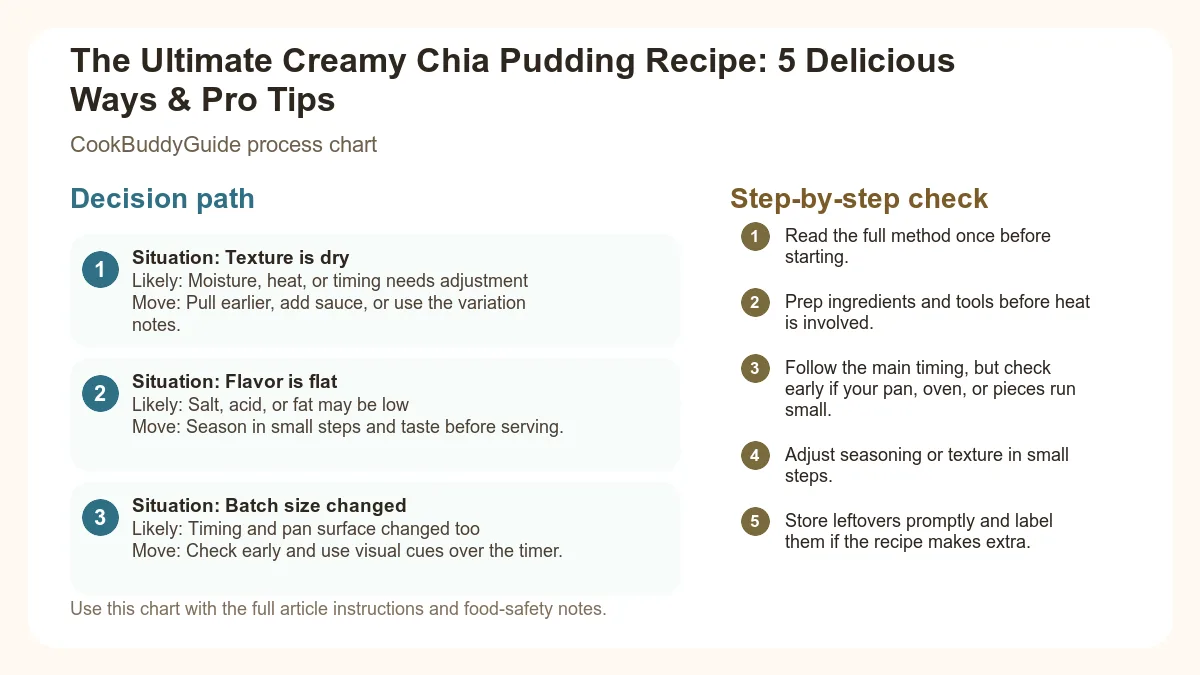
Decision table
| Situation | Likely cause or meaning | Best move |
|---|---|---|
| Texture is dry | Moisture, heat, or timing needs adjustment | Pull earlier, add sauce, or use the variation notes. |
| Flavor is flat | Salt, acid, or fat may be low | Season in small steps and taste before serving. |
| Batch size changed | Timing and pan surface changed too | Check early and use visual cues over the timer. |
Step-by-step fix
- Read the full method once before starting.
- Prep ingredients and tools before heat is involved.
- Follow the main timing, but check early if your pan, oven, or pieces run small.
- Adjust seasoning or texture in small steps.
- Store leftovers promptly and label them if the recipe makes extra.
Common mistakes
- Changing the recipe before trying the base method once.
- Measuring casually when texture depends on ratios.
- Waiting until the end to fix seasoning.
- Ignoring carryover heat or resting time.
Related topic hubs
A Practical Creamy Chia Pudding Recipe: 5 Delicious Ways & Practical Tips
- The Science of the Ratio: 1:4 vs. 1:3
- The Secret '10-Minute Rule' for Clump-Free Pudding
- Mastering the Easy Overnight Chia Pudding Method
- Five Flavor Variations to Keep Breakfast Exciting
- Troubleshooting: How to Fix Common Chia Pudding Fails
- Meal Prep Mastery: Making a Week’s Worth
- The Topping Guide: Adding Texture and Crunch
- Nutritional Deep Dive: Is Chia Pudding Actually Healthy?
The Science of the Ratio: How to Get the Perfect Consistency
The Golden Ratio Breakdown
The type of milk you choose drastically affects the pudding consistency:
- Almond Milk: Results in a lighter, slightly thinner pudding. Best for a 1:3 ratio if you want it thick.
- Full-Fat Canned Coconut Milk: This is the "luxury" option. It creates an incredibly rich, keto-friendly pudding that mimics a true dessert. Because of the fat content, it sets very firmly.
- Dairy Milk: Works perfectly at the 1:4 ratio, providing a familiar flavor profile and a good boost of protein.
The Secret '10-Minute Rule' for Clump-Free Pudding
The biggest "fail" in a chia pudding recipe is the dreaded clump. Chia seeds (from the Salvia hispanica plant) possess incredible hydrophilic properties, meaning they can absorb up to 12 times their weight in liquid. When they first hit the liquid, they immediately begin to form a chia seed gel. If the seeds are touching each other when this happens, they glue themselves together into a dry, crunchy knot that no amount of soaking will fix.
The Double-Stir Method Explained
- The Initial Mix: Add your seeds to the liquid and whisk vigorously for 30 seconds. This ensures every single seed is coated in liquid.
- The Rest: Let the jar sit on the counter for exactly 10 minutes. During this time, the seeds will settle and start to form that initial gel.
- The Critical Second Stir: After 10 minutes, you’ll notice a layer of seeds at the bottom and some clumping. Stir or shake the jar again for another 30 seconds. This breaks up the "gel pockets" and ensures a uniform, creamy texture.
skipping the second stir is the #1 reason for lumpy pudding. Once you've done the second stir, you can safely tuck your meal prep containers into the fridge.
Mastering the Easy Overnight Chia Pudding Method
The Master Base Recipe
Ingredients:
- 2 tbsp Chia Seeds
- 1/2 cup Milk of choice (Oat, Almond, or Coconut)
- 1 tsp Maple syrup sweetener (or honey/monk fruit)
- 1/4 tsp Vanilla extract
- Pinch of sea salt (crucial for depth of flavor)
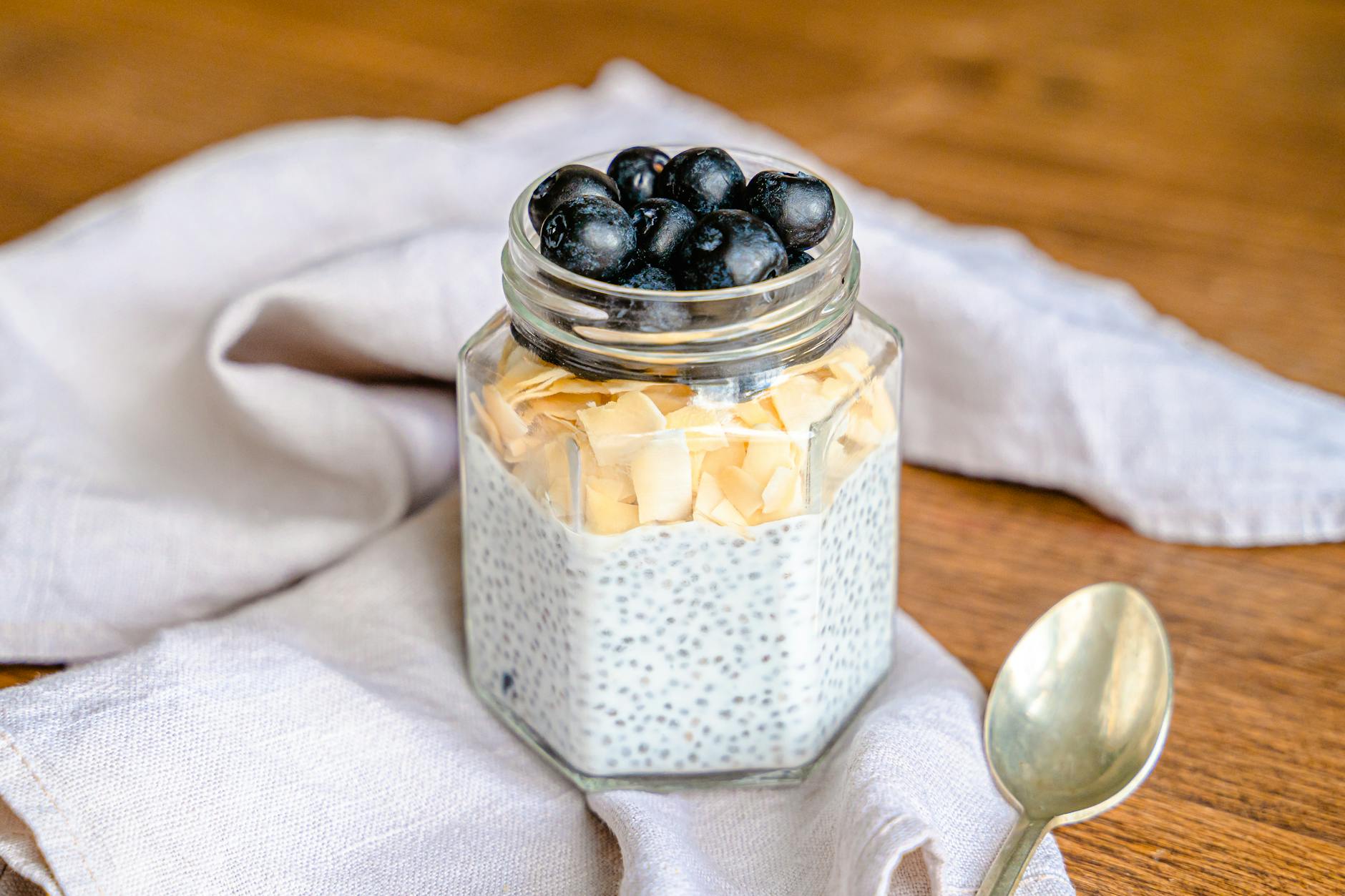
Instructions: Combine all ingredients in a glass jar. Follow the Double-Stir Method. Cover and refrigerate for at least 6 hours, or ideally overnight. Before serving, give it one final stir to fluff it up.
Five Flavor Variations to Keep Breakfast Exciting
1. Classic Vanilla Bean
To elevate the basic recipe, consider using vanilla bean paste instead of extract. The tiny black flecks not only look professional but provide a much more intense, floral aroma. This is the ultimate gluten-free snack that feels like a treat.
2. Indulgent Double Chocolate
The mistake most people make with chocolate chia pudding is adding cocoa powder directly to cold milk. It clumps and stays chalky. Pro Tip: Whisk 1 tablespoon of unsweetened cocoa powder with 1 tablespoon of hot water or warm milk to "bloom" the chocolate before adding it to the rest of the ingredients. Sweeten with a bit of extra maple syrup sweetener to balance the bitterness of the cacao.
3. Tropical Mango Swirl
4. Fresh Strawberry & Cream
Macerate 1/4 cup of chopped strawberries with a teaspoon of sugar or honey for 10 minutes before adding them to your pudding. This creates a natural syrup that ribbons through the easy overnight chia pudding, giving it a nostalgic "strawberries and cream" flavor.
5. Energizing Ceremonial Matcha
Matcha can be tricky. Sift 1 teaspoon of ceremonial grade matcha into your dry chia seeds before adding the milk. Use a bamboo whisk or a small battery-operated frother to ensure no green lumps remain. This version is packed with antioxidants and provides a steady caffeine release.
Troubleshooting: How to Fix Common Chia Pudding Fails
Even with the best intentions, things can go wrong. Here is how I rescue my batches when they don't turn out quite right.
If you wake up and your pudding is runny, don't panic. Add another teaspoon of chia seeds, stir well, and wait 30 minutes. The new seeds will quickly absorb the excess liquid. Alternatively, stir in a tablespoon of Greek yogurt or almond butter to thicken it instantly.
If you forgot the 10-minute stir and have clumps, the best fix is to use an immersion blender. Blending the chia pudding turns it into a smooth, mousse-like consistency. This is actually a great hack for kids or adults who have sensory issues with the "beady" texture of whole chia seeds.
Chia seeds have almost no flavor. You must be generous with your aromatics. Always add a pinch of salt—it's the secret to making the flavors of the milk and sweetener pop. If it's still dull, a squeeze of lemon juice or a dash of cinnamon can brighten it up.
Meal Prep Mastery: Making a Week’s Worth of Pudding
The Best Containers for Storage
Consider using 8oz wide-mouth mason jars. They are the perfect portion size, they are airtight, and they are easy to clean. Glass is superior to plastic here because it doesn't retain odors from previous meals, ensuring your vanilla pudding doesn't taste like last week's garlic shrimp.
Shelf Life and Freshness
The Topping Guide: Adding Texture and Crunch
The pudding itself is soft and creamy, so you need contrasting textures to make it a satisfying meal. My "Golden Rule" for toppings: Never add crunchy toppings until the moment you are ready to eat. If you put granola on your pudding on Sunday night, it will be soggy mush by Monday morning.
- The Crunch Factor: Toasted pumpkin seeds, hemp hearts, or sliced almonds add a wonderful snap. If you use granola, look for one with large clusters.
- The Creamy Factor: A drizzle of almond butter or peanut butter adds healthy fats and makes the meal feel more substantial. A useful option is to warm the nut butter for 10 seconds so it drizzles perfectly.
- The Fresh Factor: Fresh berries, pomegranate arils, or sliced banana provide a burst of acidity and natural sugar.
- The Superfood Boost: Sprinkle a teaspoon of bee pollen or cacao nibs over the top for extra macronutrients and a sophisticated flavor profile.
Nutritional Deep Dive: Is Chia Pudding Actually Healthy?
The short answer is: absolutely. But let's look at the data. Chia seeds are a nutritional powerhouse, and understanding their macronutrients helps you tailor the recipe to your goals.
According to the nutritional profile of chia seeds, a standard 2-tablespoon serving contains approximately:
- Fiber: 11 grams (nearly half your daily requirement!)
- Protein: 4 grams
- Omega-3 Fatty Acids: 5 grams (essential for heart and brain health)
- Calcium: 18% of the RDA
Beyond the numbers, the benefits of chia seeds include their ability to slow down digestion. Because of the high soluble fiber content, the gel prevents a rapid spike in blood sugar, which keeps you feeling full much longer than a bowl of sugary cereal would. This satiety factor is why Consider this as a healthy breakfast idea for those trying to manage their weight or energy levels throughout the morning.
Keto and Low-Carb Adjustments
If you are following a ketogenic diet, chia pudding is your best friend. To keep it strictly low-carb, swap the maple syrup sweetener for liquid stevia, monk fruit, or erythritol. Use unsweetened almond milk or canned coconut milk to keep the fat-to-carb ratio in check. A typical keto serving has only 2-3 grams of net carbs, making it an excellent low-carb dessert as well.
Conclusion: Your New Morning Ritual
Mastering the chia pudding recipe is less about cooking and more about understanding the unique properties of the chia seed. By following the 1:4 ratio, respecting the 10-minute double-stir rule, and giving it a full night to hydrate, you’ll never have to settle for a mediocre breakfast again. This easy overnight chia pudding isn't just a trend; it's a versatile, nutrient-dense tool in your meal-prep arsenal that saves time and fuels your body.