Quick Answer
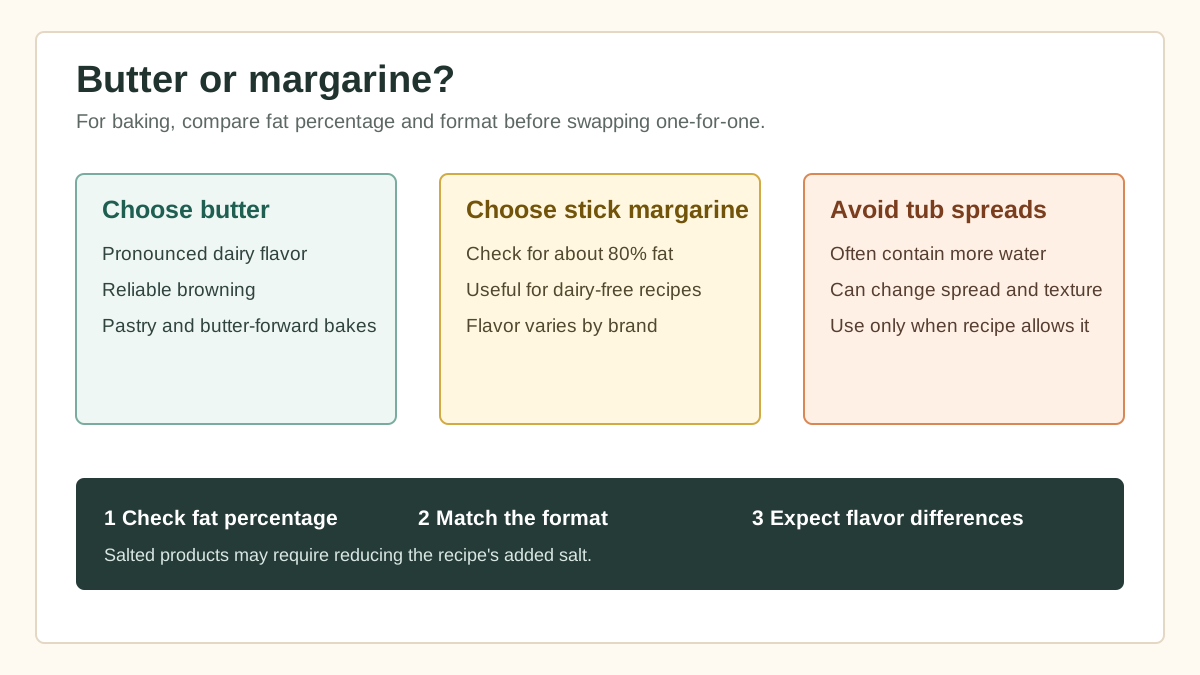
Use butter when flavor, browning, and firm chilled dough matter. Stick margarine can work when cost or a dairy-free option matters, but check the label: soft tub spreads contain more water and can make cookies spread or pastry less flaky. For baking, choose a product near 80% fat and avoid reduced-fat spreads.
Practical note
Compare products by fat percentage, not package color. In cookies and pastry, the extra water in a soft spread changes dough more than the word "margarine" does. Test a half batch before replacing all the butter in a texture-sensitive recipe.
Decision table
| Situation | Likely cause or meaning | Best move |
|---|---|---|
| Cookies or pastry | Water content controls spread and flakiness | Use butter or an 80% fat baking margarine. |
| Cake or quick bread | Either fat can tenderize the crumb | Use stick margarine only if the recipe allows a 1:1 swap. |
| Sauteing over moderate heat | Flavor matters more than structure | Choose butter for flavor or margarine for dairy-free needs. |
| Only soft tub spread available | It may contain substantially more water | Do not use it for pastry or precision baking. |
How to choose between butter and margarine
- Check whether the recipe depends on chilled solid fat, browning, or butter flavor.
- Read the margarine label and look for a product near 80% fat.
- Avoid whipped, light, and reduced-fat spreads in baking.
- Use an equal amount of stick margarine only when the recipe is not highly texture-sensitive.
- Test a small batch and note changes in spread, rise, browning, and flavor.
Common mistakes
- Treating every margarine product as if it has the same fat and water content.
- Using soft tub spread in pie dough, laminated dough, or cutout cookies.
- Expecting margarine to create the same browned-butter flavor.
- Changing both the fat and the flour ratio in the same test batch.
Related topic hubs
Table of Contents
- Introduction: The Great Kitchen Debate
- Composition and Manufacturing: What Are You Actually Eating?
- The Health Breakdown: Saturated vs. Trans Fats
- Butter or Margarine for Cooking: Performance in the Pan
- The Baking Showdown: Cookies, Cakes, and Pastries
- Plant-Based Butter: The Modern Alternative
- The CookBuddyGuide Verdict: When to Use Which
- Common Mistakes and Practical Tips
- Frequently Asked Questions
Introduction: The Great Kitchen Debate
The practical butter vs margarine choice is about fat percentage, water content, flavor, and the recipe's texture requirements. A tub spread and an 80% fat baking stick may both be called margarine, but they do not behave the same way.
The choice is more nuanced than "butter for flavor, margarine for budget." Butter and margarine can contain different proportions of fat, water, milk solids, emulsifiers, and salt, so they do not always brown, spread, or build pastry layers in the same way. Check the label and match the product to the job instead of assuming every stick is interchangeable.
Why the Choice Matters for Your Recipes
The choice between butter or margarine for cooking affects browning, flavor, cookie spread, pastry texture, and sauce stability. Butter is primarily milk fat, water, and milk solids. Margarine is made mainly from vegetable oils and varies considerably by brand. A low-fat spread with more water behaves very differently from an 80% fat baking stick, so the package composition matters more than the name alone.
A Brief History of the Butter-Margarine Rivalry
Composition and Manufacturing: What Are You Actually Eating?
To understand the butter vs margarine performance gap, compare how much fat and water each product contains and whether the fat stays firm when chilled.
How Butter is Made: The Simplicity of Cream
Butter is one of the most "honest" ingredients in your kitchen. It is made by churning heavy cream until the fat globules (butterfat) separate from the liquid (buttermilk). By law, butter must contain at least 80% milk fat. The remaining 20% is mostly water and milk solids (proteins and sugars). This flavor and fat content is what gives butter its edge; those milk solids are responsible for the nutty, toasted aroma that develops when you brown it. If you're looking for quick breakfast meal prep ideas, a simple smear of high-quality salted butter on sourdough is often all you need.
How Margarine is Made: The Science of Hydrogenation and Emulsifiers
Margarine is a feat of industrial engineering. Because vegetable oil is liquid at room temperature, manufacturers must use a process called hydrogenation (or more commonly today, interesterification) to make it solid. It is essentially an emulsion of oil and water, held together by emulsifiers like lecithin.
- Stick Margarine: Usually contains more saturated fat to keep it firm, making it better for baking than the tub variety.
- Tub Margarine/Spreads: These have a higher water content and more liquid oils for spreadability right out of the fridge.
The Health Breakdown: Saturated vs. Trans Fats
The health debate has shifted significantly in the last decade. It used to be a simple "saturated fat is bad, margarine is good" narrative, but clinical research has added layers of complexity. According to the Mayo Clinic, margarine usually tops butter when it comes to heart health, but only if you choose the right kind.
Butter and Saturated Fat: The Modern Perspective
Margarine and Trans Fats: Avoiding the Hidden Dangers
The "dark age" of margarine involved hydrogenated oils, which created trans fat. Trans fat is widely considered the worst type of fat for your heart because it raises LDL (bad cholesterol) and lowers HDL (good cholesterol). While most modern margarines have removed partially hydrogenated oils due to FDA bans, some still contain high levels of omega-6 fatty acids, which can contribute to inflammation if not balanced with omega-3s. Harvard Health notes that the choice between saturated and trans fats is the primary factor in cardiovascular risk management.
Butter or Margarine for Cooking: Performance in the Pan
When you're standing over a hot stove, the behavior of your fat changes instantly. This is where the smoke point—the temperature at which fat begins to break down and smoke—becomes critical.
Smoke Points: Sautéing and Searing
Butter has a relatively low smoke point of about 350°F (177°C). This is because the milk solids burn quickly. If you’re searing a steak at high heat, butter alone will burn and turn bitter before the meat is cooked. The Pro Tip: Use a butter-oil blend. By adding a tablespoon of neutral vegetable oil to the butter, you can slightly stabilize the fat, though the milk solids will still brown. For high-heat searing, use oil first, and "finish" with butter in the last 60 seconds of cooking for flavor.
Flavor Development: The Maillard Reaction
The Maillard reaction is the chemical reaction between amino acids and reducing sugars that gives browned food its distinctive flavor. Because butter contains milk proteins and lactose, it participates in this reaction beautifully. Margarine, being mostly oil and water, cannot replicate this. When I test butter or margarine for cooking in a simple pan-sauce, the butter version always has more depth, while the margarine version tastes "flat."
Sauces and Emulsions: Achieving the Perfect Gloss
If you’ve ever wondered why restaurant sauces are so glossy, the answer is "mounting with butter" (beurre monté). The emulsification properties of butter allow it to thicken a sauce into a velvety coating. Margarine often contains too much water; when it melts into a sauce, it can thin it out rather than thicken it, leading to a "watery" problem that makes vegetables soggy.
Technique example: brown butter sage sauce
Ingredients: 1/2 cup unsalted butter, 10 fresh sage leaves, 1/4 tsp salt.
The Technique: Melt butter in a light-colored skillet over medium heat. Swirl constantly. You will see it foam, then the foam will subside. Watch for the Maillard reaction: tiny brown specks will form at the bottom, and it will smell like toasted hazelnuts. Immediately add sage leaves (they will crisp up!) and remove from heat. This depth of flavor is impossible to achieve with margarine.
The Baking Showdown: Cookies, Cakes, and Pastries
Baking is chemistry, and fat is one of the most important reagents. The butter vs margarine choice in baking isn't just about taste; it’s about structural integrity.
Cookies: Snap, Spread, and Chewiness
Butter contributes a distinct flavor and can help cookies develop crisp edges. Its melting behavior allows dough to spread before the flour structure fully sets. When substituting margarine for butter in cookies, the higher melting point of the vegetable fats often means the cookies spread less and stay thicker. However, the high water content can lead to a "cakey" or soft texture rather than a chewy one.
Cakes: Crumb Structure and Moisture Retention
For a classic pound cake, butter is king. The process of "creaming" butter and sugar traps air bubbles in the fat, which expands during baking to create a light, airy crumb structure. Margarine can actually produce a loftier cake because it stays stable over a wider temperature range, but it lacks the creamy texture and mouthfeel of real dairy.
Pie Crusts and Biscuits: The Secret to Flakiness
To get a flaky pastry, you need distinct pockets of fat. When the cold fat hits the hot oven, the water in the fat evaporates, creating steam that lifts the layers of dough.
- Butter: Provides incredible flavor and classic flakes, but it’s finicky. If it gets too warm during handling, it melts into the flour and you lose the layers.
- Margarine/Shortening: Has a higher melting point, making it easier to work with for beginners. However, it often leaves a "filmy" feeling on the roof of the mouth.
Plant-Based Butter: The Modern Alternative
We’ve come a long way from the yellow tubs of the 1980s. Today’s dairy-free alternatives are often marketed as "plant-based butter" rather than margarine. But is there a difference?
Is it Just Margarine with Better Branding?
Technically, most plant-based butters are a form of margarine, but the ingredient quality has skyrocketed. Instead of just "soybean oil," modern versions use blends of avocado, coconut, and olive oils. These blends are engineered to match the 80% fat content of dairy butter, which is a helpful shortcut for baking results. As Bon Appétit notes, modern plant-based butter alternatives are designed to mimic the melting point and solids-to-fat ratio of real butter.
Performance Review: Avocado, Coconut, and Olive Oil Blends
Plant-based blends also behave differently depending on their main oil:
- Coconut Oil Blends: Best for pie crusts because coconut oil is solid at room temperature.
- Avocado Oil Blends: Great for sautéing due to a higher smoke point.
- Olive Oil Blends: Best for finishing dishes or dipping bread, as the olive flavor is often quite prominent.
If you're cooking cheap meals under five dollars, compare the price per ounce and choose a full-fat stick intended for cooking rather than a low-fat tub spread.
The CookBuddyGuide Verdict: When to Use Which
The practical choice depends on the recipe's need for flavor, browning, water control, and firm fat.
The "Butter is Essential" List
- Shortbread and Sugar Cookies: Where flavor is the primary ingredient.
- Hollandaise and Béarnaise Sauces: The emulsification of milk fats is non-negotiable.
- Finishing Steaks or Seafood: For that final, glossy, nutty baste.
- Buttercream Frosting: Margarine frosting often tastes "oily" and can't hold its shape in warm rooms.
The "Margarine is a Reasonable Swap" List
- Quick Breads: Banana bread or zucchini bread where spices and fruit mask the fat's flavor.
- Budget Bulk Baking: If you're making 100 cookies for a school bake sale, a high-quality stick margarine is a massive cost-saver.
- Spreading on Toast: If you prefer a product that remains spreadable straight from the refrigerator.
Budget and Shelf Life Considerations
Storage life varies by formulation and packaging. Keep both products refrigerated according to the label, protect them from strong odors, and freeze unopened extra butter when longer storage is needed.
Common Mistakes and Practical Tips
These three rules prevent the most common substitution problems.
The Temperature Trap: Room Temp vs. Melted
Reading the Label: Avoiding "Spreads" for Baking
Always check the fat percentage. If a product is labeled as a "vegetable oil spread" and has less than 60% fat, do not use it for baking. The remaining 40% is water. In a cake, this extra water will over-develop the gluten in your flour, resulting in a tough, rubbery texture instead of a tender crumb.
The Salt Factor: Adjusting Your Recipe
Salt content varies by brand. If you are replacing unsalted butter, check the nutrition label before reducing recipe salt; do not assume every margarine contains more salt.
The "Grandma's Secret" Soft-Batch Cookies
The Secret: Use 1/2 cup salted butter and 1/2 cup stick margarine. This combination provides the rich flavor of animal fats with the soft, pillowy texture that vegetable oils provide. Pro Tip: Chill the dough for exactly 30 minutes before scooping to ensure the butter doesn't melt too fast, giving you the perfect balance of snap and chew.
Frequently Asked Questions
Yes, but only if you use stick margarine. Tub spreads have too much water and will ruin the structure of baked goods.
Both are calorie-dense (about 100 calories per tablespoon). Margarine often has slightly less saturated fat, but butter is more satiating, meaning you might use less of it to feel satisfied.
That’s the water content evaporating! Since butter is about 16-18% water, it splatters as it hits the smoke point. Margarine often splatters more because its water content can be even higher.
The Final Word
In the butter vs margarine showdown, there is no single winner—only the right tool for the job. If you want the ultimate flavor and a crisp finish, butter is your best friend. If you need a soft-spread option that’s budget-friendly and dairy-free, modern margarines and plant-based butters are excellent alternatives. The key is to respect the science: watch your temperatures, check your fat percentages, and never be afraid to use a little of both to get the perfect result. Happy cooking!